

| Seung Eun Lee | 1 Article |
Purpose
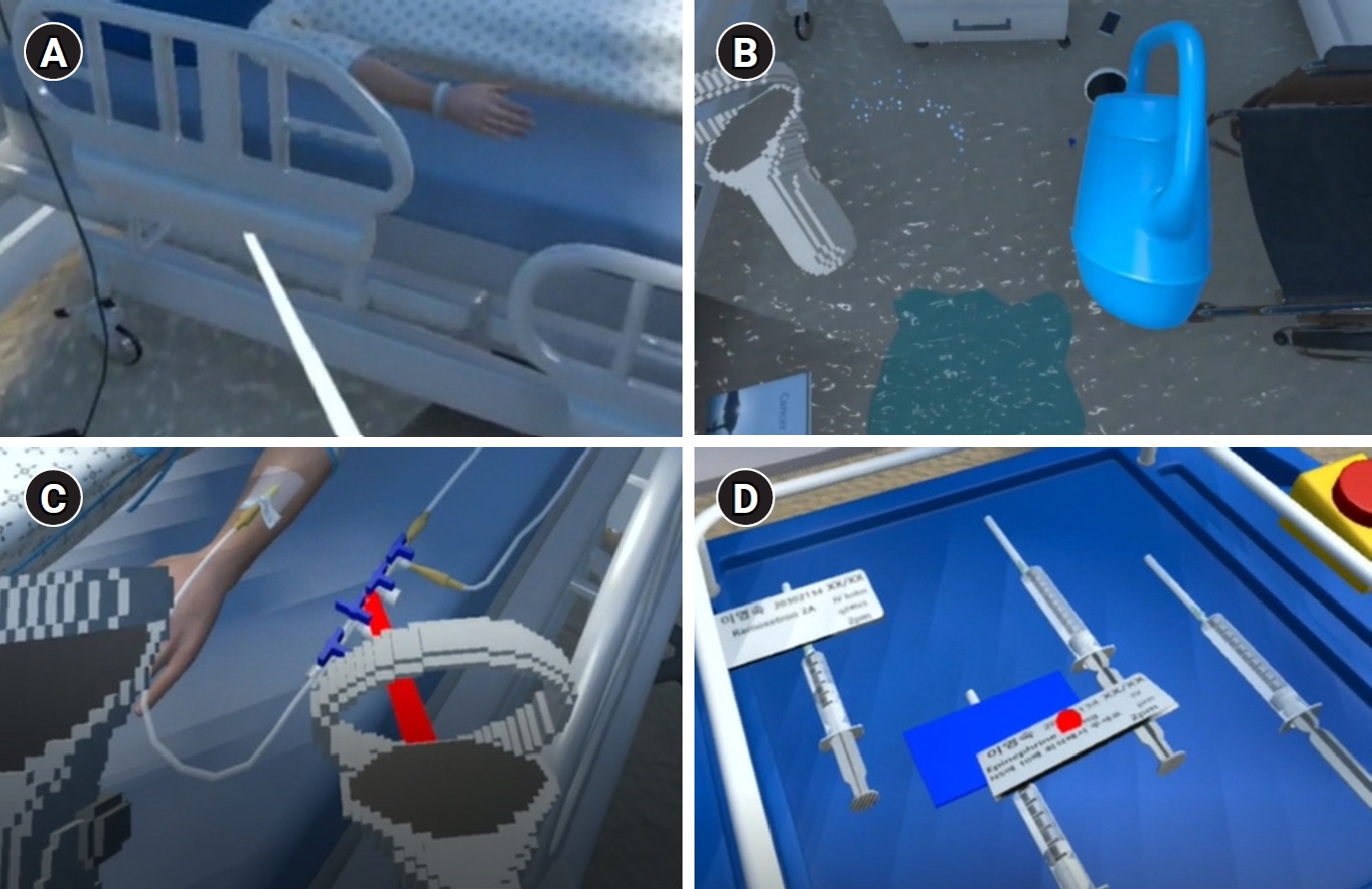
Falls and medication errors are the most common patient safety incidents globally. Kolb’s experiential learning theory supports the application of cognitive learning in clinical settings. This study examined the effectiveness of Experiential Learning–Based Fall and Medication Error Prevention Education (EFMPE), utilizing virtual reality and room of errors. Methods A randomized controlled trial was conducted with 28 fourth-year nursing students (15 experimental, 13 control). The experimental group participated in EFMPE from February 1 to 6, 2024, comprising six sessions of 2 hours each. The control group received traditional lectures. Safety control confidence and course interest were measured before and immediately after the intervention; safety control confidence was reassessed 6 weeks later. Results Both groups showed immediate improvement; however, only the experimental group sustained increased safety control confidence after 6 weeks (Wald χ²=13.21, p<.001). Course interest was significantly higher in the experimental group post-intervention (Wald χ²=10.64, p=.001). Conclusion These preliminary findings suggest that EFMPE potentially supports the prevention of falls and medication errors in clinical practice. Citations Citations to this article as recorded by

|
|
 E-SUBMISSION