• KSAN
  • Contact us
  • E-Submission
ABOUT
BROWSE ARTICLES
EDITORIAL POLICY
FOR CONTRIBUTORS

Page Path

  • HOME
  • Browse articles
  • Most cited article
13
results for

Most cited article

Filter

Article category

Keywords

Publication year

Authors

Most cited article

Most-cited are based on citations from 2024 ~ 2026.
Original Articles

Psychological Distress and Influencing Factors in Newly Diagnosed Patients with Breast Cancer: A Cross-Sectional Study
Jin-Hee Park, Yong Sik Jung, Min Hee Hur, Yu Jin Jeong
Korean J Adult Nurs 2024;36(4):311-319.   Published online November 30, 2024
DOI: https://doi.org/10.7475/kjan.2024.36.4.311
Purpose
Cancer diagnosis is associated with psychological distress, which often leads to a significant reduction in adaptation and quality of life. This study aimed to identify the prevalence and related factors of psychological distress in newly diagnosed breast cancer patients.
Methods
The study included 138 women scheduled for surgery or neoadjuvant chemotherapy following a recent breast cancer diagnosis at a university hospital in Korea. Psychological distress was assessed using the National Comprehensive Cancer Network Distress Thermometer and problem lists. Data collection occurred from November 1, 2021, to November 30, 2022. Descriptive statistics and logistic regression analysis were utilized for data analysis.
Results
The average age of the participants was 51.72 years. Among the 138 participants, 67.4% (n=93) reported moderate to severe levels of psychological distress. Multivariate logistic regression analysis identified financial burden (Odds Ratio [OR]=4.32), fears (OR=5.35), and nervousness (OR=5.50) as predictors of moderate to severe psychological distress.
Conclusion
Approximately two-thirds of newly diagnosed breast cancer patients experienced significant psychological distress. Nervousness, fears, and financial burden were significant factors influencing this distress. Therefore, management of psychological distress should be implemented for patients experiencing financial burdens or emotional problems, such as nervousness and fear, from the time of diagnosis.

Citations

Citations to this article as recorded by  
  • Psychological Resilience and Associated Factors in Cancer Patients: A Cross‐Sectional Analysis
    Marta Esteban Blanco, Inmaculada Martinez de la Viuda, Maria Gemma Rodriguez Chico, Maria del Mar Félix Montalvo, Aurea Garcia Salas, Andrés Garcia Palomo, Maria Teresa Quintana Asenjo
    Cancer Reports.2026;[Epub]     CrossRef
  • Impact of fragmented care on cancer outcomes among korean women with breast and cervical cancer: a focus on regional and economic disparities
    Sun Jung Kim, Noorhee Son, Woo-Ri Lee, Dong-Woo Choi, Seojin Park, Kyu-Tae Han
    International Journal for Equity in Health.2025;[Epub]     CrossRef
  • Family roles and limitations as mediators in medical communication for cancer patients: A qualitative study
    Yeori Park, Jiyeon Kang, Yeonju Kim, Young Su Park, Sang-Ho Yoo, Taiwo Opeyemi Aremu
    PLOS One.2025; 20(10): e0333669.     CrossRef
  • Belief-Based Family Support Intervention to Strengthen Family Resilience among Breast Cancer Caregivers: A Quasi-Experimental Study in Indonesia
    Dwi Retnaningsih, Nursalam, Ferry Efendi, Hanik Endang Nihayati, Kristiawati, Mira Triharini
    European Journal of Oncology Nursing.2025; : 103092.     CrossRef
  • 3,261 View
  • 81 Download
  • 4 Crossref
  • 0 Scopus
Development of a Conceptual Framework for Non-Adherence to Self-Management in Patients with Chronic Obstructive Pulmonary Disease: An Exploratory Study
Ja Yun Choi, Eui Jeong Ryu, So Young Yun, Sehyun Cho
Korean J Adult Nurs 2024;36(2):126-135.   Published online May 31, 2024
DOI: https://doi.org/10.7475/kjan.2024.36.2.126
Purpose
This study was conducted to develop a conceptual framework for understanding non-adherence to self-management among patients with Chronic Obstructive Pulmonary Disease (COPD). This was accomplished through a literature review, in-depth interviews with patients, and a survey of healthcare professionals featuring semi-structured open-ended questions.
Methods
First, a systematic literature review was conducted across five databases. Next, 25 patients with COPD participated in detailed interviews that included seven semi-structured questions. Subsequently, 15 healthcare professionals completed a survey about factor categories and specific factors associated with non-adherence to COPD self-management. Categories and factors identified at least once across these three methods were documented. Finally, two researchers conducted preliminary mapping of the relationships between factor categories and individual factors, which was assessed for face validity by a third researcher. All processes were conducted from March 28, 2022, and January 30, 2023.
Results
The research revealed eight factor categories and 53 individual factors associated with non-adherence to COPD self-management. The categories encompassed personal, socioeconomic, disease-related, functional, treatment- related, health system-related, and environmental characteristics. The literature review, patient interviews, and survey of healthcare professionals yielded 35, 19, and 44 factors, respectively. Twelve factors were identified using all three sources. All processes were conducted from March 28, 2022, and January 30, 2023.
Conclusion
In this study, quantitative and qualitative methods were employed to develop a conceptual framework for non-adherence to COPD self-management. The findings indicate that effective self-management of this condition requires not only patient effort but also adaptations to complex treatment regimens, societal perceptions, and workplace environments.

Citations

Citations to this article as recorded by  
  • Development of a deep learning model to predict smoking status in patients with chronic obstructive pulmonary disease: A secondary analysis of cross-sectional national survey
    Sudarshan Pant, Hyung Jeong Yang, Sehyun Cho, EuiJeong Ryu, Ja Yun Choi
    DIGITAL HEALTH.2025;[Epub]     CrossRef
  • Enhancing deep learning models for predicting smoking Status using clinical data in patients with chronic obstructive pulmonary disease
    Sehyun Cho, Hyeonseok Jin, Kyungbaek Kim, Sola Cho, Ja Yun Choi
    DIGITAL HEALTH.2025;[Epub]     CrossRef
  • Factors Associated with Non-Adherence to Self-Management Among Patients with Chronic Obstructive Pulmonary Disease: A Survey Using the Delphi Technique and Analytic Hierarchy Process
    Ja Yun Choi, Eui Jeong Ryu
    International Journal of Chronic Obstructive Pulmonary Disease.2024; Volume 19: 1247.     CrossRef
  • 1,694 View
  • 29 Download
  • 3 Crossref
  • 2 Scopus

Review Article

Effects of Mobile Health Applications in Older Adults with Dementia or Mild Cognitive Impairment: A Systematic Review and Meta-Analysis
Minjae Lee, Jisung Park, Seunghyeon Lee
Korean J Adult Nurs 2024;36(2):112-125.   Published online May 31, 2024
DOI: https://doi.org/10.7475/kjan.2024.36.2.112
Purpose
The aim of this study was to systematically review the literature on the effects of mobile health applications in older adults with dementia or Mild Cognitive Impairment (MCI) and to quantify the effect size of these interventions through meta-analysis.
Methods
A systematic review and meta-analysis was conducted, with a total of seven databases searched on April 18, 2023. The risk of bias was evaluated using the Revised Cochrane Risk of Bias and the Risk of Bias in Non-randomized Studies of Interventions tools. Effect sizes were calculated using Hedges’ g within a random effects model, and subgroup analyses were also performed.
Results
A total of 10 studies were included in the systematic review, and six studies were included in the meta-analysis. Intervention groups exhibited a statistically significant improvement in cognitive function (Hedges’ g=0.33, 95% Confidence Interval [CI]=0.09~0.56, p=.007). Subgroup analyses revealed that older adults with MCI (Hedges’ g=0.41, 95% CI=0.12~0.69, p=.006) and interventions lasting more than 4 weeks (Hedges’ g=0.47, 95% CI=0.09~0.85, p=.016) demonstrated a significant cognitive improvement.
Conclusion
The results of this study indicate that mobile health applications may represent a suitable approach for improving cognitive function in older adults with MCI, emphasizing the need for at least a four-week intervention. These findings underscore the potential of mobile health interventions as a practical option for cognitive improvement in the early stages of cognitive decline.

Citations

Citations to this article as recorded by  
  • An umbrella review and meta-meta-analysis on the effectiveness of digital health interventions for cognitive function improvement in the elderly
    Yi Deng, Minqi Wang, Can Li, Hong Wu
    European Geriatric Medicine.2025; 16(5): 1599.     CrossRef
  • Digital assistive technologies for community-dwelling people with dementia: A systematic review of systematic reviews by the INTERDEM AI & assistive technology taskforce
    David Neal, Michael P Craven, Jane Cross, Shirley Evans, Christopher Fox, Laila Oksnebjerg, Isabel Alexandre, Aidin Aryankhesal, Arlene Astell, Ahmet Begde, Annabel Ditton, Thomas Engelsma, Rikke Gregersen, Pascale Heins, Eef Hogervorst, Aysegul Humeyra K
    DIGITAL HEALTH.2025;[Epub]     CrossRef
  • Terrapino: a mobile application for Alzheimer’s risk assessment and cognitive health promotion
    Ross Andel, Katerina Sheardova, Jan Pavlik, Martin Vališ, Jana Amlerova, Jakub Hort
    Frontiers in Digital Health.2025;[Epub]     CrossRef
  • 4,528 View
  • 76 Download
  • 3 Crossref
  • 1 Scopus

Original Articles

Purpose
This study analyzed nursing students’ guided reflective journals following simulation-based practice using standardized patients for the initial care of older adults experiencing falls. It aimed to provide a deeper understanding of how changes in students’ thinking occurred through the learning experience and to describe their levels of reflection.
Methods
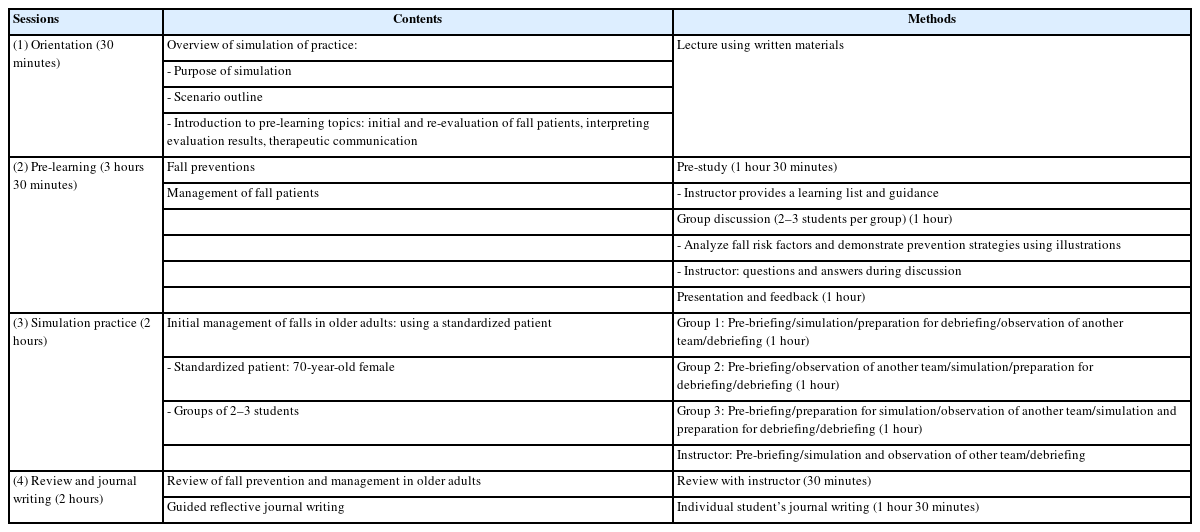
An eight-hour simulation-based education program was implemented during a geriatric clinical practicum. The program consisted of orientation, pre-learning activities, simulation practice, and a wrap-up session. Reflective journals from 53 third-year nursing students were analyzed using qualitative content analysis.
Results
Fifty-three third-year nursing students participated and submitted reflective journals. Three categories emerged from the analysis: “preparing for simulation-based practice,” which involved students setting care plans and employing observation; (2) “experiencing patient fall management through simulation-based practice,” where students actively engaged in realistic fall management scenarios; and (3) “critical reflection after simulation-based practice,” encompassing students’ acquisition of new insights and their personal growth. In the first category, students prepared for patient encounters by developing care plans and conducting observations. The second category highlighted realistic fall management scenarios utilizing standardized patients. The third category focused on personal growth through critical reflection. In the 53 reflective journals (185,021 words), level 3 reflections accounted for 31.6% of the content, while level 5, the highest reflection level, comprised only 8.6%.
Conclusion
Post-simulation reflective journaling stimulated critical thinking and self-assessment, enabling nursing students to analyze and reflect deeply on clinical practices. This process reinforced their knowledge base and behavioral foundations essential for clinical practice.

Citations

Citations to this article as recorded by  
  • Effectiveness of a high-fidelity simulation program based on flipped learning for nurses’ emergency management of seizures: a mixed-methods design
    Jae-Kyun Ju, Okja Choi, Shinhye Ahn, Hye Won Jeong
    BMC Nursing.2025;[Epub]     CrossRef
  • Effect of structured community-based older people education program on empathy, emotional intelligence, and caring behavior among nursing students
    Jing Ma, PingLei Chui, Mei Chan Chong, Jingru Yuan, Yongyan Zhu, Luyao Liu, Zhenqing Sun
    Frontiers in Medicine.2025;[Epub]     CrossRef
  • 4,319 View
  • 94 Download
  • 2 Crossref
Development of a Pressure Injury Machine Learning Prediction Model and Integration into Clinical Practice: A Prediction Model Development and Validation Study
Ju Hee Lee, Jae Yong Yu, So Yun Shim, Kyung Mi Yeom, Hyun A Ha, Se Yong Jekal, Ki Tae Moon, Joo Hee Park, Sook Hyun Park, Jeong Hee Hong, Mi Ra Song, Won Chul Cha
Korean J Adult Nurs 2024;36(3):191-202.   Published online August 31, 2024
DOI: https://doi.org/10.7475/kjan.2024.36.3.191
Purpose
The purposes of this study were to develop a prediction model for pressure injury using a machine learning algorithm and to integrate it into clinical practice.
Methods
This was a retrospective study of tertiary hospitals in Seoul, Korea. It analyzed patients in 12 departments where many pressure injuries occurred, including 8 general wards and 4 intensive care units from January 2018 to May 2022. In total, 182 variables were included in the model development. A pressure injury prediction model was developed using the gradient boosting algorithm, logistic regression, and decision tree methods, and it was compared to the Braden scale.
Results
Among the 1,389,660 general ward cases, there were 451 cases of pressure injuries, and among 139,897 intensive care unit cases, there were 297 cases of pressure injuries. Among the tested prediction models, the gradient boosting algorithm showed the highest predictive performance. The area under the receiver operating characteristic curve of the gradient boosting algorithm's pressure injury prediction model in the general ward and intensive care unit was 0.86 (95% confidence interval, 0.83~0.89) and 0.83 (95% confidence interval, 0.79~0.87), respectively. This model was integrated into the electronic health record system to show each patient's probability for pressure injury occurrence, and the risk factors calculated every hour.
Conclusion
The prediction model developed using the gradient boosting algorithm exhibited higher performance than the Braden scale. A clinical decision support system that automatically assesses pressure injury risk allows nurses to focus on patients at high risk for pressure injuries without increasing their workload.

Citations

Citations to this article as recorded by  
  • Machine Learning Applications in Nursing-Affiliated Research: A Systematic Review
    Eun Joo Kim, Seong Kwang Kim
    Korean Journal of Adult Nursing.2025; 37(3): 189.     CrossRef
  • Data Analytics and Administrative Decision‐Making in Nursing Management: A Systematic Review
    Nathidathip Darach, Min Su Kim, Wasinee Wisesrith, Eileen G. Collins, Majd Mrayyan
    Journal of Nursing Management.2025;[Epub]     CrossRef
  • 3,333 View
  • 85 Download
  • 2 Crossref
  • 0 Scopus
Purpose
This study investigated differences in inner strength, multiple identities, and quality of life among colorectal cancer survivors, considering gender and the presence of an ostomy. It also focused on identifying factors that influenced their quality of life.
Methods
In this cross-sectional study, 170 colorectal cancer survivors were recruited. Inner strength, multiple identities, and quality of life were assessed through an online survey. Within each subgroup, comparisons were made in two ways: (a) between women and men; and (b) between ostomy and non-ostomy groups.
Results
The quality of life for colorectal cancer survivors was higher among men than women. For inner strength, men reported higher levels of anguish and searching, whereas women showed higher levels of connectedness. The quality of life was higher in the non-ostomy group than the ostomy group. However, the non-ostomy group had a higher level of anguish and searching than the ostomy group. Inner strength emerged as the most powerful factor influencing quality of life after adjusting for age and gender.
Conclusion
This study emphasizes the significance of inner strength in colorectal cancer survivors. It provides a deeper understanding of quality of life in colorectal cancer survivors by examining factors that influence it and considering how these effects differ based on gender and the presence of an ostomy. To improve the quality of life of colorectal cancer survivors, it is essential to comprehend the roles of factors such as gender and ostomy and develop individualized interventions tailored to their specific characteristics.

Citations

Citations to this article as recorded by  
  • The Role of Inner Strength in Korean Colorectal Cancer Survivors on the Journey from Treatment to New Normal: A Qualitative Study
    Hannah Yu, Eunjung Ryu
    Korean Journal of Adult Nursing.2025; 37(3): 332.     CrossRef
  • Cultural Adaptation of a Web-Based Ostomy Care Intervention for Hispanic Cancer Patients and Caregivers: A Mixed Methods Study (Preprint)
    Xiaomeng Wang, Lixin Song, Amy Vondenberger, Fei Yu, Jia Liu, Roxana Delgado, Robert Svatek,  Natalia Villegas Rodriguez, Lurheinna Rosado Rivera, Mark Bonnen
    JMIR Cancer.2024;[Epub]     CrossRef
  • 1,111 View
  • 21 Download
  • 2 Crossref
The Impact of Physical Performance and Fear of Falling on Fall Risk in Hemodialysis Patients: A Cross-Sectional Study
Jiwon Choi, Sun-Kyung Hwang
Korean J Adult Nurs 2024;36(1):63-73.   Published online February 29, 2024
DOI: https://doi.org/10.7475/kjan.2024.36.1.63
Purpose
This study aimed to investigate the impact of physical performance and fear of falling on fall risk in patients with End-Stage Renal Disease (ESRD) undergoing hemodialysis. Methods: This study included 132 patients who regularly received hemodialysis treatment at outpatient clinics in B City from January to April 2022. Data were collected on demographic and clinical characteristics, physical performance (the Short Physical Performance Battery [SPPB]), fear of falling (the Korean Falls Efficacy Scale-International [KFES-I]), and fall risk (the Morse Fall Scale [MFS]). The collected data were analyzed using hierarchical multiple regression in the SPSS/WIN 25.0 program. Results: Thirty-eight patients (28.8%) had experienced accidental falls in the past year, with an average of 1.68 falls per patient. The average SPPB score was 7.89±3.55 (range, 0 to 12), the KFES-I score was 23.18±9.36 (range, 16 to 64), and the MFS score was 45.68±19.52 (range, 0 to 125). Fall risk showed a significant negative correlation with physical function (r=-.72, p<.001) and a significant positive correlation with fear of falling (r=.65, p<.001). Factors affecting the patients' fall risk included the level of serum intact parathyroid hormone (β=.15, p=.004), fear of falling (β=.24, p=.010), number of falls (β=.34, p<.001), and physical performance (β=-.41, p<.001). The regression model was statistically significant (F=22.71, p<.001), with an explanatory power of 64.9%. Conclusion: To prevent accidental falls in ESRD patients undergoing hemodialysis treatment, it is necessary to develop and apply interventions that can enhance physical performance and reduce the fear of falling.

Citations

Citations to this article as recorded by  
  • Fear of Falling among Elderly Individuals with Various Medical Conditions
    T.K. Konovalchik
    Clinical Psychology and Special Education.2025; 13(4): 76.     CrossRef
  • Latent profiles of falls self-awareness and associated factors in older maintenance hemodialysis patients
    Jun Xu, Suping Guo, Xintao Yu, Xiaojing Ji
    Scientific Reports.2025;[Epub]     CrossRef
  • 1,527 View
  • 20 Download
  • 2 Crossref
  • 1 Scopus

Invited Article

Purpose
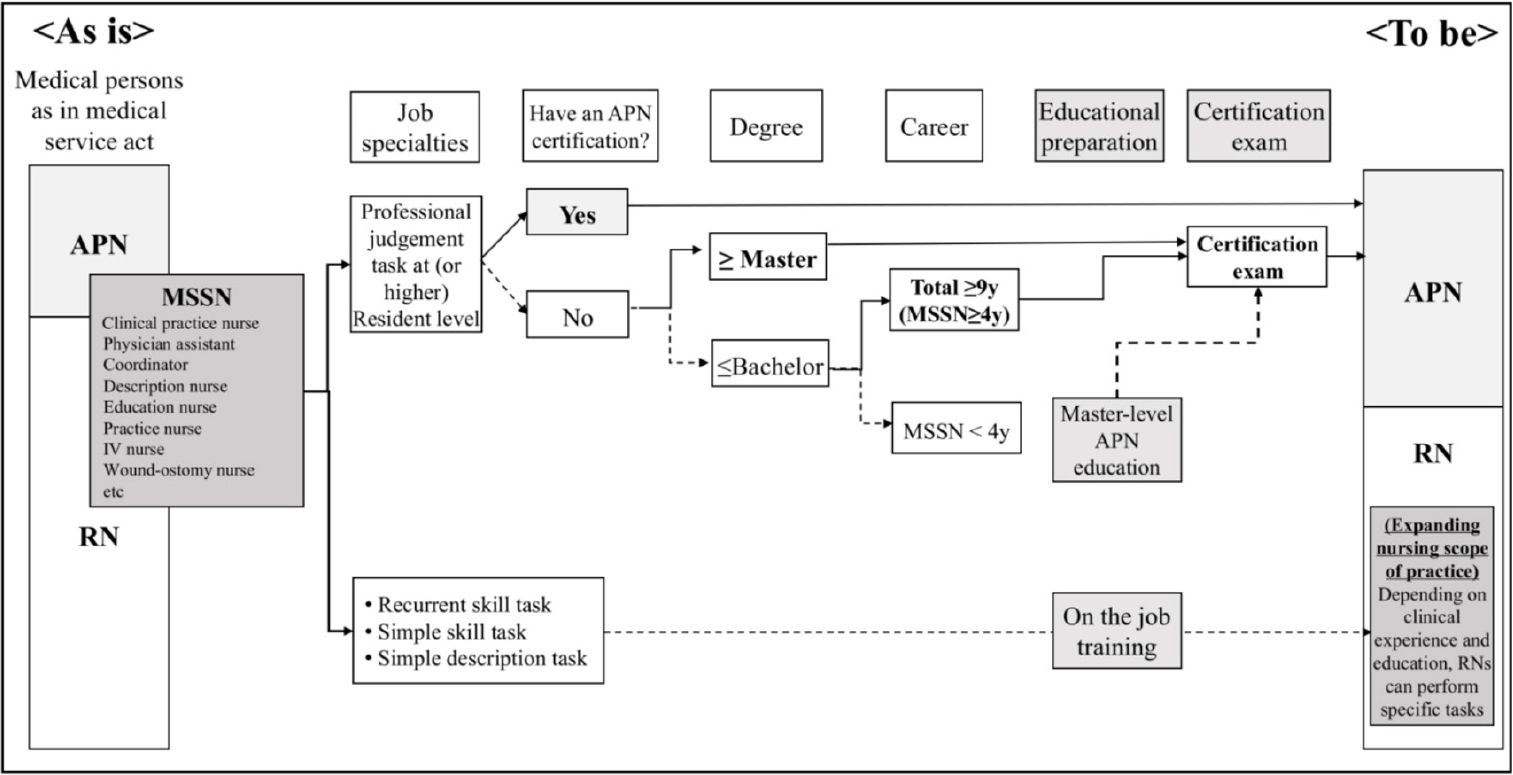
This study aimed to suggest directions for legislation regarding medical support tasks in the Nursing Act to promote the advancement of nursing.
Methods
This study reviewed the history of medical support nurses in South Korea and the educational programs for advanced practice providers, both domestically and internationally.
Results
Nurses have performed medical support tasks traditionally carried out by physicians, but legal controversies have persisted. As a result of the escalation of conflicts surrounding policies aiming to increase the physician workforce, training doctors left hospitals. This prompted the initiation of pilot programs allowing nurses to legally engage in medical support tasks, culminating in the enactment of the Nursing Act in September 2024. Internationally, advanced practice providers such as advanced practice nurses (APNs) and physician assistants (PAs) undergo graduate-level education and certification. Since Korea lacks a PA system, integrating medical support tasks within the APN framework would be preferable. Achieving this will require absorbing clinical practice nurses (referred to as PA nurses) into the APN system, implementing government-supported education programs to address regional disparities, and establishing reimbursement policies for APNs.
Conclusion
With the implementation of the Nursing Act, a long-term approach is needed to establish professional qualifications, accreditation, education, training, examination, and regulatory systems. A comprehensive discussion should be undertaken to develop an optimal workforce, ensuring the delivery of safe and high-quality healthcare services to patients and the public.

Citations

Citations to this article as recorded by  
  • Lessons from the US Advanced Practice Registered Nurse system
    Eun-Ok Im, Dongmi Kim
    Journal of Korean Academy of Nursing.2025; 55(4): 492.     CrossRef
  • 9,759 View
  • 153 Download
  • 1 Crossref

Original Articles

Purpose
Over 10% of intensive care unit (ICU) patients die; however, research aimed at assessing and improving the quality of their deaths remains scarce. This study investigated the impact of communication among healthcare professionals and person-centered care provided by ICU nurses on the quality of dying and death (QODD) experienced by ICU patients.
Methods
We measured general characteristics of ICU nurses, interprofessional communication, and person-centered care, and identified their impact on the quality of death for patients who died in the ICU. Participants consisted of 103 ICU nurses employed at two tertiary hospitals in South Korea. Data were collected between January and May 2023. Descriptive statistics, the t-test, analysis of variance, the Mann-Whitney U test, Pearson correlation coefficients, and multiple linear regression analyses were conducted using SPSS version 23.0.
Results
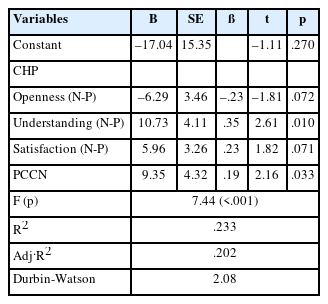
The mean QODD score was 44.73±21.26. QODD was positively correlated with openness (nurse-physician), understanding (nurse-physician), satisfaction (nurse-physician), and person-centered care. Factors significantly influencing QODD included nurse-physician communication, specifically understanding (β=.35, p=.010), and person-centered care (β=.19, p=.033), explaining 20.2% of the total variance (F=7.44, p<.001).
Conclusion
Improved communication among healthcare professionals and enhanced person-centered care are essential for improving the QODD for ICU patients. To achieve this, educational initiatives focusing on end-of-life care and communication training programs for healthcare professionals should be implemented.

Citations

Citations to this article as recorded by  
  • Intensive care nurses’ perceptions of good death and end-of-life care attitudes and behaviors: a descriptive and correlational quantitative study
    Rumeysa Bayram, Belkız Kiziltan
    BMC Palliative Care.2025;[Epub]     CrossRef
  • 3,547 View
  • 65 Download
  • 1 Crossref
Exploring the Facilitators and Barriers of Rapid Response Teams in Korea: A Qualitative Study from the Nursing Perspective
Sun-Hee Moon, Hyeonjin Jeong, Daun Jeong
Korean J Adult Nurs 2025;37(1):1-12.   Published online February 28, 2025
DOI: https://doi.org/10.7475/kjan.2025.37.1.1
Purpose
This study aimed to explore the roles, facilitators, barriers, and future directions of rapid response teams (RRTs) in Korean hospitals from the perspectives of both RRT and ward nurses.
Methods
Focus group interviews were conducted with 10 RRT nurses and 10 ward nurses across three hospitals that employed RRTs in Korea from August 2021 to February 2022. The interviews were recorded, transcribed, and analyzed using qualitative content analysis to identify themes relevant to RRT operations.
Results
The analysis yielded 10 subtopics and 4 main themes: the exploration of RRT's essential roles, the facilitators and barriers impacting RRT operations, and the construction of a blueprint for future systems. Notable barriers included unclear job assignments without legal safeguards, conflict arising from hierarchical structures, and insufficient organizational support. The following facilitators were identified: transformed perceptions through collaborative efforts, organizational recognition and support, and self-reinforcement by demonstrating expertise.
Conclusion
This study highlights the challenges and opportunities associated with implementing RRTs in Korean hospitals, including the need for clear role definitions, effective interprofessional collaboration, and organizational support. Based on these findings, future efforts should focus on establishing legal frameworks that define the scope of practice for RRT nurses.

Citations

Citations to this article as recorded by  
  • Enhancing postoperative recovery with multimodal prehabilitation: the journey begins before surgery
    Ah-Reum Cho, Wariya Vongchaiudomchoke, Detlef Balde, Do Jun Kim, Francesco Carli
    Korean Journal of Anesthesiology.2025; 78(5): 401.     CrossRef
  • 4,113 View
  • 81 Download
  • 1 Crossref
  • 0 Scopus
Purpose
Middle-aged women often experience weight gain, particularly as visceral fat, due to hormonal changes associated with menopause. Visceral fat, which accumulates in the abdomen, poses significant risks to cardiometabolic health. This cross-sectional study aimed to compare the cardiometabolic risks associated with Visceral Fat Obesity (VFO) and Subcutaneous Fat Obesity (SFO) in middle-aged Korean women and to identify factors that influence VFO.
Methods
Women aged 40 to 64 with overweight or obesity were recruited from March to April 2019. The study involved anthropometric measurements, fasting blood tests, and low-volume abdominal computed tomography. Additionally, participants provided self-reported sociodemographic, health-related, and lifestyle information, including Physical Activity (PA) and dietary intake.
Results
Of all participants, 70.8% were post-menopausal, and 55.1% had VFO. Those with VFO exhibited significantly higher mean values for waist circumference, total cholesterol, low-density lipoprotein cholesterol, triglycerides, fasting glucose, high sensitivity C-reactive protein, and the Framingham risk score compared to those with SFO. The factors influencing VFO were age (odds ratio (OR)=1.14; 95% confidence interval (CI), 1.032~1.247), body mass index (OR=1.47; 95% CI, 1.151 ~1.875), days of vigorous PA per week (OR=0.42; 95% CI, 0.244~0.735), and intake of animal calcium (OR=0.99; 95% CI, 0.988~0.997).
Conclusion
The findings indicate that middle-aged women with VFO face increased cardiometabolic risks. Since menopause is inevitable in women, targeting modifiable behaviors to reduce weight, particularly visceral fat, is crucial for lowering cardiometabolic risk.

Citations

Citations to this article as recorded by  
  • Literature Review on the Effects of Functional Food Ingredients for Blood Glucose and Body Fat Reduction on Glycemic Control in Insulin Resistance and Diabetes
    Nohyeon Kim, Minhee Lee, Yoo Kyung Park, Jeongmin Lee
    Journal of the Korean Society of Food Science and Nutrition.2025; 54(10): 805.     CrossRef
  • 4,253 View
  • 39 Download
  • 1 Crossref
  • 0 Scopus
Review Articles
The Effects of Aromatherapy on Stroke Symptoms in Stroke Patients: A Systematic Review and Meta-Analysis
A Reum Lim, Hyun Kyoung Kim
Korean J Adult Nurs 2024;36(2):85-101.   Published online May 31, 2024
DOI: https://doi.org/10.7475/kjan.2024.36.2.85
Purpose
This systematic review and meta-analysis aimed to investigate the effects of aromatherapy interventions on stroke symptoms in stroke patients.
Methods
This study adhered to the Preferred Reporting Items of Systematic Reviews and Meta-Analysis guidelines. Relevant studies published between 2004 and 2022 were searched in the PubMed, CINAHL, Cochrane Library, EMBASE, ERIC, and RISS databases. The review included randomized and non-randomized studies of stroke patients who received aromatherapy interventions targeting stroke symptoms. The extracted literature was evaluated via the ROB 2 and ROBINS-1 quality appraisal checklists and visualized using a risk-of-bias visualization tool.
Results
The review included five randomized controlled trials and five quasi-experimental studies. The results showed that aromatherapy, administered through massage, inhalation, acupressure, mouth care, and olfactory stimulation, was effective in alleviating pain, constipation, oral health, motor power, muscle strength, balance, fatigue, and sleep quality. Aromatherapy also demonstrated beneficial effects in reducing depression, stress, delirium, blood pressure, pulse rate, respiration rate, serum cortisol, and antioxidants, while enhancing happiness, body temperature, and quality of life. A meta-analysis of mean differences in post-test results revealed that three studies reported a significant effect on pain, with an effect size of 1.85 (95% CI, 0.18~3.51).
Conclusion
Aromatherapy had positive effects on physical, physiological, psychological, cognitive, and integrative health outcomes. We recommend the use of aromatherapy in stroke patients to improve pain relief and health outcomes.

Citations

Citations to this article as recorded by  
  • Traditional, complementary, and integrative medicine in the management of ischemic stroke: a narrative review
    S. Sowmiya, Rukaiah Fatma Begum, L. S. Dhivya, Praveen Rajendran, N. Harikrishnan, Ankul Singh S
    Frontiers in Pharmacology.2025;[Epub]     CrossRef
  • 4,730 View
  • 90 Download
  • 1 Crossref
  • 0 Scopus
The Application of Theories in Research on Advance Care Planning (2010~2022): A Scoping Review
Jeongwon Shin, Sujin Lim, Hwain Kim, Kyunghee Lee, Heejung Jeon
Korean J Adult Nurs 2024;36(1):1-14.   Published online February 29, 2024
DOI: https://doi.org/10.7475/kjan.2024.36.1.1
Purpose
This scoping review aimed to identify the current state of the application of theories in research related to advance care planning and to analyze the types and characteristics of the theories applied. Methods: Using the scoping review methodology presented by Arksey & O'Malley, the articles published from 2010 to 2022 were searched by combining the terms "advance care planning," "theory," and "model" in five electronic databases; PubMed, CINAHL, EMBASE, KMBASE, and KISS. Results: Thirty-two studies were identified. Theory-based research has been actively conducted since 2019, with a total of 25 theories applied. Psychological theories were the most prevalent, accounting for 75.0% of the applications, followed by sociological theories (12.5%), public health theories (6.3%), and one nursing theory (3.1%). Theories were utilized to create a framework for data analysis, establish a philosophical underpinning, develop intervention frameworks, and derive new tools. Conclusion: Various theories have been applied to research on advance care planning, yet the application of nursing theory has been limited. To optimize end-of-life care and advance care planning from a nursing perspective, further research incorporating nursing theory is essential.

Citations

Citations to this article as recorded by  
  • Nurses’ high valuation of palliative care versus patient and family misconceptions: A mixed-approach study of Advanced Care Planning implementation in China
    Chenyan Liang, Suzhen Lv, Jia Song, Leiwen Tang, César Leal-Costa
    PLOS One.2025; 20(10): e0333739.     CrossRef
  • 2,322 View
  • 44 Download
  • 1 Crossref
  • 0 Scopus
TOP