• KSAN
  • Contact us
  • E-Submission
ABOUT
BROWSE ARTICLES
EDITORIAL POLICY
FOR CONTRIBUTORS

Page Path

  • HOME
  • Browse articles
  • Article type
1,782
results for

Article type

Filter

Article category

Keywords

Publication year

Authors

Funded articles

Article type

Original Articles

Purpose
Stage 3 chronic kidney disease (CKD) is highly prevalent and often progresses to end-stage renal disease without effective self-management. This study examined the effects of an Individual and Family Self-Management Program delivered via a mobile communication application on self-management behaviors and clinical outcomes among patients with stage 3 CKD.
Methods
A 12-week quasi-experimental study with a pretest-posttest control group design was conducted among 50 patients with stage 3 CKD at a tertiary hospital in Thailand, between January and May 2024. The intervention group received a self-management program grounded in Individual and Family Self-Management Theory and delivered via the LINE chatbot. The program included educational content, self-regulation strategies, and structured family support, while the control group received usual care. Outcomes included self-management behaviors, estimated glomerular filtration rate (eGFR), systolic blood pressure (SBP), diastolic blood pressure (DBP), and hemoglobin A1c (HbA1c). Analysis of covariance was used to adjust for baseline differences.
Results
After adjustment for baseline values, the intervention group showed significantly greater improvements in self-management behaviors (F=7.92, p<.05) and eGFR (F=52.92, p<.001) compared with the control group. Significant reductions were also observed in SBP (F=26.84, p<.001), DBP (F=12.61, p<.05), and HbA1c levels (F=7.74, p<.05).
Conclusion
A mobile-based Individual and Family Self-Management Program effectively improved self-management behaviors and key clinical outcomes among patients with stage 3 CKD, supporting the integration of family engagement and digital technology in chronic disease care.
  • 94 View
  • 6 Download
Purpose
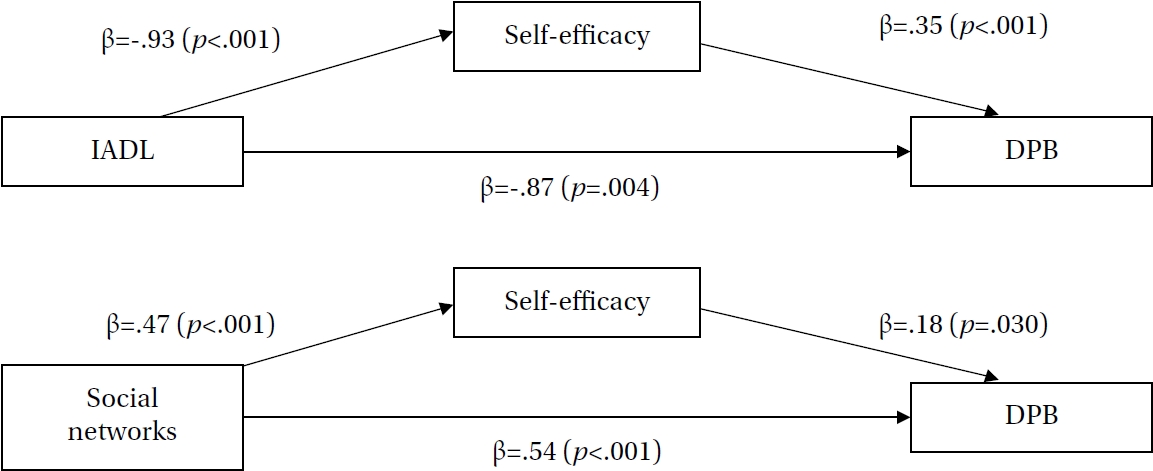
While capability and opportunity factors in dementia prevention have been extensively studied, the motivational mechanisms that translate these resources into behavior remain relatively underexplored. This study examined the mediating effect of self-efficacy on the relationships between instrumental activities of daily living (IADL), social networks, and dementia-prevention behaviors among community-dwelling older adults, guided by the capability, opportunity, motivation-behavior (COM-B) theoretical framework.
Methods
A cross-sectional study was conducted with 205 community-dwelling adults aged 65 years and older residing in Gyeongsangnam Province, South Korea. Data were collected between July and September 2024 using validated instruments, including the Korean Instrumental Activities of Daily Living, Social Network Measurement Scale, General Self-Efficacy Scale, and Korean Health Behavior for Dementia Prevention Scale. Mediation analysis was performed using Hayes’ PROCESS macro (model 4) with bootstrap resampling (5,000 iterations) to estimate indirect effects, while controlling for demographic and health-related covariates.
Results
Self-efficacy significantly mediated both the IADL–dementia-prevention behavior relationship (indirect effect, −0.33; 95% confidence interval [CI], −0.61 to −0.12) and the social network– dementia-prevention behavior relationship (indirect effect, 0.08; 95% CI, 0.002 to 0.19). The mediation models explained 40.7% and 48.5% of the variance in dementia-prevention behaviors, respectively. Bootstrap CIs confirmed significant partial mediation effects in both pathways.
Conclusion
These findings provide empirical support for the COM-B model’s theoretical proposition that motivation serves as a critical bridge linking capability and opportunity factors to actual behavior. Nursing interventions should therefore integrate self-efficacy–enhancement strategies alongside traditional capability-building and opportunity-provision approaches to maximize the effectiveness of dementia-prevention programs for older adults.
  • 92 View
  • 4 Download
Perceived Threat of the Risk for Graft Rejection and Its Related Factors in Kidney Transplant Recipients: A Cross- Sectional Study
Seolhwa Baek, Sung Reul Kim, Kyounghae Kim, Yusun Park
Korean J Adult Nurs 2026;38(1):81-93.   Published online February 19, 2026
DOI: https://doi.org/10.7475/kjan.2025.0930
Purpose
Concern about graft rejection is a major issue among kidney transplant recipients. However, integrated studies that examine diverse factors influencing the perceived threat of the risk of graft rejection (PTGR) remain rare. This study explored levels of PTGR and the factors associated with PTGR in kidney transplant recipients.
Methods
A cross-sectional study was conducted with 194 kidney transplant recipients recruited from a tertiary hospital in South Korea. The PTGR scale assesses graft-related threat, intrusive anxiety, and lack of control, and was administered alongside measures of transplant-related symptoms, anxiety, depression, social support, and self-efficacy.
Results
Approximately 70.1% of participants reported strong graft-related threat beliefs, 57.2% experienced high intrusive anxiety, and 46.9% reported a low sense of control related to PTGR. Demographic factors (age, gender, education level, and kidney donor), clinical factors (transplant complications, posttransplant duration, and symptoms), and psychosocial factors (anxiety, depression, and social support) were associated with PTGR. Women, higher education levels, longer posttransplant duration, and donor relationship predicted graft-related threat, whereas anxiety and donor relationship predicted intrusive anxiety.
Conclusion
Many kidney transplant recipients experience high levels of PTGR, which are associated with demographic, clinical, and psychosocial factors. Healthcare providers should consider these factors when assessing PTGR and incorporate them into targeted interventions to support kidney transplant recipients.
  • 141 View
  • 7 Download
Determining the Optimal Cut-off Score on the Pressure Ulcer Scale for Healing: A Retrospective Study
Juhee Lee, Sookhyun Park, Jeonghee Hong
Korean J Adult Nurs 2026;38(1):74-80.   Published online February 13, 2026
DOI: https://doi.org/10.7475/kjan.2025.0904
Purpose
This study aimed to identify a clinically meaningful cut-off score on the Pressure Ulcer Scale for Healing tool for objectively determining healing in adult inpatients with pressure injury.
Methods
A retrospective analysis was conducted using electronic health records from adult inpatients at a tertiary hospital in South Korea. Pressure Ulcer Scale for Healing scores were calculated based on wound size, exudate amount, and tissue type. Receiver operating characteristic curve analyses were performed, and optimal cut-off scores were identified using the Youden Index. Stratified analyses by pressure injury stage were also conducted to evaluate predictive performance.
Results
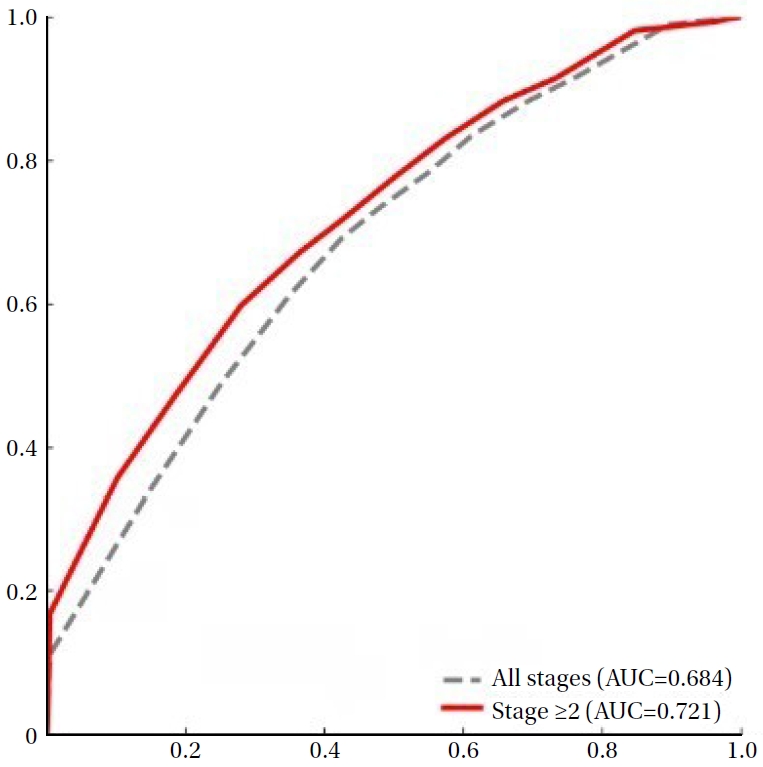
A total of 20,476 pressure injuries were analyzed, of which 5,873 were classified as healed. Although all stages were initially included, stage 1 pressure injuries demonstrated limited discriminative ability (area under the curve=0.612) and were therefore excluded from cut-off derivation. For stage 2 or higher pressure injuries, the optimal cut-off score was 3.5, yielding an area under the curve of 0.721, with a sensitivity of 59.8% and a specificity of 72.0%.
Conclusion
The identified threshold for stage 2 or higher pressure injuries demonstrated meaningful discriminative ability for determining wound healing status. Application of this criterion may support more objective and consistent clinical decision-making when using the Pressure Ulcer Scale for Healing in nursing practice.
  • 108 View
  • 5 Download
Purpose
This study aimed to examine the effects of a post-discharge tailored telephone (TATE) follow-up program for patients with low health literacy (LHL) who had undergone percutaneous coronary intervention.
Methods
This pilot study employed a non-equivalent control group pretest–posttest design to evaluate the preliminary effects of a TATE follow-up program at a university hospital in Seoul. Data were collected from July 2020 to September 2021. A total of 51 patients were recruited, and 46 completed the study. Patients were divided into three groups: an intervention group with LHL, a control group with LHL, and a control group with high health literacy. The intervention group received two 15-minute phone calls as part of the TATE follow-up program.
Results
The TATE follow-up program significantly improved disease- related knowledge in the intervention group compared with the control groups (p=.001). The intervention group also reported significantly higher satisfaction with nursing services than the other two groups (p=.006). However, there were no significant differences in changes in health behavior adherence among the groups, although the intervention group with LHL showed the greatest increase of 17.5 points after the intervention.
Conclusion
This pilot study demonstrated that the TATE follow-up program was effective and feasible for improving disease-related knowledge and satisfaction with nursing services among patients with LHL. These findings highlight the importance of tailored transitional care interventions to support cardiovascular disease management and secondary prevention.
  • 227 View
  • 11 Download
Purpose
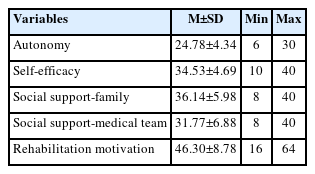
This study investigated the relationships of autonomy, self-efficacy, and social support with rehabilitation motivation in patients who had undergone acute stroke management. Methods: A cross-sectional descriptive correlational study was conducted at a tertiary university hospital in Suwon, South Korea. Data were collected from June 1, 2023, to June 1, 2024, using structured self-reported questionnaires administered to patients scheduled for discharge after their first-ever acute stroke management. A total of 231 patients diagnosed with stroke participated in the study. Hierarchical multiple regression analysis was performed to identify predictors of rehabilitation motivation. Results: Positive bivariate relationships were observed between autonomy (r=.26, p<.001), self-efficacy (r=.26, p<.001), social support from family (r=.22, p<.001), social support from medical teams (r=.26, p<.001), and rehabilitation motivation. In the hierarchical multiple regression analyses, patients with paralysis (β=−.21, p=.001), higher autonomy (β=.19, p=.003), and higher social support from the medical team (β=.22, p<.001) demonstrated higher rehabilitation motivation. Conclusion: Based on these findings, nursing interventions and educational strategies that enhance patient autonomy and strengthen support from medical teams should be developed and implemented to improve rehabilitation motivation, engagement, and health outcomes in acute stroke care.
  • 351 View
  • 22 Download
Purpose
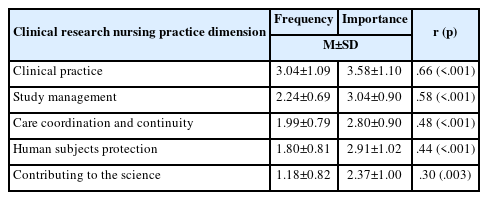
This study aimed to investigate the frequency and perceived importance of 52 clinical research nursing activities in Korea and to apply importance–performance analysis (IPA) to identify areas requiring improvement.
Methods
A descriptive survey was conducted among 96 clinical research nurses (CRNs) with ≥2 years of experience. Data were collected online in May 2022 using a questionnaire addressing 14 general characteristics and 52 clinical research nursing activities across five dimensions: clinical practice (CP), study management (SM), care coordination and continuity, human subjects protection, and contributing to the science (CS), as defined by the US National Institutes of Health (NIH). Frequency and importance were evaluated on a 6-point Likert scale. Analyses included descriptive statistics, Pearson correlation coefficients, the t-test, analysis of variance with Duncan post hoc tests, and IPA.
Results
The mean frequency and importance scores for the 52 activities were 2.02±1.27 and 2.91±1.24, respectively. CP activities were performed most often and rated as most important, whereas CS activities were performed least often and rated as least important. Higher education, certification, and professional association membership were associated with higher CS activity frequencies. IPA revealed strengths in CP and core SM activities, while regulatory reporting, data integrity assurance, and site audits were underperformed despite being highly important.
Conclusion
Korean CRNs play essential roles in CP and SM but require enhanced education, institutional support, and clearer role delineation in regulatory and quality-assurance activities. These findings provide evidence to guide CRN education, policy development, and the strengthening of professional identity among CRNs in Korea.
  • 188 View
  • 8 Download
Factors Influencing the Quality of Self-Care among Continuous Ambulatory Peritoneal Dialysis Patients in Central Java, Indonesia: A Cross-Sectional Study
Muhamad Syamsul Arif Setiyo Negoro, R Susanti, Yuni Wijayanti, Eram Tunggul Pawenang
Korean J Adult Nurs 2026;38(1):24-35.   Published online February 6, 2026
DOI: https://doi.org/10.7475/kjan.2025.0616
Purpose
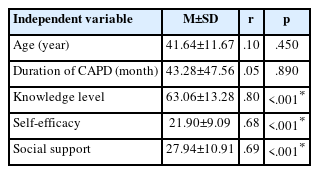
This study examined the associations between sociodemographic characteristics, knowledge, self-efficacy, social support, comorbidities, and self-care quality among CAPD patients in Central Java, Indonesia.
Methods
This cross-sectional study included CAPD patients recruited from two tertiary referral hospitals in Central Java (Dr. Kariadi Hospital and Dr. Moewardi Hospital). Data were collected from April to May 2025, with a total sample of 72 patients. The study instruments comprised the Self-care Scale for Peritoneal Dialysis Patients, a knowledge questionnaire, the Duke-UNC Functional Social Support Questionnaire, and the General Self-Efficacy Scale. Data analysis was performed using the chi-square test, Spearman’s rank correlation, and univariate logistic regression.
Results
Univariate logistic regression analysis demonstrated that the presence of comorbidities was associated with significantly lower odds of good self-care quality (odds ratio [OR], 0.05; 95% confidence interval [CI], 0.01–0.18; p<.001). Higher levels of knowledge (OR, 1.45; 95% CI, 1.19–1.78; p<.001), self-efficacy (OR, 1.27; 95% CI, 1.14–1.42; p<.001), and social support (OR, 1.38; 95% CI, 1.16–1.64; p<.001) were significantly associated with better self-care quality. Sociodemographic factors showed no statistically significant associations with self-care quality (all p>.05).
Conclusion
Among CAPD patients in Central Java, higher levels of knowledge, self-efficacy, and social support were associated with better self-care quality, whereas the presence of comorbidities was associated with factors hindering optimal self-care. Sociodemographic variables did not demonstrate clear associations with self-care quality, which may be partly attributable to limited statistical power in this sample.
  • 136 View
  • 14 Download

Review Articles

The Effect of Non-pharmacological Exposures on Cardiovascular Outcomes in Patients with Metabolic Syndrome: A Systematic Review and Meta-Analysis
Haejung Lee, Dae Eun Lee, Misoon Lee, Sojeong Jo
Korean J Adult Nurs 2026;38(1):13-23.   Published online January 29, 2026
DOI: https://doi.org/10.7475/kjan.2025.0827_2
Purpose
Metabolic syndrome (MetS) patients have a higher risk of cardiovascular disease (CVD) incidence and mortality than those without MetS. The effects of non-pharmacological exposures may help improve the management of CVD. This study aimed to assess the long-term effects of non-pharmacological exposures on CVD in MetS patients through a meta- analysis of cohort and case-control studies.
Methods
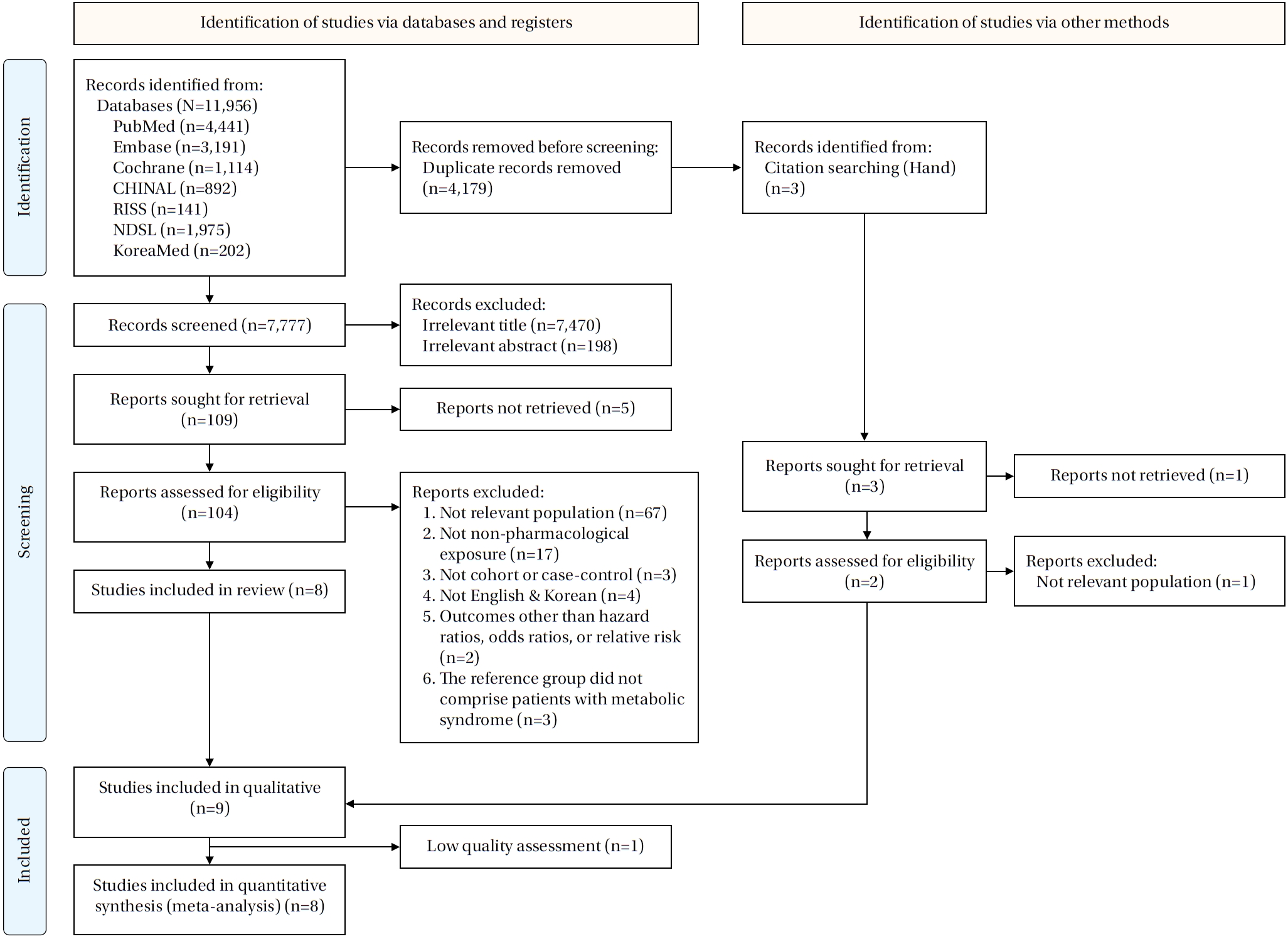
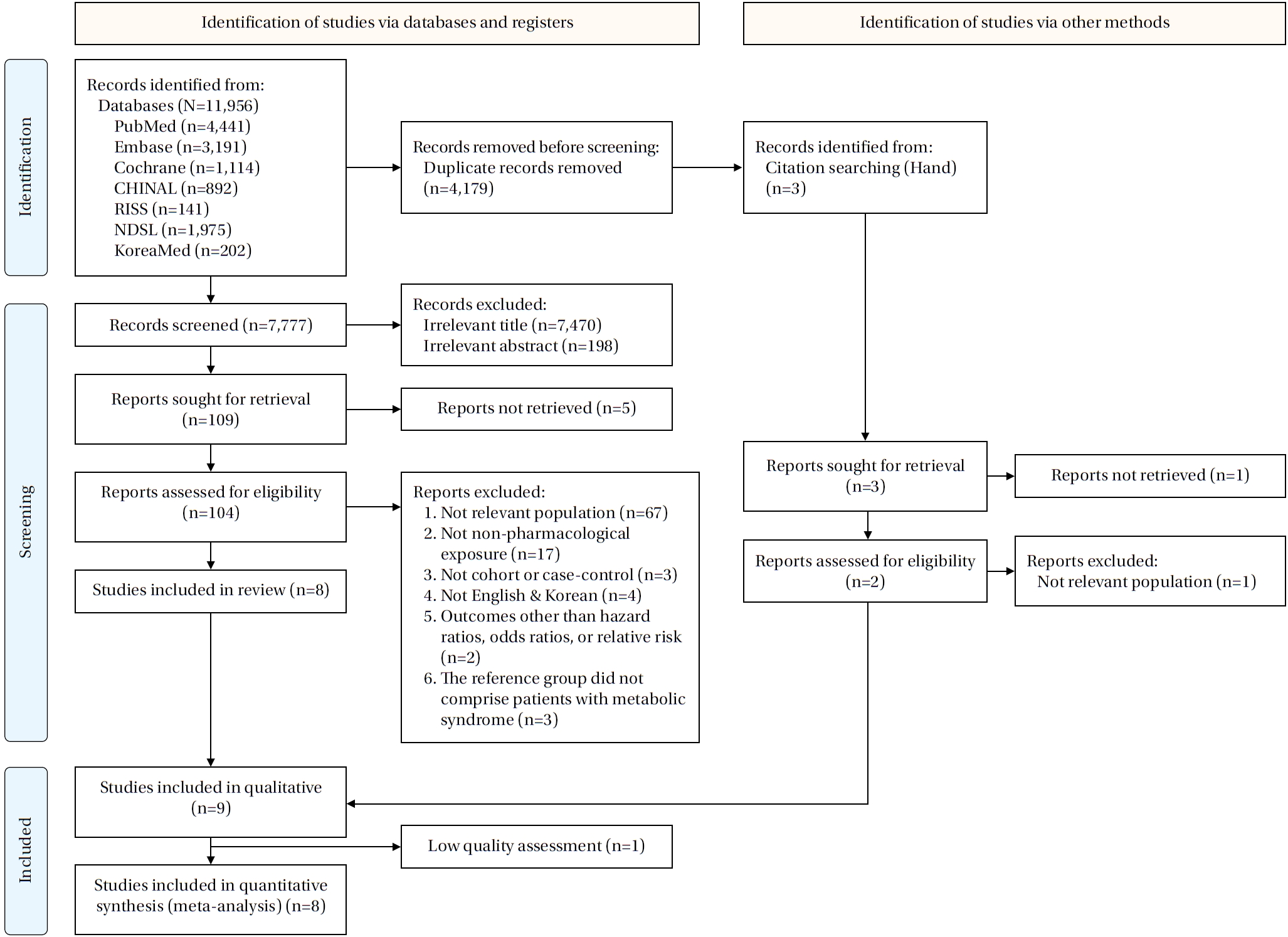
Searches were conducted in seven databases (PubMed, Embase, CINAHL, Cochrane, RISS, NDSL, and KoreaMed) between August 7, 2024 and December 1, 2024. The quality of the included studies was assessed using the Newcastle-Ottawa Scale. The meta-analysis was conducted using the RevMan 5.4 program and RStudio 2022.12.0. A total of nine studies were included in the systematic review, with eight studies analyzed in the meta-analysis (PROSPERO CRD42024584658).
Results
A total of nine studies were included in the systematic review, of which eight were eligible for meta-analysis to evaluate the effects of non-pharmacological exposures. Eight studies were included for meta-analysis to investigate the effect of non-pharmacological exposures. The quality of individual studies was rated “good” for eight studies and “poor” for one. Non-pharmacological exposures in MetS patients were effective in reducing CVD-related mortality (relative risk [RR]=0.81, 95% confidence interval [CI], 0.73–0.91) and all-cause mortality (RR=0.80, 95% CI, 0.75–0.85).
Conclusion
Interventions and education on non-pharmacological exposures in MetS patients are associated with reduced CVD. As evidence continues to emerge, future studies should explore the long-term effects of diet, smoking, and sleep by assessing their individual impacts on CVD outcomes in individuals with MetS.
  • 161 View
  • 9 Download
Utilizing Educational Technology for Formative Assessment in Nursing Education: A Scoping Review
Sujin Shin, Eunmin Hong, Minjae Lee, Miji Lee
Korean J Adult Nurs 2026;38(1):1-12.   Published online February 3, 2026
DOI: https://doi.org/10.7475/kjan.2025.0730
Purpose
This review presents a comprehensive overview of the utilization of educational technology for formative assessment in nursing education and proposes directions for its future application.
Methods
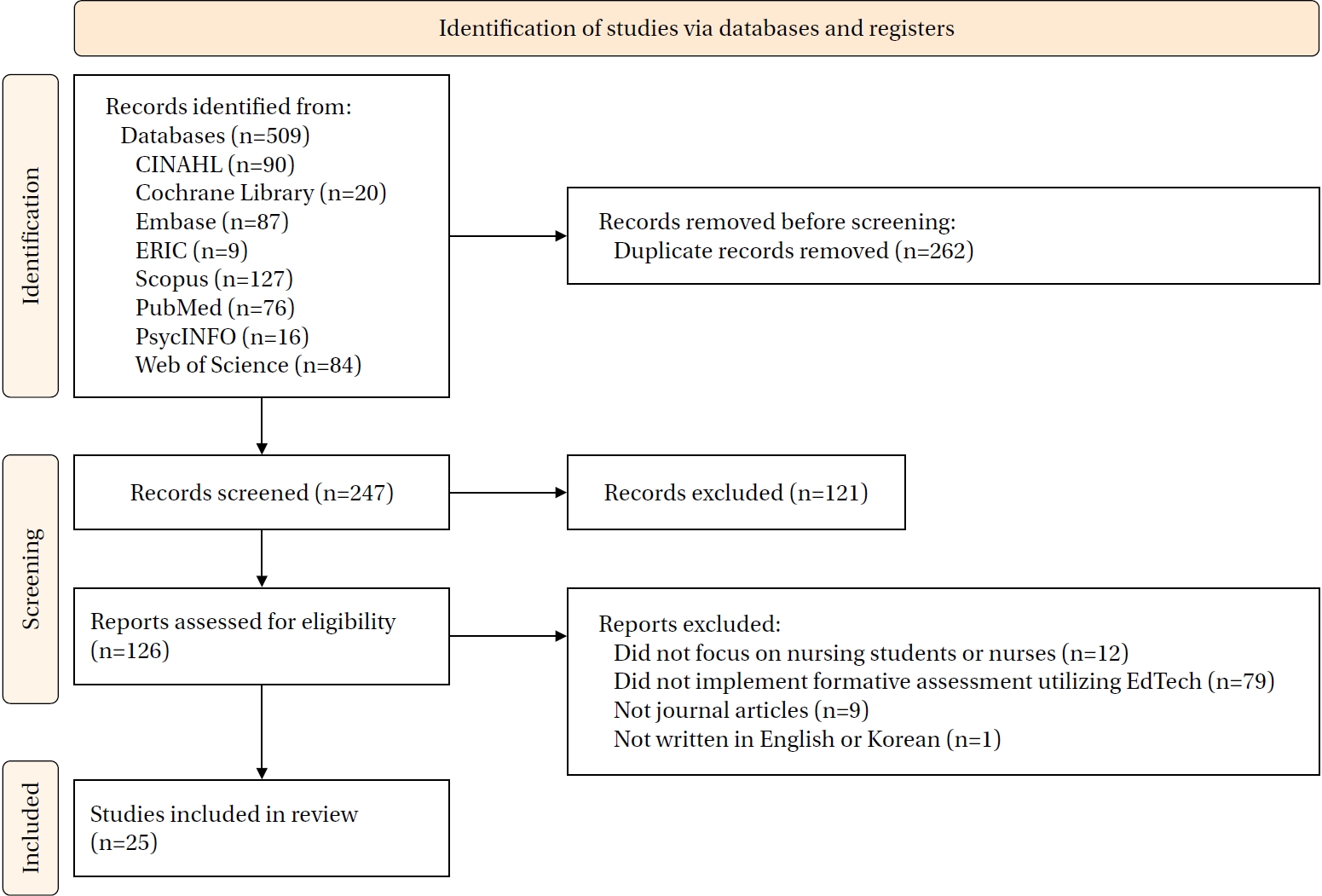
Arksey and O'Malley’s scoping review design was adopted. A total of 509 articles were retrieved in February 2025 from the Cumulative Index to Nursing and Allied Health Literature, the Cochrane Library, Embase, Education Resources Information Center, Scopus, PubMed, PsycINFO, and Web of Science databases.
Results
Twenty-five articles that conducted formative assessments utilizing educational technology among nursing students and nurses were analyzed. The analysis identified three key themes: educational technology, formative assessment, and educational feedback. Online platforms were the most frequently employed educational technology, while mobile applications have gained prominence since 2020. Formative assessment primarily evaluated knowledge in theoretical courses but has increasingly been used to evaluate skills in practicum settings since 2020. Immediate constructive feedback was provided by educators, peer learners, and non-human agents. Since 2020, feedback delivery has increasingly been automated through non-human agents, including artificial intelligence-based non-human agents.
Conclusion
This review, which focused on the implementation of educational technology-based formative assessment in nursing education, highlights the increasing adoption of non-human agents for delivering educational feedback in practicum courses. To strengthen educators’ competency in providing immediate and constructive educational feedback, sustained support from policymakers and educational institutions is required.
  • 178 View
  • 10 Download

Original Articles

Purpose
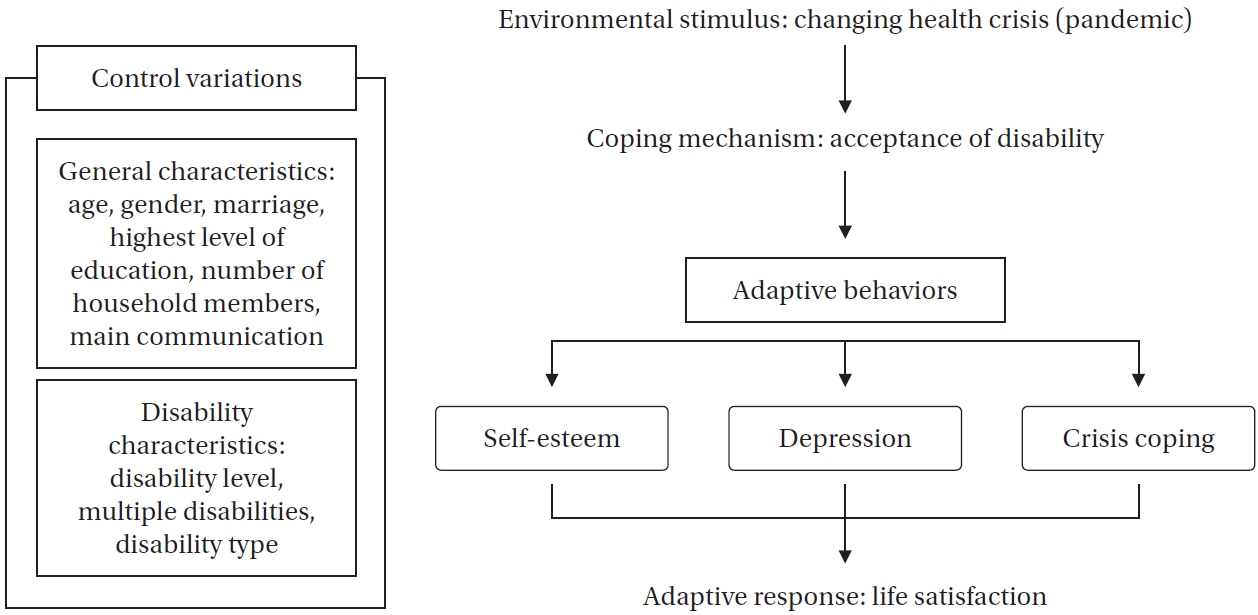
This study aimed to analyze the multiple mediating effects of self-esteem, depression, and crisis coping on the relationship between disability acceptance and life satisfaction among older adults with disabilities, comparing periods before and during the coronavirus disease 2019 pandemic. Methods: This study employed a longitudinal comparative design, using data from waves 1–5 of the Disability and Life Dynamics Panel. The sample was divided into pre-pandemic (2018–2019) and pandemic (2020–2022) periods. Roy’s adaptation model served as the theoretical framework. Multiple mediation effects were examined using the PROCESS macro (Model 6). Results: Both the direct and indirect effects of disability acceptance on life satisfaction were significant, indicating partial mediation. In the pre-pandemic period, approximately 60% of the total effect was attributable to the direct effect and 40% to the indirect effect. During the pandemic, the proportion shifted, with the direct effect decreasing to 49% and the total indirect effect increasing to 51%. Conclusion: In crisis situations such as a pandemic, self-esteem, depression, and crisis coping play crucial roles in improving life satisfaction among older adults with disabilities. These findings highlight the need for policy approaches that consider diverse socio-psychological factors to increase life satisfaction among older adults during pandemics.
  • 561 View
  • 24 Download
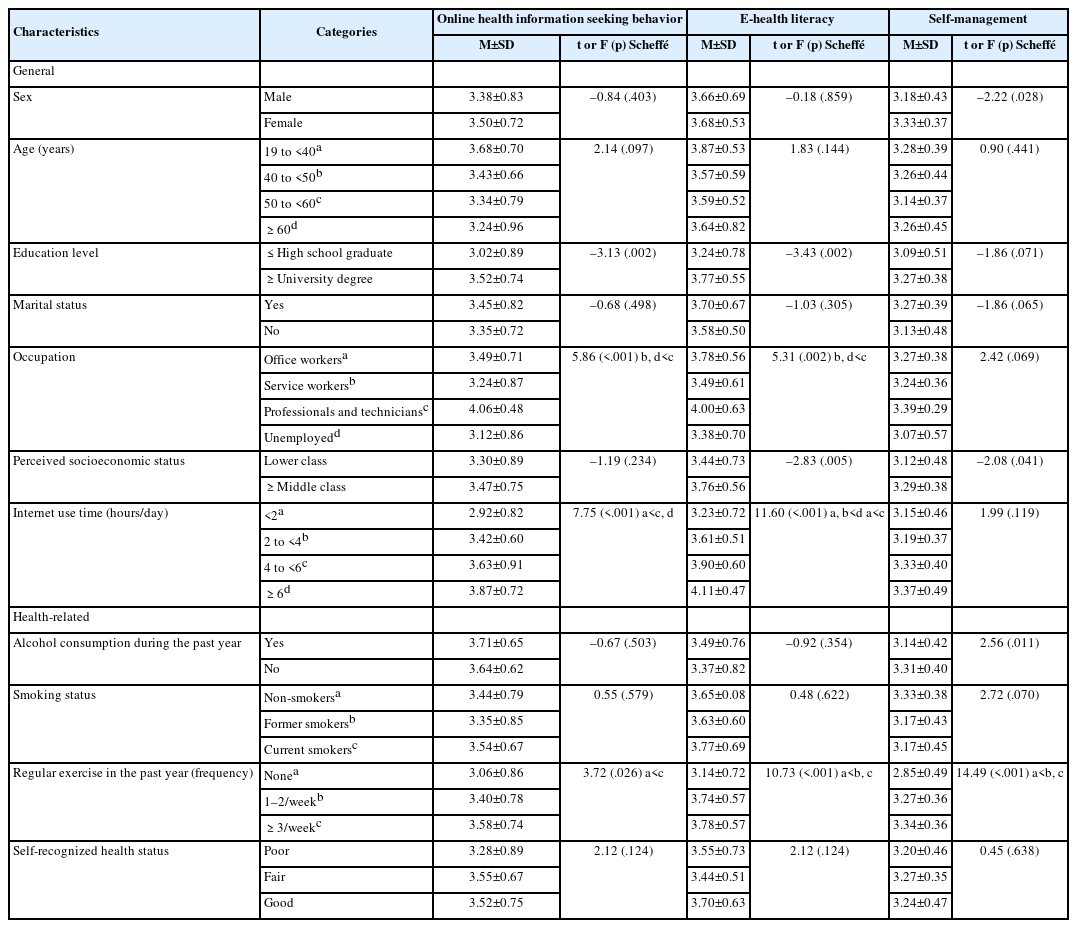
Purpose
This study aimed to examine the influences of online health information-seeking behavior and e-health literacy on self-management among patients undergoing hemodialysis. Methods: A correlational survey was conducted with 150 adult hemodialysis patients who had been receiving dialysis for at least three months. Data were collected from July to November 2023 using structured questionnaires. The variables measured included online health information-seeking behavior, e-health literacy, and self-management. Data were analyzed using descriptive statistics, the independent t-test, one-way analysis of variance, Pearson correlation coefficients, and hierarchical multiple regression with IBM SPSS/WIN 28.0. Results: Participants demonstrated moderate to high levels of online health information-seeking behavior, e-health literacy, and self-management. Self-management was positively correlated with online health information-seeking behavior (r=.34, p<.001) and e-health literacy (r=.45, p<.001). Hierarchical multiple regression analysis identified e-health literacy (β=.30, p<.001), regular exercise during the past year (β=.27, p<.001), and alcohol consumption during the past year (β=−.22, p=.002) as significant predictors of self-management, explaining 32% of the variance. Conclusion: E-health literacy, regular exercise, and alcohol consumption significantly affect self-management among hemodialysis patients. Therefore, nursing interventions should focus on enhancing e-health literacy and promoting healthy lifestyle habits to strengthen self-management capabilities in this population.
  • 481 View
  • 20 Download
Factors Influencing Adherence to Physical Exercise Rehabilitation during the First Three Months Post-Stroke among Adults with First-Onset Stroke
Yinan Wu, Panicha Ponpinij, Pornpat Hengudomsub
Korean J Adult Nurs 2025;37(4):489-501.   Published online November 28, 2025
DOI: https://doi.org/10.7475/kjan.2025.0709
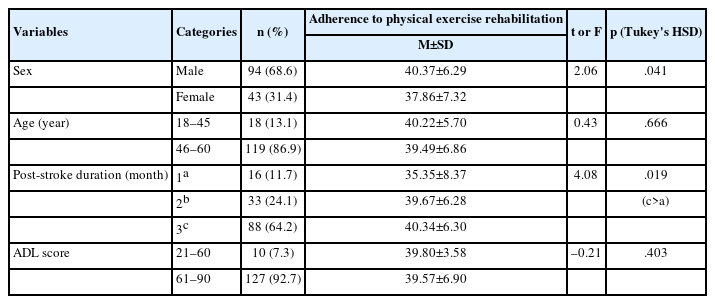
Purpose
This study aimed to identify key predictive factors influencing adherence to physical exercise rehabilitation among adults during the first three months following a first-onset ischemic stroke in China. Methods: A cross-sectional descriptive study was conducted among 137 adults who attended clinical follow-up appointments within the first three months after experiencing a first-onset ischemic stroke. Predictors included family support, coping with role transition, depression, self-efficacy, and body image. Hierarchical multiple regression analysis was performed. Results: The mean adherence score for physical exercise rehabilitation was 39.58 (standard deviation=6.71), indicating a moderate adherence level (70.6%). In model 1, male sex (β=.20, p=.017) and post-stroke duration of 2 months (β=.31, p=.015) and 3 months (β=.39, p=.002) were significant predictors of adherence to physical exercise rehabilitation. Adding main predictors in model 2 resulted in a significant increase in explained variance (ΔR²=.418, p<.001), accounting for 51.5% of the total variance (R²=.515, adjusted R²=.484). Male sex (β=.15, p=.017), family support (β=.43, p<.001), self-efficacy (β=.26, p<.001), depression (β=–.24, p=.001), and coping with role transition (β=.16, p=.033) were significant predictors. Body image and post-stroke duration were not significant after adjustment. Conclusion: Efforts to promote adherence to physical exercise rehabilitation should prioritize family support, depressive symptoms, self-efficacy, and coping with role transition. Furthermore, body image may warrant attention when developing sex-specific intervention strategies.
  • 1,093 View
  • 36 Download
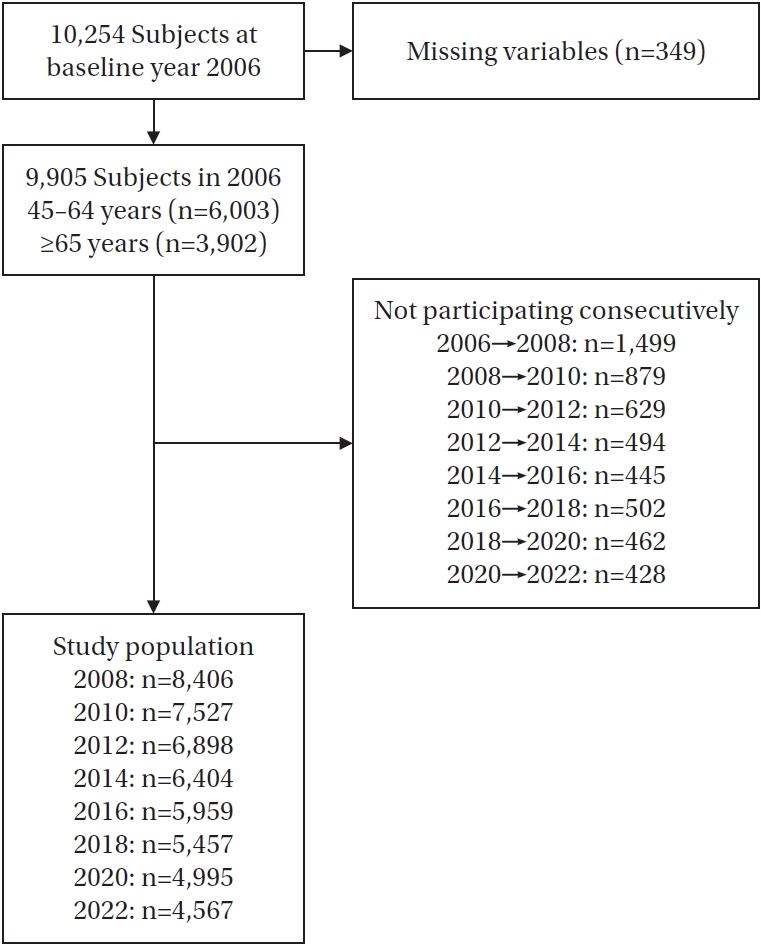
Purpose
This study examined the 16-year longitudinal impact of social frailty on quality of life (QoL) and health-related quality of life (HRQoL) among middle-aged and older adults. Methods: Data were obtained from the Korean Longitudinal Study of Aging (2006–2022), comprising 9,905 participants (6,003, aged 45–64 years; and 3,902, aged ≥65 years). Social frailty was assessed using five components: social support, social activity, social network, loneliness, and living alone. QoL and HRQoL were measured using self-reported satisfaction scales. Generalized estimating equations were applied to adjust for covariates. Results: Social frailty was prevalent among both middle-aged (44.6%) and older adults (60.1%) and was significantly associated with lower QoL and HRQoL. In longitudinal analyses, declines in QoL and HRQoL persisted throughout the follow-up period in older adults, whereas in middle-aged adults, the declines were significant only during the earlier years. In middle-aged adults, current smoking exerted a stronger negative impact on QoL and HRQoL (QoL: β=–4.33, p<.001; HRQoL: β=–2.89, p<.001), while in older adults, lack of regular exercise had a greater effect on HRQoL (β=–3.84, p<.001). Conclusion: Social frailty was associated with lower QoL and HRQoL across both age groups, with stronger and more persistent effects among older adults. Early interventions are needed during midlife, while sustained strategies are essential in later life. Age-specific approaches are crucial to promoting healthy aging.
  • 1,017 View
  • 31 Download
A Predictive Model for Person-Centered Care in Intensive Care Units in South Korea: A Structural Equation Model
Sunmi Kwon, Kisook Kim
Korean J Adult Nurs 2025;37(4):467-477.   Published online November 28, 2025
DOI: https://doi.org/10.7475/kjan.2025.0702
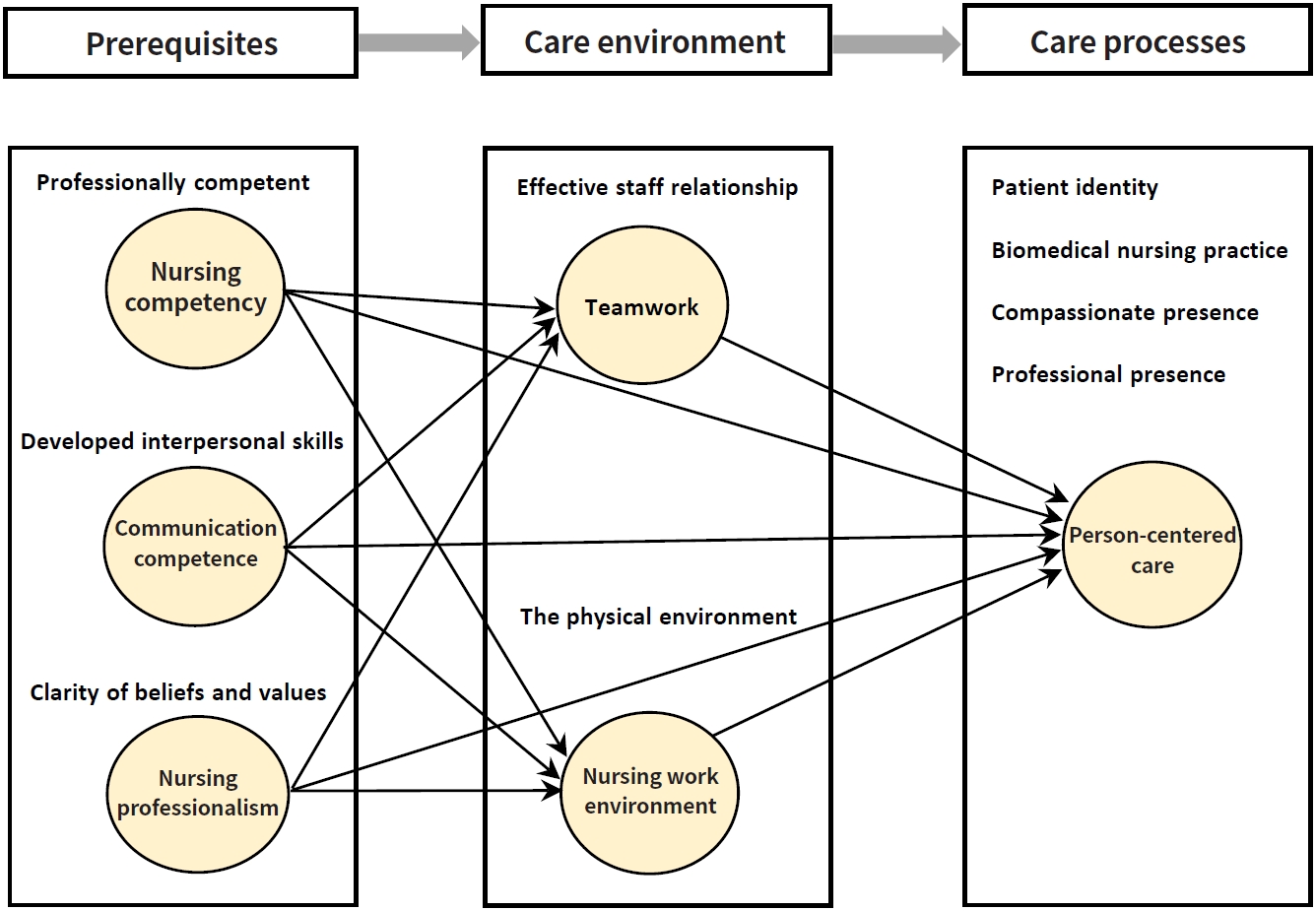
Purpose
Person-centered care emphasizes the therapeutic relationship between medical staff and patients, founded on mutual trust and understanding. In intensive care settings, there is growing recognition of the need to improve the care environment and promote patient-focused nursing. This study aimed to construct and validate a predictive model explaining person-centered care in intensive care units. Methods: This study employed a cross-sectional design involving 230 intensive care unit nurses working in a tertiary hospital, each with more than one year of direct patient care experience. Data were collected online between March 2 and March 30, 2023. Data analysis was conducted using IBM SPSS ver. 26.0 and AMOS ver. 25.0. Results: Statistically significant pathways were identified from nursing competency to the nursing work environment and person-centered care; from communication competence to teamwork and person-centered care; from nursing professionalism to teamwork and the nursing work environment; and from the nursing work environment to person-centered care. Nursing professionalism indirectly influenced person-centered care through teamwork and the nursing work environment. Conclusion: Enhancing person-centered care in intensive care units requires recognizing the critical roles of communication competence, nursing competency, and the nursing work environment. Developing and implementing educational programs that strengthen communication and nursing competencies, alongside initiatives that improve the nursing work environment, are essential.
  • 812 View
  • 32 Download
Utilization of Life-Sustaining Treatments before Death by Health Insurance Type in Older Adults in South Korea: A Nationwide Cohort Study
Jeonghyun Cho, Na-Young Kim, Sang Suk Kim, Joung-Hwan Back, Hyejin Kim
Korean J Adult Nurs 2025;37(4):458-466.   Published online November 14, 2025
DOI: https://doi.org/10.7475/kjan.2025.0621
Purpose
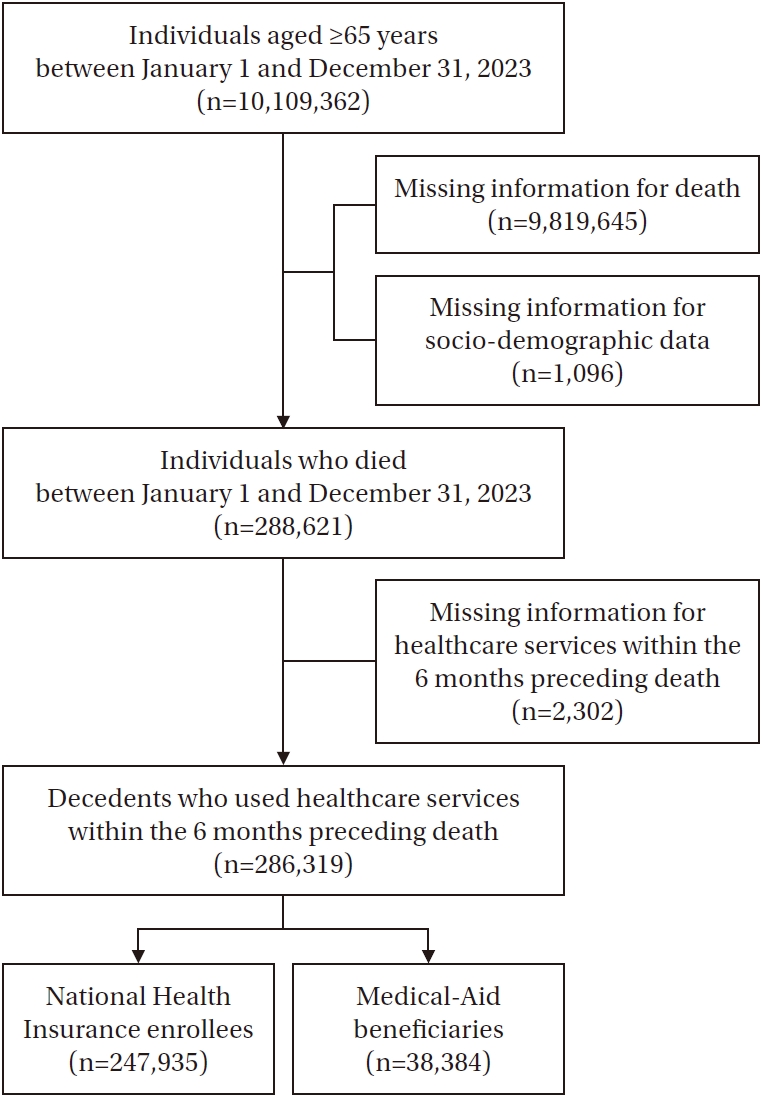
This study investigated differences in the use of life-sustaining treatments during the last six months of life between older adults covered by the National Health Insurance (NHI) and those enrolled in the Medical Aid (MA) program. Methods: A retrospective cohort design was applied using national claims data from the National Health Insurance Service. The study population included individuals aged ≥65 years who died in 2023, with 286,319 decedents (247,935 with NHI and 38,384 with MA) analyzed. We compared hospitalization frequency and duration, intensive care unit (ICU) stays, and the use of life-sustaining treatments, including cardiopulmonary resuscitation, mechanical ventilation, hemodialysis, chemotherapy, transfusions, and vasopressors, between NHI and MA groups. Logistic regression analyses were conducted with adjustments for age, sex, comorbidities, place of death, and advance care planning status. Results: Completion rates of advance directives and physician orders for life-sustaining treatment were lower in MA than in NHI decedents. MA decedents had fewer admissions but significantly longer hospital and ICU stays than NHI decedents. They were less likely to receive mechanical ventilation, chemotherapy, transfusion, and vasopressors but more likely to undergo hemodialysis. Conclusion: Substantial disparities exist in end-of-life care by insurance type, suggesting that socioeconomic inequalities and reimbursement structures influence patterns of intensive care near the end of life. Targeted interventions are needed to ensure equitable, patient-centered end-of-life care for socioeconomically vulnerable older adults.
  • 428 View
  • 18 Download
Factors Influencing Health-Related Quality of Life in Patients with Rotator Cuff Tears: A Cross-Sectional Study
Hyo Jung Han, Yeon-Hwan Park
Korean J Adult Nurs 2025;37(4):447-457.   Published online November 25, 2025
DOI: https://doi.org/10.7475/kjan.2025.0619
Purpose
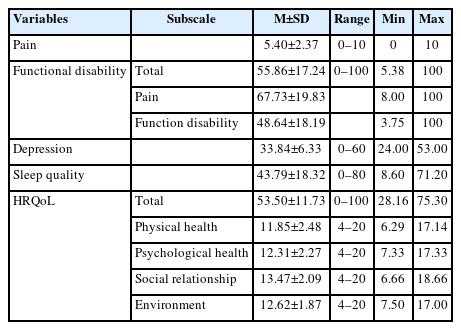
This study investigated health-related quality of life (HRQoL) and aimed to identify factors influencing HRQoL for patients with rotator cuff tears (RCTs). Methods: We conducted a descriptive correlational survey with 118 outpatients diagnosed with RCTs at a tertiary general hospital in Seoul. Data were collected between February and June 2021 using structured self-report questionnaires, including the numeric rating scale, Korean version of the Shoulder Pain and Disability Index, Verran and Snyder-Halpern Sleep Scale, and the World Health Organization Quality of Life Instrument, Short Form. Results: HRQoL showed significant positive correlations with sleep quality (r=.64, p<.001) and the frequency of shoulder-intensive sports activities (r=.24, p=.008). It was negatively correlated with symptom days per week (r=–.32, p<.001), symptom hours per day (r=–.51, p<.001), pain (r=–.21, p=.025), functional disability (r=–.49, p<.001), and depression (r=–.60, p<.001). Stepwise regression analysis indicated that sleep quality (β=.36, p<.001) was the strongest predictor of HRQoL, followed by occupation (β=.26, p<.001), depression (β=–.24, p=.010), and symptom hours per day (β=–.19, p=.013). Conclusion: Sleep quality was the most influential factor affecting HRQoL in patients with RCTs. These findings underscore the need for comprehensive nursing interventions that address sleep disturbances, provide psychological support for depressive symptoms, consider occupational demands, and promote early management of prolonged symptoms to enhance HRQoL in this population.
  • 458 View
  • 19 Download
Purpose
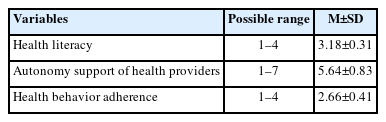
This study aimed to examine the influence of health literacy and autonomy support on health behavior adherence among patients with premature coronary artery disease (PCAD), defined as onset before age 55 years in males and 65 years in females. Methods: A descriptive, cross-sectional design was employed. Data from 153 patients were collected at a hospital in Seoul, South Korea, between January and March 2023. Statistical analyses included the independent t-test, one-way analysis of variance, Pearson correlation coefficients, and hierarchical multiple regression, conducted using IBM SPSS WIN ver. 27.0. Results: Health literacy (β=.36, p<.001) was the strongest determinant of health behavior adherence. A disease duration of more than one year (β=.17, p=.016) was positively associated with adherence, while male sex (β=–.16, p=.039) and the absence of comorbidities (β=–.17, p=.011) showed significant negative associations. Autonomy support from healthcare providers was not significantly associated with health behavior adherence. Conclusion: Healthcare professionals should prioritize improving patient health literacy through tailored communication and educational strategies. Male patients and those newly diagnosed should be recognized as vulnerable groups for low adherence. Targeted interventions should be designed to meet their specific needs. Furthermore, patients with PCAD should be guided to increase their awareness and understanding of their condition.
  • 972 View
  • 39 Download
Stigma and Self-Management in Patients Undergoing Hemodialysis: A Cross-Sectional Study
Seulgi Ryu, Yeon-Hwan Park
Korean J Adult Nurs 2025;37(4):425-435.   Published online November 14, 2025
DOI: https://doi.org/10.7475/kjan.2025.0606
Purpose
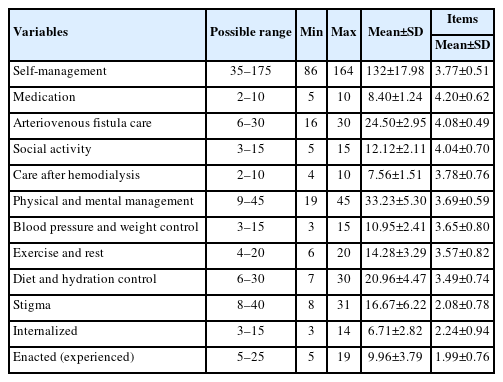
This study aimed to examine the relationship between stigma and self-management among patients undergoing hemodialysis and to identify the key factors influencing their self-management practices. Methods: A convenience sample of 139 hemodialysis patients, aged 18 years or older with an arteriovenous fistula, was recruited from online websites designed for patients undergoing hemodialysis in South Korea. Data were collected using a self-reported questionnaire that assessed demographic and clinical characteristics, self-management behavior, and stigma. Data analysis included descriptive statistics, the independent t-test, one-way analysis of variance, Pearson r correlations, and hierarchical regression analysis to evaluate the influence of stigma on self-management. Results: Hierarchical regression analysis showed that demographic and clinical characteristics accounted for 25.1% of the variance in self-management, and the inclusion of stigma increased the explained variance to 31.4%. Significant predictors included the number of hemodialysis sessions per week (≥3) (β=–.38, p<.001), stigma (β=–.27, p<.001), monthly household income (≥4 million won) (β=.24, p=.014), and marital status (single) (β=–.18, p=.028). Conclusion: The findings highlight the substantial impact of stigma and treatment burden on self-management, while socioeconomic status and marital support serve as protective factors. Targeted interventions that reduce stigma and strengthen support systems are warranted.
  • 950 View
  • 37 Download
Purpose
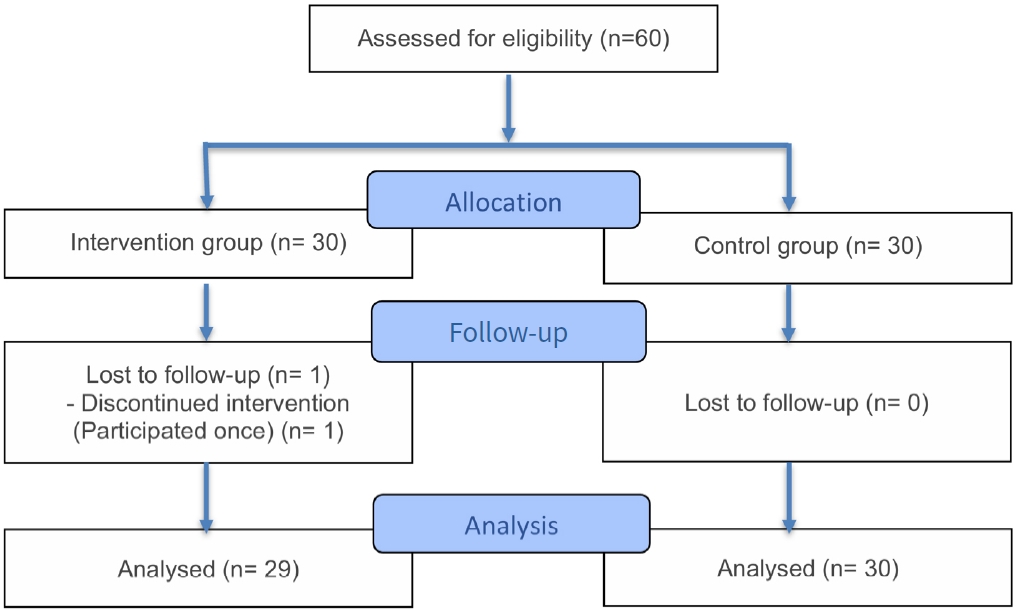
This study aimed to develop and evaluate the effectiveness of a therapeutic communication program based on King’s goal attainment theory, specifically designed for nurses providing care to patients with hematological oncology in a tertiary hospital setting. Methods: A non-equivalent control group design was employed, involving 59 nurses (intervention group: 29, control group: 30) with experience in hematological cancer care. The therapeutic communication program, developed according to the theoretical constructs of King’s theory, consisted of eight weekly sessions. Outcome variables included problem-solving ability, communication self-efficacy, and interaction satisfaction. The effects of the intervention were analyzed using the independent- and paired-samples t-test as well as a Wilcoxon signed-rank test. Results: In between-group comparisons of pre–post changes, communication self-efficacy increased significantly more in the intervention group than in the control group (p=.027). However, no significant between-group differences were found for problem-solving ability or interaction satisfaction. These findings suggest that the program effectively enhances therapeutic communication competencies among nurses in hematological oncology wards. Conclusion: The therapeutic communication program significantly improved problem-solving ability, communication self-efficacy, and interaction satisfaction among nurses in the intervention group within the hematological oncology ward. This theory-based intervention provides an evidence-based framework for strengthening clinical nursing practice and education.
  • 613 View
  • 44 Download
Influencing Factors of Fear of Cancer Recurrence among Adult Breast Cancer Survivors: A Cross-Sectional Study
Kyunghwa Lee, Eun-Jeong Park, Jung Ok Choi
Korean J Adult Nurs 2025;37(4):401-411.   Published online November 13, 2025
DOI: https://doi.org/10.7475/kjan.2025.0417
Purpose
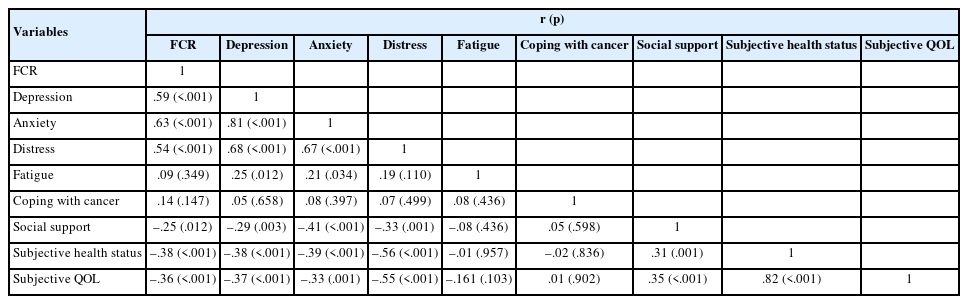
This study aimed to examine the level of fear of cancer recurrence (FCR) among adult breast cancer survivors and to identify factors influencing it. Methods: This cross-sectional study included 104 adult breast cancer survivors who were no longer receiving active treatment. Data were collected through self-report questionnaires addressing FCR, depression, anxiety, distress, fatigue, coping with cancer, social support, subjective health status, subjective quality of life, demographic characteristics, and disease-related characteristics. Surveys were administered both face-to-face and online between March and September 2024. Data analysis was conducted using descriptive statistics, frequencies, the independent t-test, one-way analysis of variance, Pearson’s correlation, and multiple regression. Results: The mean total FCR score was 78.83±25.71 (range, 0–168), reflecting a moderate level. Among participants, 22.1% scored above the cutoff for depression, 34.6% for mild anxiety, and 27.9% for severe distress. More than 70% of participants reported fatigue. Levels of coping with cancer, social support, subjective health status, and subjective quality of life were moderate or higher. Anxiety (β=.56, p<.001), fatigue (≤34) (β=.18, p=.019), and subjective quality of life (β=–.18, p=.022) significantly influenced FCR. Conclusion: Ongoing assessments and tailored interventions are essential to address FCR and to promote psychological well-being in breast cancer survivors following completion of active treatment.
  • 1,223 View
  • 45 Download

Review Articles

The Effects of Game-Based Virtual Reality in Nursing Education: A Scoping Review
Mina Park, Kyoung Ja Moon
Korean J Adult Nurs 2025;37(4):384-400.   Published online November 24, 2025
DOI: https://doi.org/10.7475/kjan.2025.0814
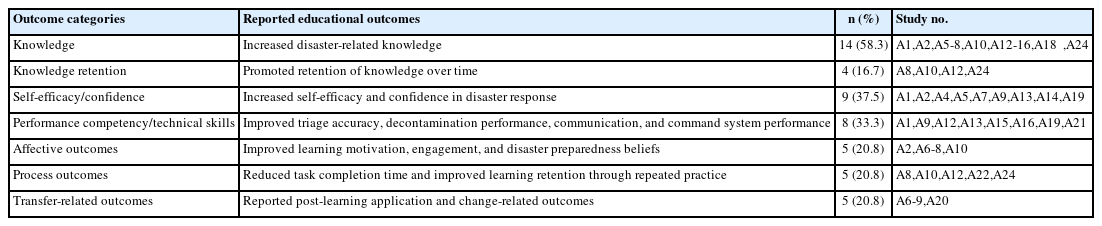
Purpose
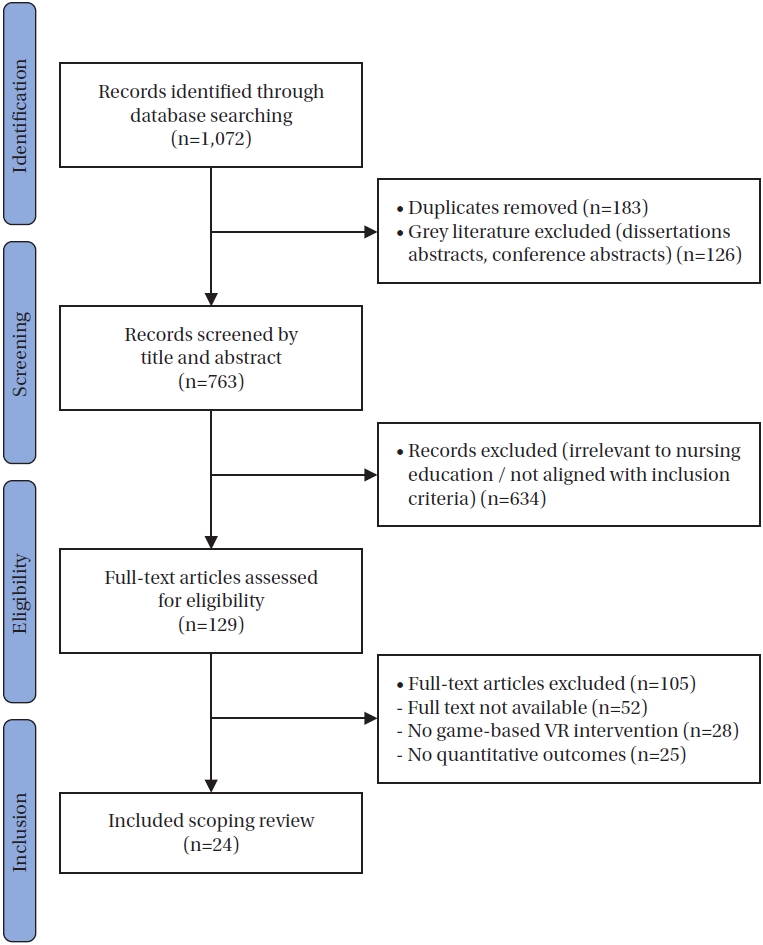
This scoping review aimed to explore the characteristics and educational effects of game-based virtual reality (VR) programs used in nursing education, providing foundational insights for future instructional design and research. Methods: Following the Joanna Briggs Institute guidelines and the Preferred Reporting Items for Systematic Reviews and Meta-Analyses extension for Scoping Reviews checklist, a comprehensive literature search was conducted across eight databases for studies published between April 2014 and March 2025. Studies were screened and selected using the population, concept, context framework. Twenty-four studies met the inclusion criteria and were analyzed. Results: Most of the 24 included studies targeted nursing students, with some involving practicing nurses. Interventions primarily employed immersive VR head-mounted displays and incorporated diverse game elements such as mission-based scenarios, challenges, feedback loops, and virtual patient interactions. Educational effects were categorized into cognitive, affective, and psychomotor domains. Improvements in knowledge acquisition, self-efficacy, learning motivation, and skill performance were consistently reported. Additionally, most studies reported enhanced learner satisfaction, engagement, and emotional immersion. However, limited evidence was found regarding teamwork and communication skills. Conclusion: Game-based VR programs show substantial potential as effective instructional strategies in nursing education. Their design features—including immediate feedback, repeatable immersive scenarios, and engaging game mechanics—support learner-centered and self-directed learning. Nevertheless, the current evidence base largely focuses on nursing students and short-term outcomes. Future studies should encompass diverse nursing populations and assess long-term effects and real-world applicability, particularly in team-based and clinical practice contexts.
  • 2,208 View
  • 54 Download
Theory-Based Mobile Self-Management Interventions and Behavior Change Techniques for Type 2 Diabetes Patients: A Scoping Review
Heeae Moon, Sun-Kyung Hwang
Korean J Adult Nurs 2025;37(4):368-383.   Published online November 25, 2025
DOI: https://doi.org/10.7475/kjan.2025.0530
Purpose
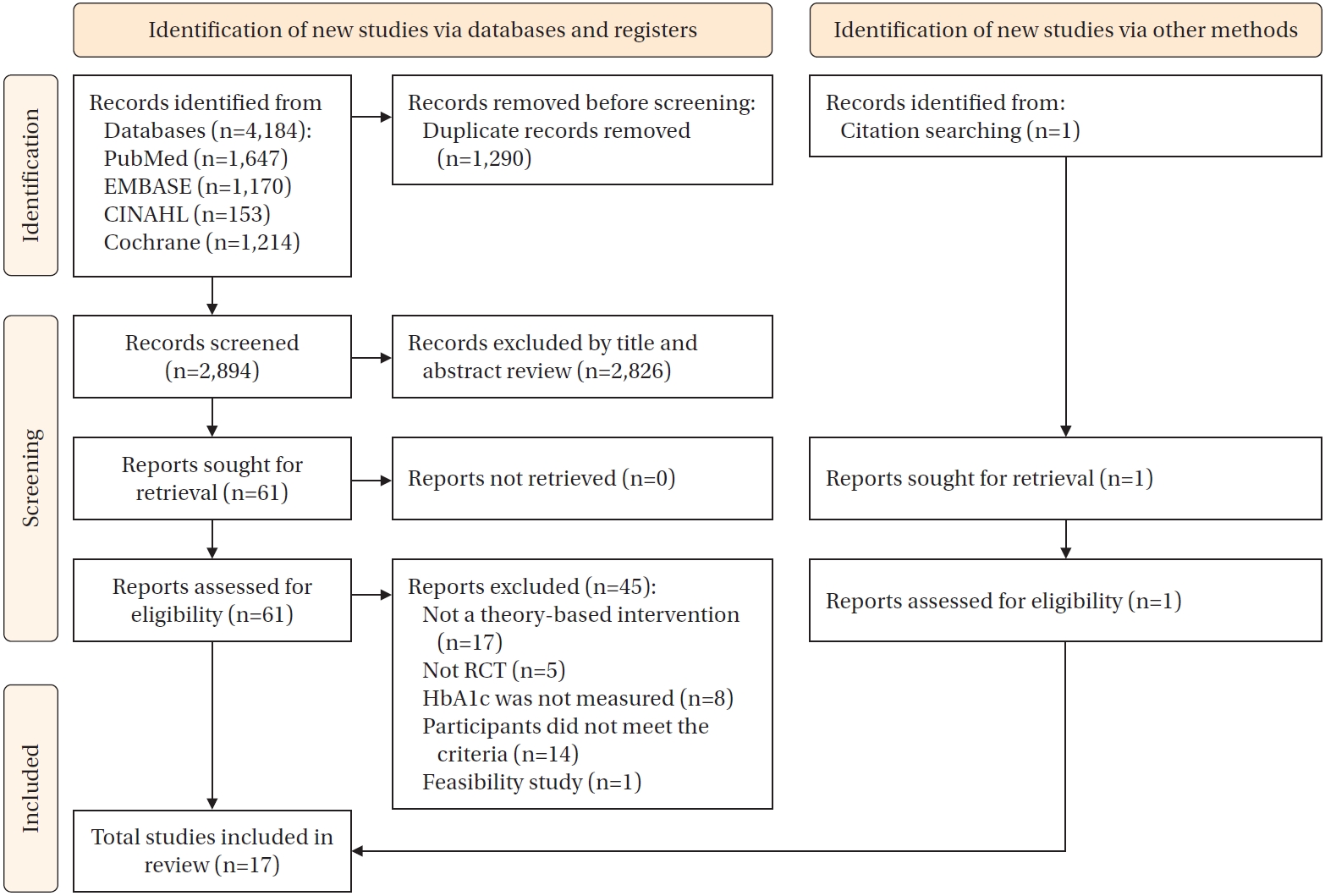
This review aimed to analyze the use of behavior change techniques (BCTs) and the degree of theory implementation using a theory coding scheme (TCS) in mobile self-management interventions for type 2 diabetes mellitus (T2DM). Methods: In this scoping review, four electronic databases (PubMed, EMBASE, CINAHL, and CENTRAL) and gray literature sources were searched. Studies were independently screened according to predefined criteria. The BCT taxonomy was used to categorize techniques, and the TCS was applied to evaluate the quality of theory implementation. Results: Seventeen randomized controlled trials were included. Twenty-five unique BCTs were identified (mean, 8.1 per study). Commonly used BCTs included social support (unspecified) (n=14), instructions on how to perform a behavior (n=14), feedback on behavior (n=11), and prompts/cues (n=11). Techniques related to capability, such as habit formation, rewards, framing/reframing, and verbal persuasion, were rare (n=1 study each). TCS scores ranged from 5 to 15 (mean, 10.3). All included studies cited a theory, used it to select intervention techniques, and employed randomization. However, no study used the findings to refine the theory, and only one conducted a mediational analysis of theoretical constructs. Conclusion: Mobile T2DM self-management interventions commonly rely on a limited range of BCTs and show restricted theoretical application beyond basic implementation. Future interventions should employ a broader array of BCTs and apply theories more rigorously, including tailoring interventions, empirically testing theoretical mechanisms, and refining theories based on results to increase their effectiveness.
  • 590 View
  • 47 Download
Purpose
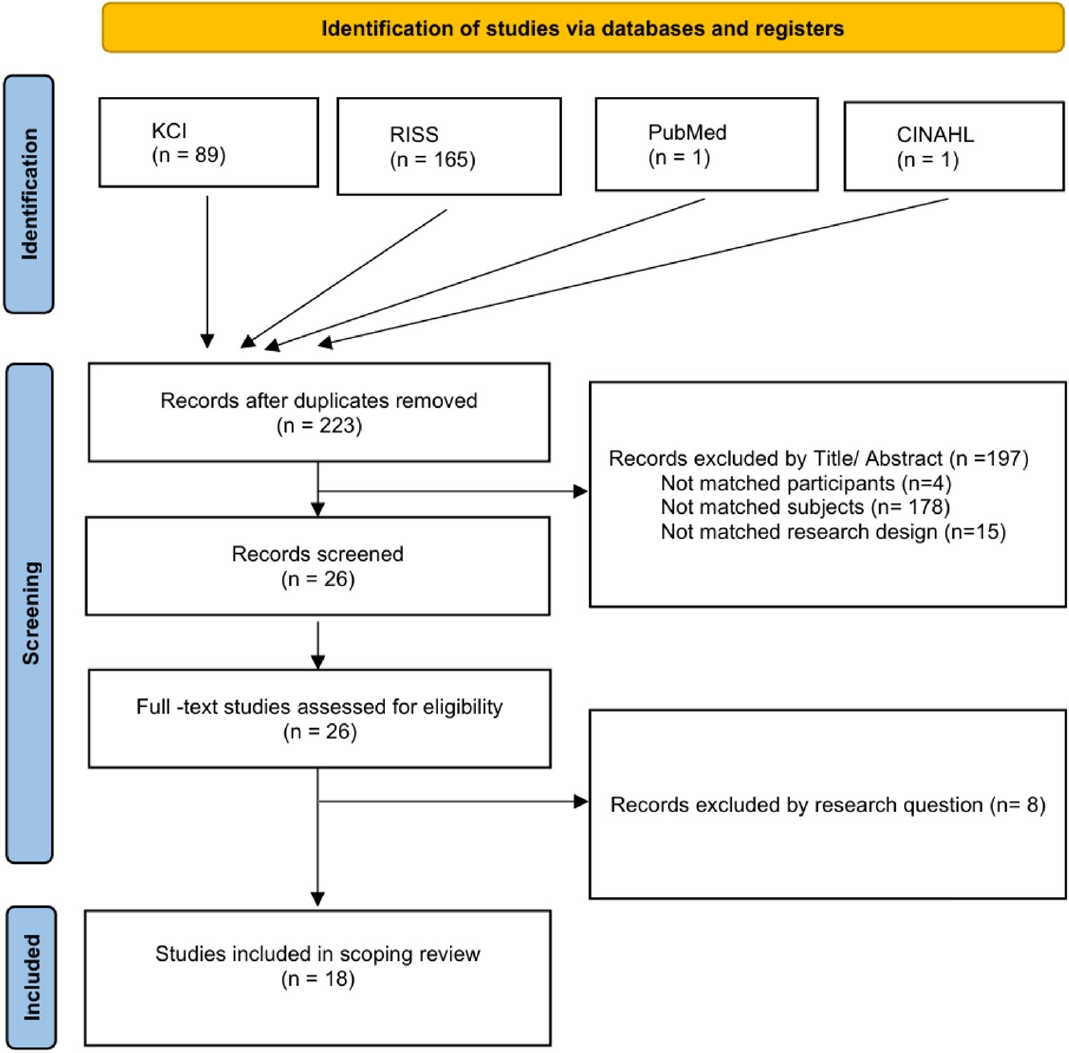
This scoping review aimed to comprehensively examine environmental and individual factors contributing to clinical practice stress among nursing students in South Korea and to provide evidence-based recommendations for improving the clinical education environment. Methods: A scoping review was conducted following Arksey and O’Malley’s five-stage framework and the PRISMA-ScR guidelines. Relevant studies published between January 2016 and March 2025 were identified through searches of domestic databases (KCI, RISS) and international databases (PubMed, CINAHL) using predefined keywords. A total of 18 studies met the inclusion criteria. Data were extracted using a standardized template and categorized by study characteristics, methodological features, and stress-related variables. Results: Most included studies were conducted after 2022 and involved students from multiple institutions. Environmental stressors identified included poor clinical setting quality, lack of instructor support, interpersonal challenges, limited educational infrastructure, and disruptions caused by new infectious diseases. At the individual-level, resilience, coping strategies, and emotional regulation were the most frequently studied variables. Among these, resilience was consistently reported as a protective factor against stress, while incivility emerged as the most prominent environmental stressor. Multiple regression models indicated that stress-related factors explained between 18.0% and 75.6% of the variance in outcomes. Conclusion: Clinical practice stress in nursing students results from a dynamic interaction between environmental and individual factors. Nursing education programs should incorporate resilience-enhancing interventions, strengthen collaboration with clinical sites, and adopt flexible educational methods, such as simulation-based training, particularly during periods of restricted clinical access.
  • 1,387 View
  • 43 Download

Original Articles

Factors Influencing Nurses’ Person-Centered Care: A Cross-sectional Descriptive Study
Heesun Jang, Young A Kim
Korean J Adult Nurs 2025;37(3):344-353.   Published online August 29, 2025
DOI: https://doi.org/10.7475/kjan.2025.0509
Purpose
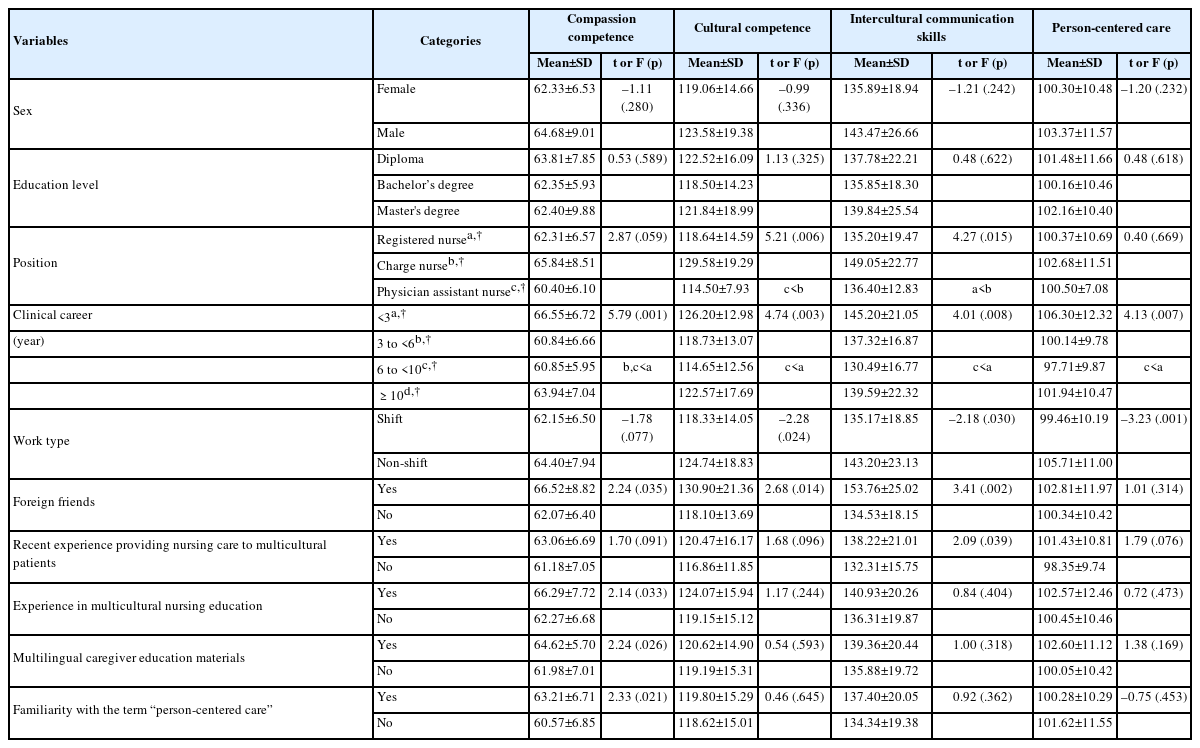
Person-centered care is essential to improving patient outcomes, yet the factors that influence it require further investigation. This study examines the relationships among nurses’ compassion competence, cultural competence, intercultural communication skills, and person-centered care, and it identifies key predictors of person-centered care. Methods: A descriptive survey was conducted among 191 nurses from two general hospitals using convenience sampling between April 1 and April 22, 2024. Data collection included measures of compassion competence, cultural competence, intercultural communication skills, and person-centered care. Statistical analyses involved descriptive statistics, the independent t-test, analysis of variance, Pearson’s correlation coefficient, and stepwise multiple regression. Results: Of the 191 participants, 172 (90.1%) were females and 19 (9.9%) were males, with an average clinical experience of 8.89 years. Person-centered care showed significant positive correlations with compassion competence (r=.58, p<.001), cultural competence (r=.62, p<.001), and intercultural communication skills (r=.63, p<.001). Key predictors of person-centered care included intercultural communication skills (β=.29, p=.001), compassion competence (β=.27, p<.001), cultural competence (β=.20, p=.024), and non-shift work status (β=.12, p=.031). The model explained 47.9% of the variance in person-centered care (F=44.76, p<.001). Conclusion: In this study, person-centered care among nurses was influenced by compassion competence, cultural competence, intercultural communication skills, and work type. Further research is warranted on the delivery of person-centered care among nurses who provide care to patients from diverse cultural backgrounds.
  • 4,265 View
  • 95 Download
Purpose
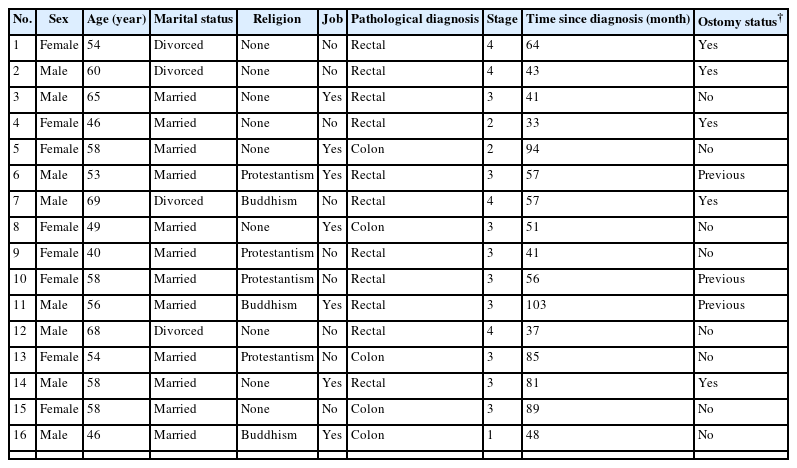
Colorectal cancer (CRC) survivors face significant challenges after completing treatment, including returning to work, concerns about the future, and financial difficulties. Understanding how inner strength developed after treatment affects survivors’ lives is crucial for informing patient-centered care. This study explored the unique inner strength exhibited by CRC survivors during their transition to a “new normal.” Methods: We recruited 16 patients from Korea who had completed treatment, to explore their experiences of managing their health. We conducted a qualitative study from July 4, 2022 to July 25, 2022 using individual interviews and directed content analysis. Transcribed interview data were analyzed to interpret meaning from the data, consistent with the naturalistic paradigm. Results: Participants described their transition to a new normal by reframing the cancer experience, struggling to return to normal life, experiencing growth promoted by supportive relationships, and encountering both positive and negative life changes. Throughout these experiences as survivors, inner strength played a critical role in adapting to a new normal. Conclusion: Our findings suggest that inner strength serves as a dynamic psychological resource, enabling CRC survivors to reframe their illness, regain disrupted roles, and reconstruct a meaningful life despite ongoing physical and emotional challenges. In doing so, inner strength facilitates their adaptation to a new normal.
  • 596 View
  • 28 Download
Purpose
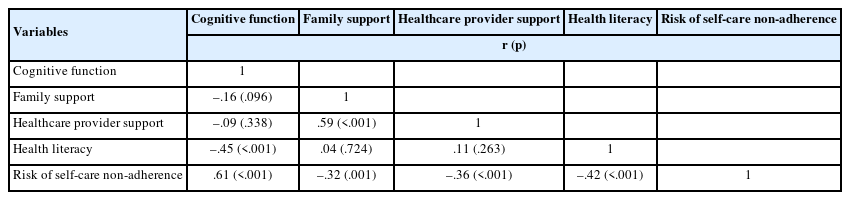
This study examined the effects of cognitive function, health literacy, and social support influence the risk of self-care non-adherence among older adults with chronic kidney disease. Methods: A cross-sectional survey was conducted using structured questionnaires. The study included 105 older adults (≥65 years) in the pre-dialysis stage, all of whom were receiving regular follow-up at a nephrology outpatient clinic in Jeonju, Jeollabuk-do, Korea. Data were collected through one-on-one interviews from April to May 2024 and analyzed using SPSS version 26.0. Predictive factors were assessed using hierarchical multiple regression analysis. Results: The risk of self-care non-adherence was significantly correlated with cognitive impairment (r=.61, p<.001), lower social support from healthcare providers (r=–.36, p<.001), and reduced health literacy (r=–.42, p<.001). Multiple regression analysis indicated that decreased physical activity (β=.25, p=.002), greater cognitive impairment (β=.29, p<.001), and lower support from healthcare providers (β=–.26, p=.008) were significant predictors of increased risk of self-care non-adherence. The model explained 46% of the variance in the risk of self-care non-adherence. In contrast, family support and health literacy were not significant predictors. Conclusion: To reduce the risk of self-care non-adherence in older adults with chronic kidney disease, routine cognitive screening and tailored education for those with cognitive impairment should be implemented in outpatient care. Promoting physical activity and strengthening support from healthcare providers are also key strategies to improve adherence in this population.
  • 1,926 View
  • 44 Download
Effectiveness of a Self-Management Program for Patients Undergoing Lumbar Spinal Stenosis Surgery: A Quasi-Experimental Study
Mi Kyung Seo, Gyoo Yeong Cho
Korean J Adult Nurs 2025;37(3):307-320.   Published online August 29, 2025
DOI: https://doi.org/10.7475/kjan.2025.0331
Purpose
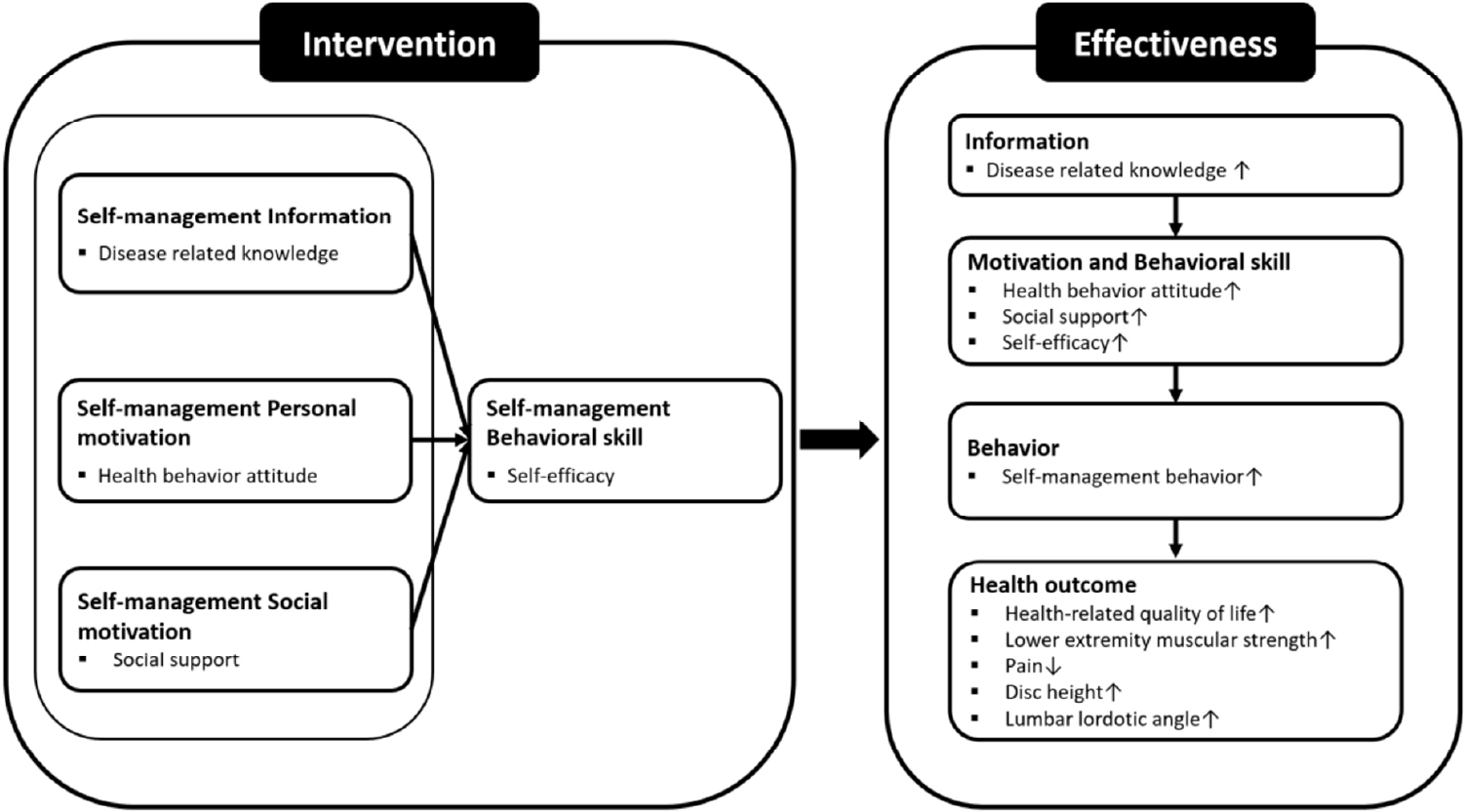
This study developed a self-management program for patients undergoing lumbar spinal stenosis surgery utilizing the information-motivation-behavioral skills (IMB) model. Methods: This study employed a quasi-experimental design with a nonequivalent control group and pretest–posttest design. Data were collected from August 11, 2022, to March 31, 2023, at a general hospital in South Korea. A total of 58 patients participated in the study (30 experimental, 28 control group). The experimental group received a six-session self-management program based on the IBM model, whereas the control group received usual education and information. Data were analyzed with SPSS/WIN 23.0 using the independent t-test, chi-square test, Fisher’s exact test, Shapiro-Wilk test, and Mann-Whitney U test. Results: Significant differences were observed in self-management information (p<.001), personal motivation (p=.002), social motivation (p=.002), behavioral skills (p=.002), behaviors (p=.003), health-related quality of life (p<.001), and disc height (p=.006) in the experimental group following program implementation, compared to the control group. However, no significant differences were found in lower extremity muscular strength, lumbar lordotic angle, or the visual analog scores for low back pain and leg pain between the two groups. Conclusion: The self-management program developed in this study, based on the IMB model, was effective in improving self-management information, motivation, behavioral skills, behaviors, health-related quality of life, and self-management health outcomes in patients undergoing lumbar spinal stenosis surgery. Nevertheless, future research should aim to verify the long-term effects of such self-management programs by extending the intervention period.
  • 1,538 View
  • 41 Download
Purpose
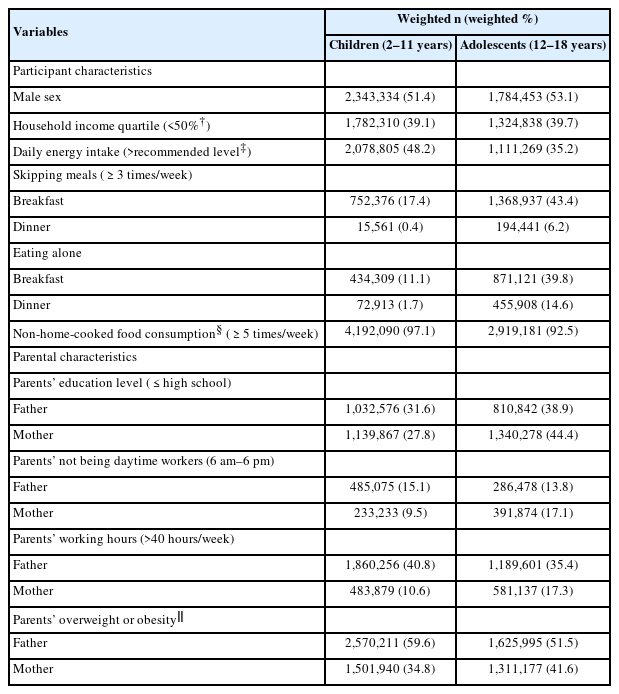
Emerging evidence indicates that eating patterns—particularly skipping meals and eating alone—are associated with excess body weight. However, few studies have assessed whether these behaviors contribute to weight gain across different age groups. This study examined the associations of skipping breakfast or dinner, and of eating those meals alone, with overweight or obesity among Korean adults compared to children and adolescents. Methods: This cross-sectional secondary analysis used data from the 2019 Korea National Health and Nutrition Examination Survey. Information on skipping meals, eating alone, and sociodemographic characteristics was obtained via self-report for adults and proxy report for participants under 12 years of age. Overweight or obesity was determined from measured height and weight. Multivariable logistic regression analyses were performed separately by age group. Results: Among adults, eating dinner alone was associated with higher odds of obesity (odds ratio [OR]=1.27, 95% confidence interval [CI]=1.06–1.52). Among adolescents, skipping dinner three or more times per week was associated with higher odds of obesity (OR=2.60, 95% CI=1.04–6.54). No significant associations were observed in children. Skipping breakfast or eating breakfast alone was not significantly associated with overweight or obesity in any age group. Conclusion: Although the cross-sectional design precludes causal inference, the findings suggest age-specific links between eating behaviors and weight status. For adults, reducing solitary dinners may help prevent obesity, whereas for adolescents, preventing frequent dinner skipping could be beneficial. Nursing strategies promoting shared mealtimes in adults and regular dinners in adolescents may help address obesity in Korea.
  • 5,454 View
  • 33 Download
Sex-Specific Predictors of Microalbuminuria in Type 2 Diabetes: A Cross-Sectional Study
Eun Sook Bae, Hye Seung Kang
Korean J Adult Nurs 2025;37(3):287-296.   Published online August 29, 2025
DOI: https://doi.org/10.7475/kjan.2025.0326
Purpose
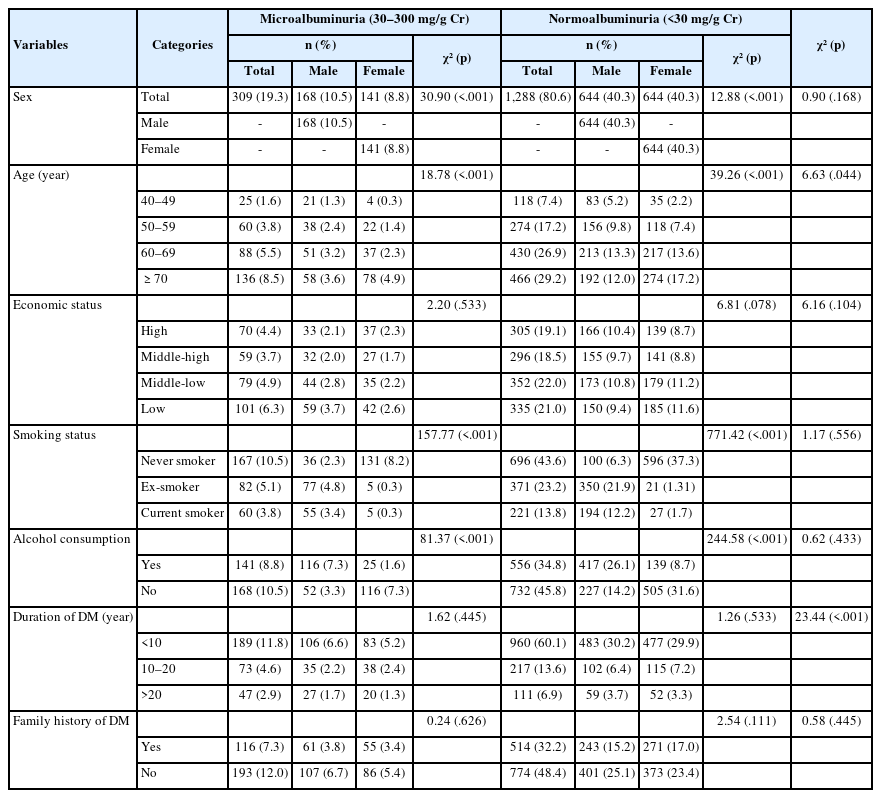
This study aimed to identify sex-specific predictors of microalbuminuria in patients with type 2 diabetes mellitus. Recognizing sex-based differences in risk factors may facilitate the early detection and prevention of diabetic kidney disease. Methods: A cross-sectional analysis was performed using data from the Korea National Health and Nutrition Examination Survey. Microalbuminuria was defined as a urinary albumin-to-creatinine ratio ≥30 mg/g. Multivariable complex sample logistic regression analyses were conducted separately for male and female. Independent variables included age, duration of diabetes, glycated hemoglobin (HbA1c), fasting blood sugar (FBS), triglyceride to high-density lipoprotein cholesterol ratio (TG/HDL-C), TG, HDL-C, waist circumference, and systolic blood pressure (SBP). Results: The prevalence of microalbuminuria was higher in male than in female. In both sexes, longer diabetes duration and elevated SBP were associated with microalbuminuria. Among male, FBS, TG/HDL-C ratio, TG, and low HDL-C were significant predictors. In female, HbA1c showed the strongest association, followed by age and diabetes duration. Conclusion: Sex-specific differences were identified in the predictors of microalbuminuria among patients with type 2 diabetes. Incorporating these differences into early screening and individualized care strategies may help improve the prevention of diabetic kidney complications.
  • 1,240 View
  • 28 Download
Experiences of Nurse Managers in Clinical Nursing Education during Emerging Infectious Disease Outbreaks: A Qualitative Study
Soojin Chung, Ju-Young Park, Jeongim Lee
Korean J Adult Nurs 2025;37(3):276-286.   Published online August 29, 2025
DOI: https://doi.org/10.7475/kjan.2025.0321
Purpose
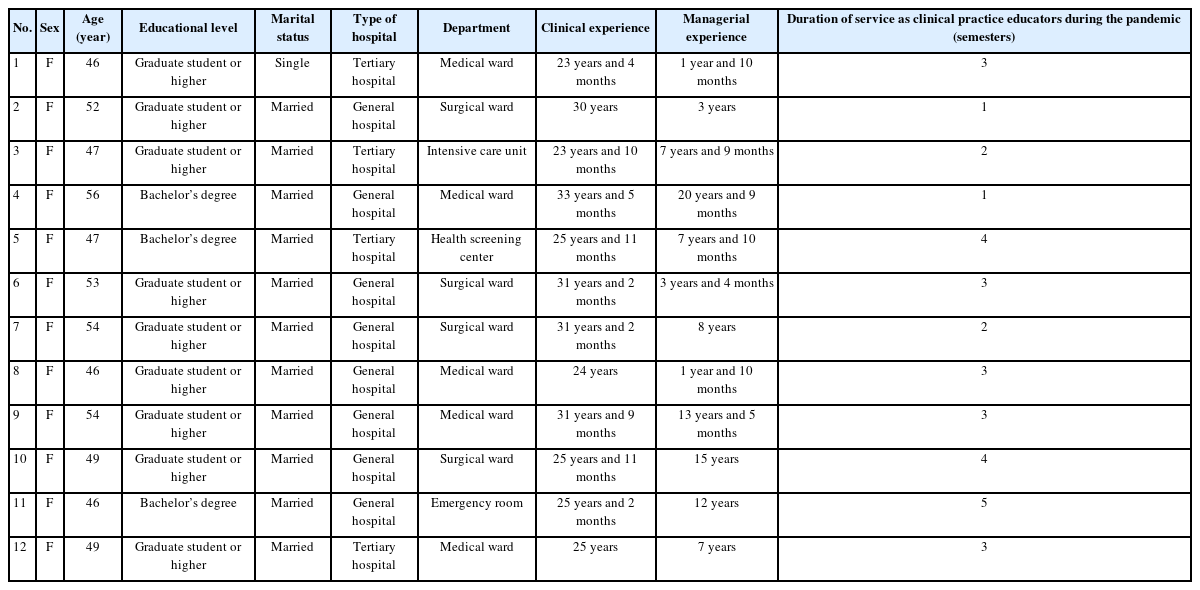
The purpose of this study was to examine the experiences of nurse managers in clinical nursing education during an emerging infectious disease outbreak. Methods: Individual semi-structured interviews were conducted with 12 nurse managers from seven general or tertiary hospitals, each with 300 or more beds, in South Korea. Data were collected between February 17 and June 10, 2023, and analyzed using qualitative content analysis. Results: Four themes and 11 subthemes were identified. Nurse managers faced significant challenges in departmental management during the infectious disease outbreak, encountered a wide range of student attitudes toward learning, adapted their teaching methods flexibly in response to changing infectious disease conditions, and ultimately found meaning in the irreplaceable value of clinical practice education. Conclusion: During the emerging infectious disease outbreak, nurse managers not only encountered substantial difficulties but also experienced professional growth as clinical nursing educators. To enhance clinical nursing education in such challenging environments, it is essential to minimize uncertainty caused by infectious diseases and foster positive perceptions among nursing students regarding clinical practice education under restrictive circumstances. Institutional support is also necessary to reduce the work burden on nurse managers.
  • 1,271 View
  • 29 Download
Purpose
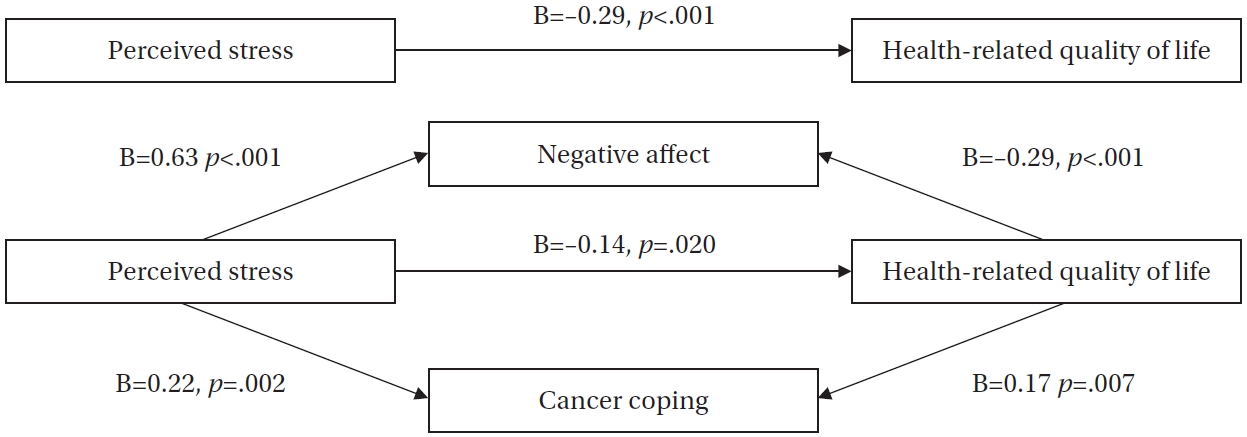
The incidence of gynecological cancers is increasing, presenting significant challenges for patient care and outcomes. Perceived stress and negative affect can impede self-care behaviors and reduce health-related quality of life (HRQoL). This study examined the mediating effects of negative affect and cancer coping on the relationship between perceived hospital stress and HRQoL among patients with gynecological cancer. Methods: A cross-sectional mediation analysis was conducted with 118 gynecological cancer patients recruited from the outpatient clinic of a university hospital (October 2023 to February 2024). Participants completed validated instruments assessing perceived stress, negative affect, cancer coping, and HRQoL. Data were analyzed using Spearman’s correlations and the PROCESS macro (Model 4) with 95% bootstrap confidence intervals (CIs). Results: Perceived stress was significantly correlated with negative affect (r=.58, p<.001), cancer coping (r=.23, p=.012), and HRQoL (r=–.45, p<.001). Negative affect was correlated with HRQoL (r=–.59, p<.001). Furthermore, negative affect and cancer coping mediated the relationship between stress and HRQoL (B=–0.18, 95% CI=–0.27 to –0.11 and B=0.04, 95% CI=0.01 to 0.08, respectively). Conclusion: Negative affect and cancer coping significantly mediated the relationship between hospital stress and HRQoL. Targeted interventions aiming to reduce stress and strengthen emotional and coping strategies could enhance HRQoL among gynecological cancer patients.
  • 1,525 View
  • 45 Download
Purpose
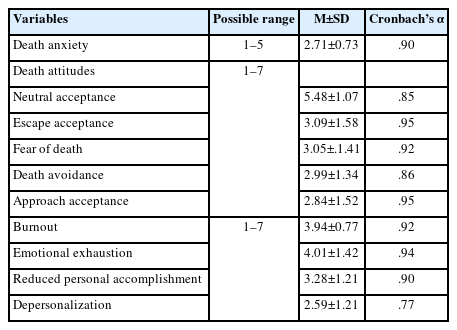
This study aimed to examine the relationships among death anxiety, attitudes toward death, and burnout in nurses working in hemodialysis units. Methods: A cross-sectional, self-report questionnaire-based survey was conducted. Eighty-six nurses, each with more than one year of experience in hemodialysis units across six general hospitals, participated. Data were collected from July to December 2021. Statistical analyses included Pearson correlation coefficients and multivariate linear regression. Results: The mean death anxiety score was 2.71±0.73 out of 5. Among attitudes toward death, neutral acceptance was most prevalent, with a mean score of 5.48±1.07 out of 7. The average burnout score was 3.94±0.77 out of 7. Death anxiety showed a significant negative correlation with neutral acceptance of death (r=–.33, p=.002) and a significant positive correlation with fear of death attitudes (r=.65, p<.001). Multiple regression analysis identified marital status (being married) (β=–.35, p=.005) and the death attitude of escape acceptance (β=.37, p=.002) as significant predictors of burnout, together explaining 22.3% of the variance (F=2.43, p=.005). Conclusion: Attitudes toward death among hemodialysis nurses may be linked to burnout. Burnout management programs for nurses in hemodialysis units should provide opportunities for neutral discussions and emotional expression regarding death, and should address strategies to mitigate escape acceptance attitudes.
  • 2,284 View
  • 70 Download
Self-Rated Health among People with Chronic Kidney Disease: A Secondary Data Analysis
Jena Lee, Soo Kyung Park
Korean J Adult Nurs 2025;37(3):245-256.   Published online August 29, 2025
DOI: https://doi.org/10.7475/kjan.2025.0308
Purpose
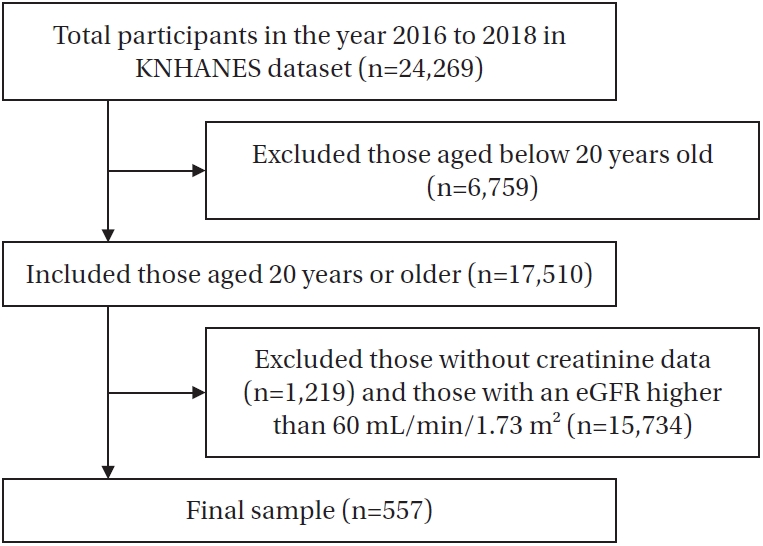
Self-rated health in individuals with chronic diseases is influenced by various factors, including dietary adherence and physical activity. However, limited research has investigated how these factors relate to self-rated health among people with chronic kidney disease. Therefore, this study aimed to describe self-rated health and identify its associated factors in this population. Methods: This cross-sectional, secondary data analysis utilized datasets from the seventh Korea National Health and Nutrition Examination Survey, which were collected between 2016 and 2018. A total of 557 participants (mean age=74.8 years) with a glomerular filtration rate of <60 mL/min/1.73 m² were included. Data from health interviews and examinations were analyzed to assess self-rated health, dietary adherence, and physical activity. Descriptive and inferential statistical methods were employed for analysis. Results: Among the 557 participants, 42.6% rated their health as poor. Factors such as sex, age, income, smoking history, anxiety/depression, number of comorbidities, glomerular filtration rate, and physical activity were significantly associated with self-rated health. In contrast, dietary adherence did not exhibit a significant association. Conclusion: Understanding the factors associated with self-rated health can inform the development of nursing interventions aimed at improving self-rated health among patients with chronic kidney disease.
  • 2,007 View
  • 41 Download
Purpose
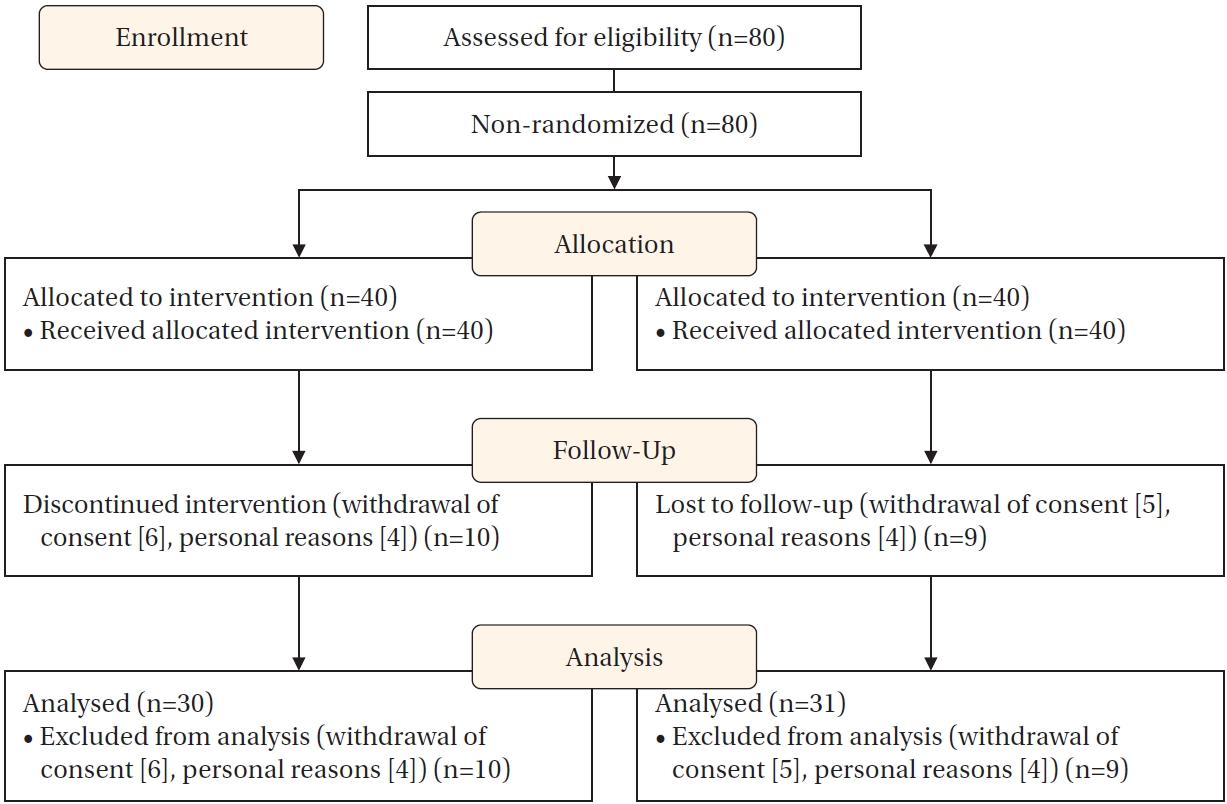
This study aimed to develop and evaluate the effectiveness of a health management program using a mobile application for middle-aged men experiencing andropause. Methods: A quasi-experimental design with a non-equivalent control group pretest-posttest structure was employed. The study took place from June 27 to August 30, 2024, with participant recruitment occurring from June 27 to July 10, 2024. In total, 61 participants (30 in the experimental group and 31 in the control group) participated from July 15 to August 20, 2024. The experimental group received an application-based health management program, while the control group did not. Results: The experimental group showed significant improvements in subjective quality of life, health-promoting behaviors, and subjective health status compared to the control group (p<.001). Conclusion: This study confirms that mobile applications can effectively manage health during andropause in middle-aged men. Further research with a larger sample size is recommended to validate these findings.
  • 1,012 View
  • 72 Download
Nursing Competence in Coping with Clinical Deterioration: An Evolutionary Concept Analysis
Ui Rim Song
Korean J Adult Nurs 2025;37(3):215-230.   Published online August 29, 2025
DOI: https://doi.org/10.7475/kjan.2025.0409
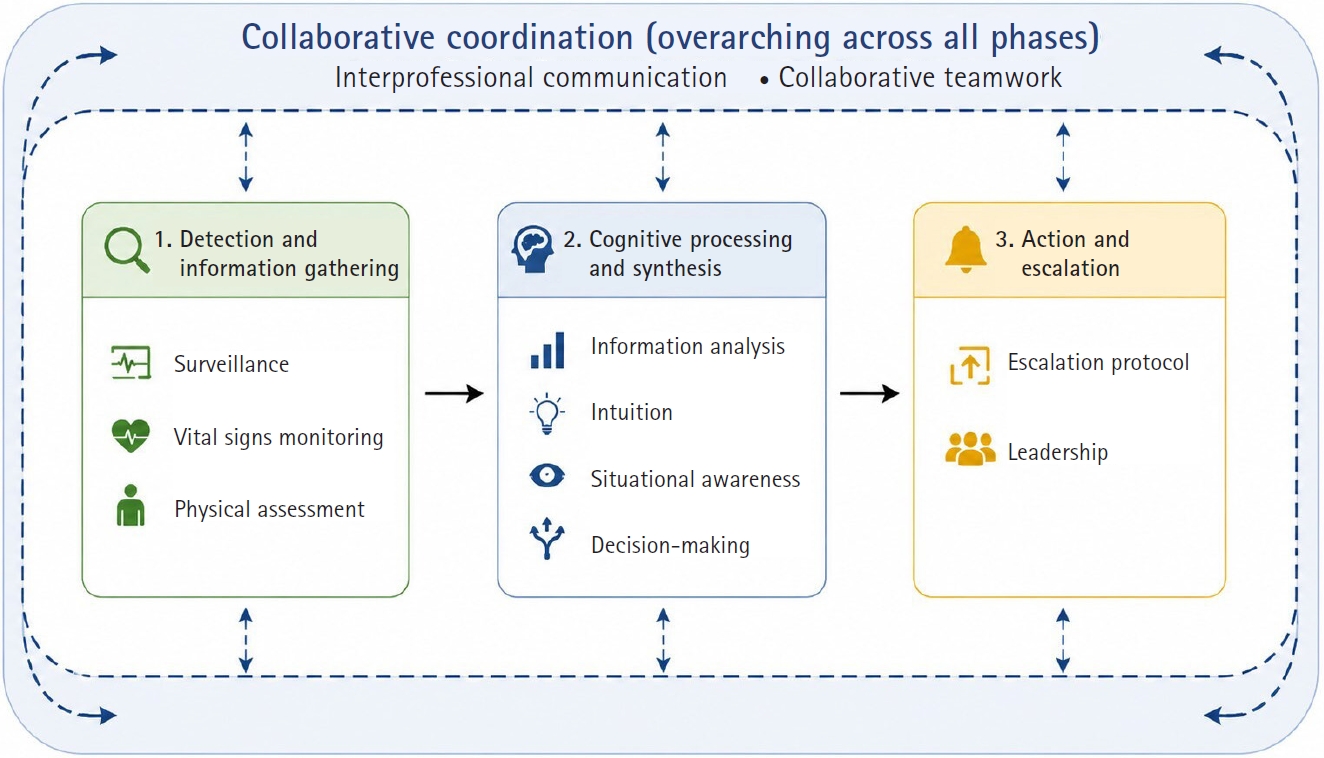
Purpose
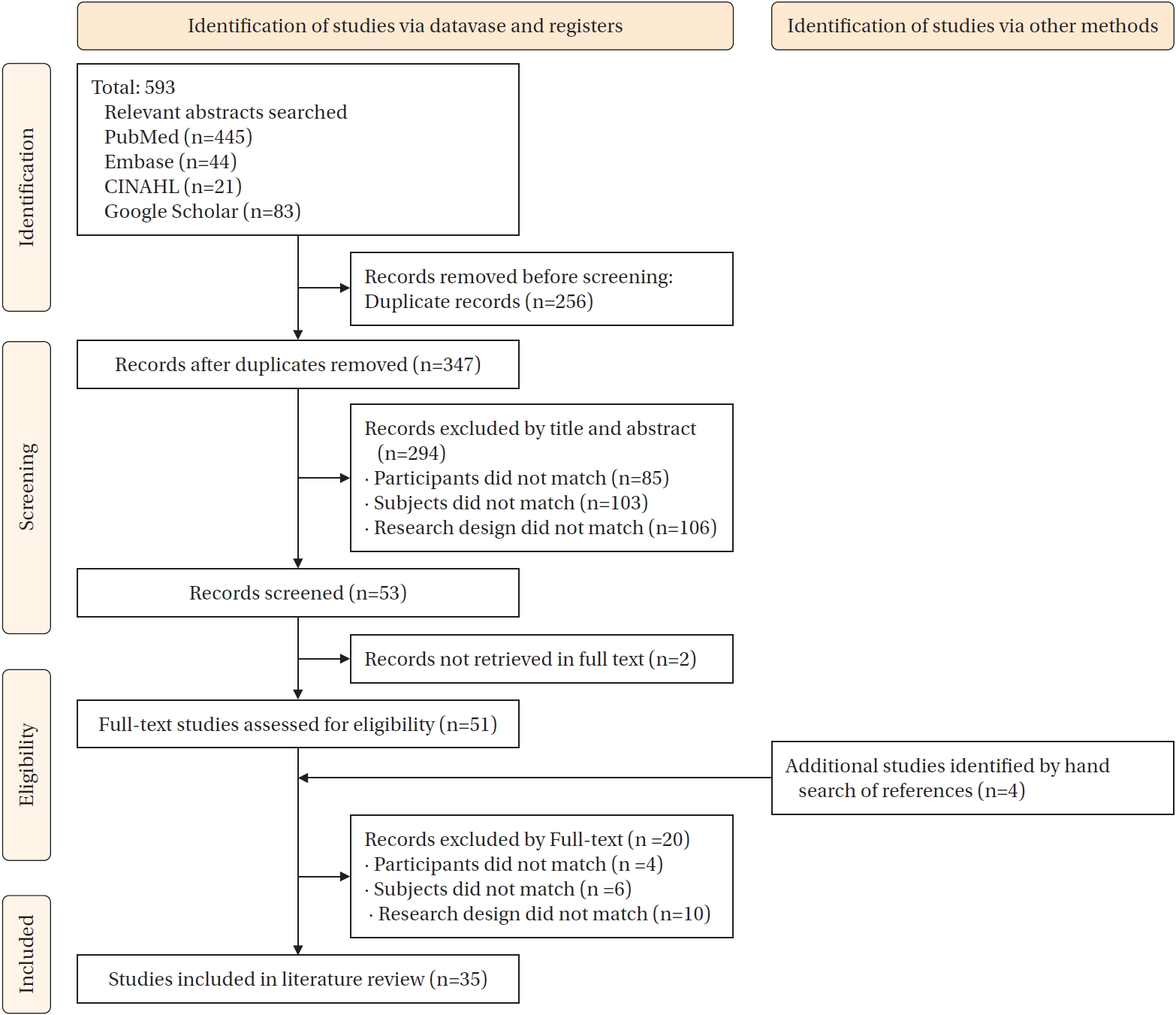
This study aimed to clarify the concept of nursing competence in coping with clinical deterioration by employing Rodgers’ evolutionary concept analysis, which reflects both sociocultural and temporal dimensions. Methods: A six-step concept analysis was conducted following Rodgers’ methodology. A systematic literature review was performed using PubMed, Embase, CINAHL, and Google Scholar, yielding 35 relevant studies published between 2000 and 2025. Data extraction followed the Joanna Briggs Institute template, and quality was appraised using the STROBE checklist. Results: Four key attributes of nursing competence were identified: technical skills in patient monitoring, situational awareness and clinical intuition, decision-making regarding escalation of care, and communication and teamwork to ensure timely intervention. Antecedents included formal education, clinical experience, and institutional support. Consequences encompassed enhanced patient safety, increased nurse confidence, and greater professional autonomy. The concept was demonstrated to be dynamic and influenced by healthcare policies, such as the implementation of rapid response systems. Conclusion: Nursing competence in managing clinical deterioration is a multidimensional and evolving concept that is essential for patient safety. Clarification of this concept can inform the development of assessment tools and simulation-based education. Further research should explore its application across diverse healthcare contexts and address challenges related to escalation of care.
  • 5,374 View
  • 117 Download

Invited Article

Machine Learning Applications in Nursing-Affiliated Research: A Systematic Review
Eun Joo Kim, Seong Kwang Kim
Korean J Adult Nurs 2025;37(3):189-214.   Published online August 29, 2025
DOI: https://doi.org/10.7475/kjan.2025.0327
Purpose
This study analyzed the methodological characteristics of machine learning (ML) applications in nursing research, evaluated their reporting quality against standardized guidelines, and assessed progress toward clinical implementation. Methods: A PRISMA-compliant systematic review (PROSPERO CRD42024595877) searched nine English- and Korean-language databases through September 27, 2024. Included studies applied ML to a nursing question and had at least one nursing-affiliated author. Two reviewers independently extracted data following the Cross-Industry Standard Process for Data Mining (CRISP-DM) framework. Reporting quality was appraised using the TRIPOD+AI checklist. Results: Of 125 included studies, supervised learning predominated (93.6%), with random forest, logistic regression, and support vector machines as common algorithms. The most frequent performance metrics were the area under the receiver operating curve and accuracy. Mean TRIPOD+AI compliance was 50.4% (standard deviation=9.37), with reporting quality lowest for data preparation (48.0%) and class imbalance handling (22.4%). Research focused on predicting pressure injuries, falls, and readmissions. Only seven studies described clinical deployment, often citing ethical or workflow barriers. Conclusion: While ML studies in nursing are increasing and show strong discriminatory accuracy, their impact is limited by inconsistent reporting, limited external validation, and rare clinical deployment. Translating these algorithms into practice requires adopting comprehensive reporting guidelines like TRIPOD+AI, documenting each CRISP-DM phase, and integrating nurse-centered decision-support pathways.
  • 7,711 View
  • 104 Download

Retraction

  • 573 View
  • 41 Download

Original Articles

Purpose
This descriptive correlational study aimed to evaluate the impact of patient activation on self-management and explore the mediating role of shared decision-making (SDM) among patients on hemodialysis.
Methods
A cohort of 136 participants was recruited from hemodialysis units in Gwangju, South Korea, between August 9 and 22, 2024. Patient activation, self-management, and SDM were assessed using the Patient Activation Measure (PAM-13), the Hemodialysis Self-Management Instrument (HDMI-K), and the 9-item Shared Decision-Making Questionnaire (SDM-Q-9), respectively. Descriptive statistics, Pearson’s correlation analysis, and mediation analysis using the PROCESS macro were conducted to analyze the data.
Results
Patient activation, SDM, and self-management were positively correlated with one another. Mediation analysis showed that patient activation significantly predicted both SDM and self-management. SDM also significantly predicted self-management, confirming its partial mediating effect. The final model explained 54.5% of the variance in self-management. The indirect effect of patient activation on self-management through SDM was statistically significant (indirect effect=0.05, 95% confidence interval [CI]=0.02–0.10). The indirect effect of patient activation on self-management through SDM was statistically significant (indirect effect=0.05, 95% CI=0.02–0.10).
Conclusion
Patient activation directly and indirectly enhances self-management through SDM, verifying the partial mediating role of SDM. Integrating SDM into nursing interventions is essential for effectively supporting self-management in patients undergoing hemodialysis.
  • 2,947 View
  • 89 Download
Effects of the Abdominal Draw-in Maneuver and Body Mechanics on Low Back Pain Relief in Nurses: A Quasi-Experimental Study
Saeun Cheon, Seung-bin Park, Insoon Kang
Korean J Adult Nurs 2025;37(2):165-176.   Published online May 30, 2025
DOI: https://doi.org/10.7475/kjan.2025.0217
Purpose
This study evaluated the effectiveness of an intervention combining the abdominal draw-in maneuver (ADIM) and body mechanics for nurses with chronic low back pain (LBP).
Methods
A non-equivalent control group pretest-posttest design was used, with data collected from August 30 to December 29, 2023. Participants were nurses experiencing chronic LBP (≥3 months) from a university hospital. Participants were allocated by ward units, with the experimental group (n=30) enrolled first, followed by the control group (n=30). The experimental group received ADIM and body mechanics training, performed ADIM exercises three times weekly for 6 weeks, and received daily text reminders. Exercise adherence and body mechanics usage were monitored weekly. The control group received educational materials upon request after study completion. Outcomes included LBP intensity, LBP disability, lumbar flexibility, and body mechanics performance, analyzed using SPSS version 27.0 through descriptive statistics, the chi-squared test, the Fisher exact tests, the independent t-test, the Mann-Whitney U test, and analysis of covariance.
Results
Compared to the control group, the experimental group showed significant reductions in LBP intensity (Z=4.65, p<.001) and LBP disability (F=7.04, p=.010), as well as improvements in lumbar flexibility (t=6.15, p<.001) and body mechanics performance (t=6.91, p<.001).
Conclusion
The intervention effectively alleviated LBP, reduced disability due to LBP, and improved lumbar flexibility and body mechanics performance. Thus, integrating ADIM with body mechanics may represent a practical and beneficial approach for reducing pain and enhancing functional outcomes among nurses experiencing chronic LBP in clinical settings.
  • 2,173 View
  • 60 Download
Purpose
Over 10% of intensive care unit (ICU) patients die; however, research aimed at assessing and improving the quality of their deaths remains scarce. This study investigated the impact of communication among healthcare professionals and person-centered care provided by ICU nurses on the quality of dying and death (QODD) experienced by ICU patients.
Methods
We measured general characteristics of ICU nurses, interprofessional communication, and person-centered care, and identified their impact on the quality of death for patients who died in the ICU. Participants consisted of 103 ICU nurses employed at two tertiary hospitals in South Korea. Data were collected between January and May 2023. Descriptive statistics, the t-test, analysis of variance, the Mann-Whitney U test, Pearson correlation coefficients, and multiple linear regression analyses were conducted using SPSS version 23.0.
Results
The mean QODD score was 44.73±21.26. QODD was positively correlated with openness (nurse-physician), understanding (nurse-physician), satisfaction (nurse-physician), and person-centered care. Factors significantly influencing QODD included nurse-physician communication, specifically understanding (β=.35, p=.010), and person-centered care (β=.19, p=.033), explaining 20.2% of the total variance (F=7.44, p<.001).
Conclusion
Improved communication among healthcare professionals and enhanced person-centered care are essential for improving the QODD for ICU patients. To achieve this, educational initiatives focusing on end-of-life care and communication training programs for healthcare professionals should be implemented.

Citations

Citations to this article as recorded by  
  • Intensive care nurses’ perceptions of good death and end-of-life care attitudes and behaviors: a descriptive and correlational quantitative study
    Rumeysa Bayram, Belkız Kiziltan
    BMC Palliative Care.2025;[Epub]     CrossRef
  • 3,917 View
  • 85 Download
  • 1 Crossref
Preliminary Evaluation of Experiential Learning–Based Fall and Medication Error Prevention Education (EFMPE) using a Virtual Reality Room of Errors program: A Randomized Controlled Trial
Hyeran Park, JuHee Lee, Eun Kyoung Choi, Seung Eun Lee, Eunbae B. Yang, Yoonju Lee
Korean J Adult Nurs 2025;37(2):140-152.   Published online May 30, 2025
DOI: https://doi.org/10.7475/kjan.2025.0117
Purpose
Falls and medication errors are the most common patient safety incidents globally. Kolb’s experiential learning theory supports the application of cognitive learning in clinical settings. This study examined the effectiveness of Experiential Learning–Based Fall and Medication Error Prevention Education (EFMPE), utilizing virtual reality and room of errors.
Methods
A randomized controlled trial was conducted with 28 fourth-year nursing students (15 experimental, 13 control). The experimental group participated in EFMPE from February 1 to 6, 2024, comprising six sessions of 2 hours each. The control group received traditional lectures. Safety control confidence and course interest were measured before and immediately after the intervention; safety control confidence was reassessed 6 weeks later.
Results
Both groups showed immediate improvement; however, only the experimental group sustained increased safety control confidence after 6 weeks (Wald χ²=13.21, p<.001). Course interest was significantly higher in the experimental group post-intervention (Wald χ²=10.64, p=.001).
Conclusion
These preliminary findings suggest that EFMPE potentially supports the prevention of falls and medication errors in clinical practice.

Citations

Citations to this article as recorded by  
  • Safety-centered simulation education using the 360-degree video room of errors: A mixed-methods study
    Jiyoung Kim, Yeji Kim, Hyunji Park, Jiyeong Won, Jiwon Yun, Yuran Lee
    Clinical Simulation in Nursing.2026; 111: 101899.     CrossRef
  • 4,611 View
  • 130 Download
  • 1 Crossref
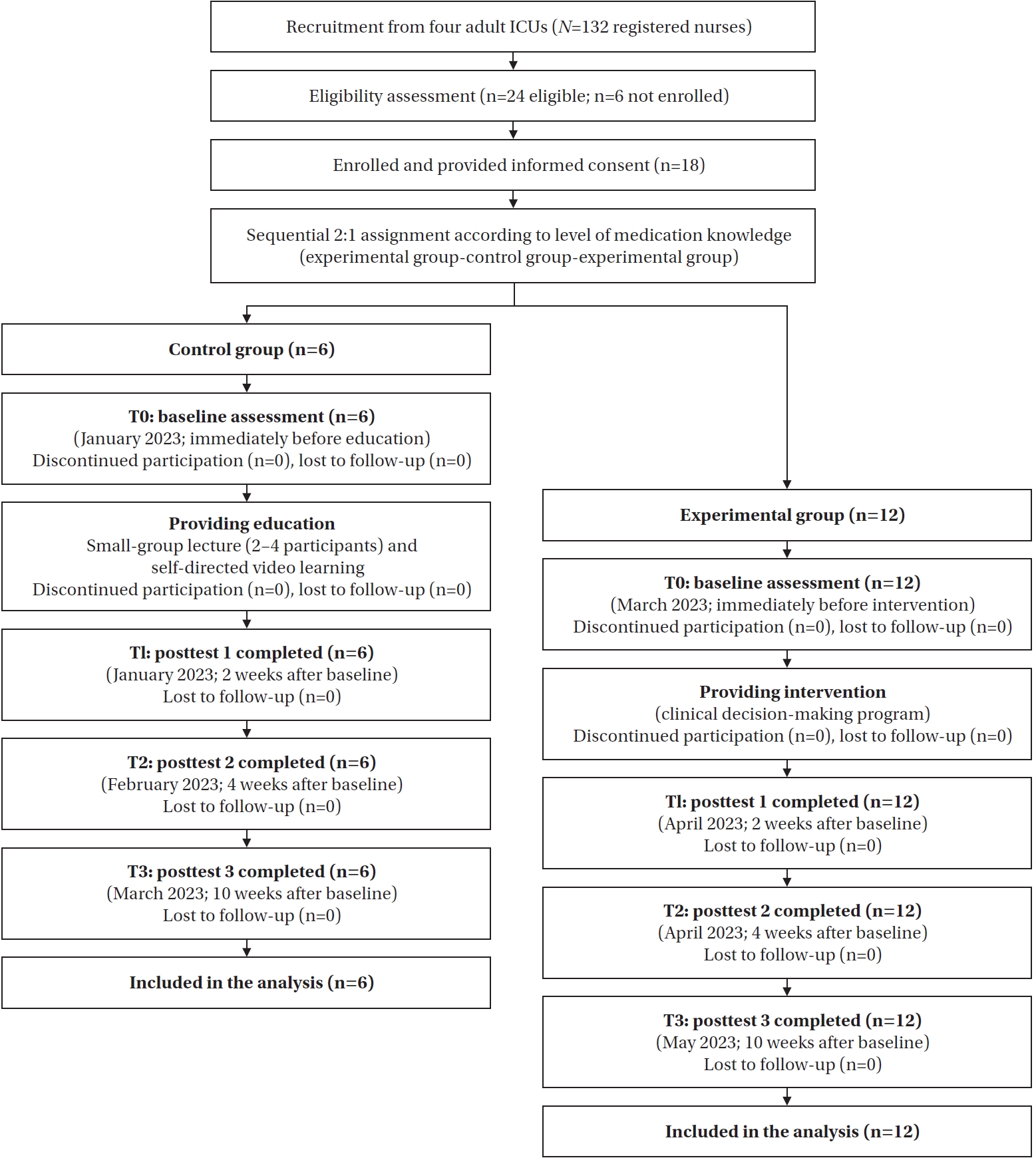
Purpose
The subjective experiences of middle-aged individuals during the coronavirus disease 2019 (COVID-19) pandemic play a pivotal role in fostering resilience for reintegration into normal life post-pandemic and preparing for potential future infectious disease outbreaks. This study aimed to explore the experiences of middle-aged individuals during the COVID-19 pandemic using the Q methodology.
Methods
Forty-six middle-aged individuals from 10 cities in South Korea participated in this study. The participants arranged and ranked 39 Q statements describing their experiences with the COVID-19 pandemic using a Q-sort table. Subsequently, the data were analyzed using the PQ method.
Results
Three distinct viewpoints were identified: concerns regarding government policies related to COVID-19 (political perspective: consistent government policies are of utmost importance); concerns about personal loss related to COVID-19 (personal perspective: daily life is of the utmost importance); and concerns about social losses related to COVID-19 (social perspective: societal interests take precedence over individual needs).
Conclusion
The nursing interventions recommended for these three factors serve as a strategic blueprint for effectively addressing future outbreaks of infectious diseases. These nursing intervention strategies can significantly enhance positive perceptions of the three identified elements of the COVID-19 experience, providing an opportunity to transform negative outlooks into positive ones.
  • 1,479 View
  • 35 Download
  • 0 Scopus
Purpose
This study aimed to investigate the mediating role of patient safety perception (PSP) in the relationship between the right to know (RtK) and patient participation (PP) among inpatients.
Methods
This descriptive study used a convenience sample of inpatients from three small and medium-sized hospitals in October 2023. A total of 231 inpatients completed a self-report questionnaire assessing PP, RtK, and PSP. Data were analyzed using a mediation model with the PROCESS Macro (Model 4), applying 95% bias-corrected bootstrap confidence intervals.
Results
The findings revealed significant positive correlations between PP and RtK (r=.78, p<.001) and PSP (r=.83, p<.001). Both RtK and PSP had significant effects on PP. PSP was identified as an important mediator in the relationship between RtK and PP (B=.35, boot standard error=.06, 95% confidence interval=.27–.44). The findings confirm that inpatients’ RtK is associated with improved PSP and increased PP.
Conclusion
These findings highlight the critical role of safeguarding patients’ right to information as a strategy for promoting patient safety. To ensure safe and effective care in small and medium-sized hospitals, ongoing support is essential for developing and systematically implementing patient safety education initiatives that actively involve patients.
  • 1,619 View
  • 67 Download
Purpose
During the coronavirus disease 2019 (COVID-19) pandemic, anxiety and need satisfaction may predict turnover intention among emergency room nurses, with need satisfaction negatively influencing turnover intention. This study aimed to examine the mediating effect of need satisfaction on the relationship between COVID-19–induced anxiety and job turnover intention among emergency room nurses during the pandemic.
Methods
This descriptive cross-sectional study recruited 206 emergency room nurses from 11 hospitals in South Korea. Data were collected using a questionnaire from December 2022 to February 2023.
Results
High COVID-19–induced anxiety was associated with increased turnover intention among nurses. Physiological needs partially mediated the relationship between COVID-19–induced anxiety and turnover intention. However, safety and belongingness needs showed no mediating effect.
Conclusion
During the COVID-19 pandemic, if physiological needs were not satisfied, reducing anxiety and turnover intention among emergency room nurses proved challenging, even when other needs were met. Therefore, physiological needs should be prioritized and addressed before focusing on other types of needs.
  • 1,735 View
  • 70 Download
Purpose
This study analyzed nursing students’ guided reflective journals following simulation-based practice using standardized patients for the initial care of older adults experiencing falls. It aimed to provide a deeper understanding of how changes in students’ thinking occurred through the learning experience and to describe their levels of reflection.
Methods
An eight-hour simulation-based education program was implemented during a geriatric clinical practicum. The program consisted of orientation, pre-learning activities, simulation practice, and a wrap-up session. Reflective journals from 53 third-year nursing students were analyzed using qualitative content analysis.
Results
Fifty-three third-year nursing students participated and submitted reflective journals. Three categories emerged from the analysis: “preparing for simulation-based practice,” which involved students setting care plans and employing observation; (2) “experiencing patient fall management through simulation-based practice,” where students actively engaged in realistic fall management scenarios; and (3) “critical reflection after simulation-based practice,” encompassing students’ acquisition of new insights and their personal growth. In the first category, students prepared for patient encounters by developing care plans and conducting observations. The second category highlighted realistic fall management scenarios utilizing standardized patients. The third category focused on personal growth through critical reflection. In the 53 reflective journals (185,021 words), level 3 reflections accounted for 31.6% of the content, while level 5, the highest reflection level, comprised only 8.6%.
Conclusion
Post-simulation reflective journaling stimulated critical thinking and self-assessment, enabling nursing students to analyze and reflect deeply on clinical practices. This process reinforced their knowledge base and behavioral foundations essential for clinical practice.

Citations

Citations to this article as recorded by  
  • Effectiveness of a high-fidelity simulation program based on flipped learning for nurses’ emergency management of seizures: a mixed-methods design
    Jae-Kyun Ju, Okja Choi, Shinhye Ahn, Hye Won Jeong
    BMC Nursing.2025;[Epub]     CrossRef
  • Effect of structured community-based older people education program on empathy, emotional intelligence, and caring behavior among nursing students
    Jing Ma, PingLei Chui, Mei Chan Chong, Jingru Yuan, Yongyan Zhu, Luyao Liu, Zhenqing Sun
    Frontiers in Medicine.2025;[Epub]     CrossRef
  • 4,868 View
  • 109 Download
  • 2 Crossref

Review Article

Purpose
This study involved a meta-synthesis of qualitative research concerning the experiences of women with infertility and infertility treatments. Based on an analysis of emotional changes and adaptation processes, it aimed to propose an interaction model encompassing expectation, loss, and resilience and clarify the conceptual meaning of each component.
Methods
Thomas and Harden’s five-step qualitative meta-synthesis methodology was employed. A total of 22 studies published between 2014 and 2024 were comprehensively analyzed and synthesized. The findings were integrated into a model representing the experiences of women undergoing infertility and infertility treatments.
Results
The meta-synthesis identified six key themes: changes in identity and inner growth; strengthening resilience through the roles of spouses, family, and peers; strategies for recovery and growth; support systems amidst economic and social burdens; life in the tension of waiting and hope; and the reconfiguration of couple and family relationships. Based on these themes, a dynamic interaction model, named the Model of Psychological Changes and Resilience (PCR Model), was developed to illustrate the interrelationships among expectation, loss, and resilience. The conceptual implications of these relationships were also explicated.
Conclusion
The cyclical interplay between expectation and loss among women experiencing infertility is intensified by social ideologies and cultural contexts, while resilience is strengthened through overcoming distress and finding meaning in life. Further quantitative research is necessary to validate these relationships in clinical settings by obtaining empirical data that apply this model.
  • 1,833 View
  • 50 Download

Invited Article

Purpose
This study aimed to suggest directions for legislation regarding medical support tasks in the Nursing Act to promote the advancement of nursing.
Methods
This study reviewed the history of medical support nurses in South Korea and the educational programs for advanced practice providers, both domestically and internationally.
Results
Nurses have performed medical support tasks traditionally carried out by physicians, but legal controversies have persisted. As a result of the escalation of conflicts surrounding policies aiming to increase the physician workforce, training doctors left hospitals. This prompted the initiation of pilot programs allowing nurses to legally engage in medical support tasks, culminating in the enactment of the Nursing Act in September 2024. Internationally, advanced practice providers such as advanced practice nurses (APNs) and physician assistants (PAs) undergo graduate-level education and certification. Since Korea lacks a PA system, integrating medical support tasks within the APN framework would be preferable. Achieving this will require absorbing clinical practice nurses (referred to as PA nurses) into the APN system, implementing government-supported education programs to address regional disparities, and establishing reimbursement policies for APNs.
Conclusion
With the implementation of the Nursing Act, a long-term approach is needed to establish professional qualifications, accreditation, education, training, examination, and regulatory systems. A comprehensive discussion should be undertaken to develop an optimal workforce, ensuring the delivery of safe and high-quality healthcare services to patients and the public.

Citations

Citations to this article as recorded by  
  • Impact of role conflict and job stress on turnover intention among Korean physician assistant nurses: A cross-sectional study
    Jin-Won Lee, Eun-Hi Choi, Ji-Sun Back
    International Journal of Nursing Sciences.2026;[Epub]     CrossRef
  • Lessons from the US Advanced Practice Registered Nurse system
    Eun-Ok Im, Dongmi Kim
    Journal of Korean Academy of Nursing.2025; 55(4): 492.     CrossRef
  • 10,169 View
  • 165 Download
  • 2 Crossref
Original Articles
Purpose
This study aimed to examine the relationship among professor-student interactions, grit, and adaptation to college life.
Methods
In this quantitative, cross-sectional study, participants completed a structured questionnaire comprising 48 items: 8 on general characteristics, 8 on professor-student interactions, 12 on grit, and 20 on adaptation to college life. Data were collected from 165 nursing students at two four-year universities between April 15 and May 20, 2023.
Results
Professor-student interactions had a mean score of 3.76±0.59 out of 5, grit had a mean score of 3.09±0.53, and adaptation to college life had a mean score of 3.48±0.51. Regression analysis identified significant predictors of adaptation to college life, including professor-student interactions (β=.26, p<.001), grit-perseverance of effort (β=.18, p=.047), and satisfaction with the major, with the "very satisfied" (β=.40, p<.001) and "satisfied" (β=.24, p=.002) categories showing significant impacts. The overall regression model was statistically significant (F=20.76, p<.001) and accounted for 32.5% of the variance in adaptation to college life.
Conclusion
Educational programs designed to strengthen professor-student interactions, enhance grit, and improve satisfaction with one's major should be developed to help nursing students adapt to college life. These findings have important implications for nursing education practices, the improvement of student support systems, and the preparation of students for their professional roles.
  • 3,110 View
  • 41 Download
  • 0 Scopus
Purpose
The incidence of diabetes mellitus (DM) rises significantly in the post-middle-age population, and stress along with depressive symptoms hinders effective DM management. This study examined the mediating effect of social capital (trust in the physical environment, reciprocity, social participation, and social networks) on the relationship between perceived stress and depression among middle-aged adults with DM in Korea. It also aimed to provide data for developing targeted interventions to enhance blood glucose management in this population.
Methods
A descriptive correlational study using data from the 2019 Community Health Survey by the Korea Disease Control and Prevention Agency (KDCA) was conducted. Complex sample regression analysis and the Sobel test were employed for mediation analysis. The study included 9,394 middle-aged adults (aged 45-64 years) diagnosed with DM. The analysis assessed the effects of perceived stress on social capital and depression, as well as the mediating role of social capital.
Results
Perceived stress negatively impacted social capital (β=-0.16, p<.001) and positively influenced depression (β=0.37, p<.001). Both perceived stress and social capital significantly affected depression (F=998.83, p<.001), with social capital showing a partial mediating effect (z=2.65, p<.001).
Conclusion
Social capital partially mediated the relationship between stress and depression, suggesting its potential as a strategy for reducing stress and lowering depression among middle-aged adults with DM. These findings lay the groundwork for targeted interventions to improve blood glucose management in this population. Future research should explore the relationships among specific components of social capital, stress, and depression.
  • 2,197 View
  • 49 Download
  • 0 Scopus
TOP