

| Yeonsoo Jang | 1 Article |
Purpose
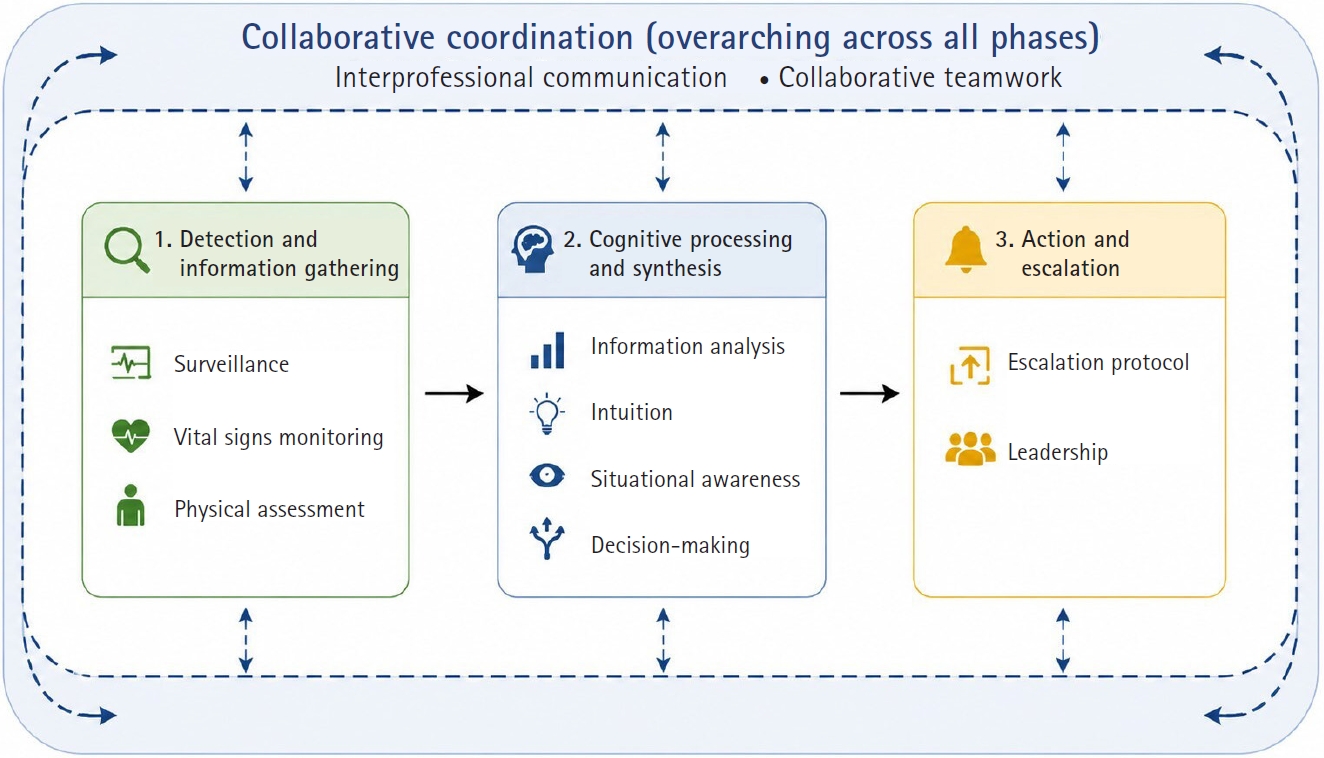
This scoping review identified the core components of nursing competence required for general ward nurses to recognize and manage clinical deterioration and examined how this competence has been conceptualized in previous studies. It also synthesized individual- and system-level factors associated with competence and identified research gaps relevant to nursing education, future research, and patient safety initiatives. Methods This scoping review was conducted using Arksey and O’Malley’s framework and reported in accordance with the PRISMA-ScR guidelines. Six databases—PubMed, CINAHL, Embase, the Cochrane Library, Scopus, and Web of Science—were searched for studies published between January 2016 and December 2025 using search terms related to clinical deterioration and nursing competence. Results Twenty-one studies met the inclusion criteria. The findings were organized into two domains: nursing competencies and factors associated with competence. Technical competencies included physical assessment, vital-sign monitoring, surveillance, information analysis, and application of escalation protocols. Non-technical competencies included situational awareness, clinical decision-making, intuition, leadership, interprofessional communication, and teamwork. Individual-level factors included clinical experience, self-confidence, skill acquisition, and clinical judgment. System-level factors included education and training, relationship-building with physicians, supportive work environments, electronic tools, organizational support, and teamwork culture. Conclusion Nursing competence in managing clinical deterioration is multidimensional and reflects the interaction of individual capabilities with system-level supports. Future research should develop educational strategies that strengthen both technical and non-technical skills while reinforcing organizational systems that support timely and effective responses to deterioration.
|
|
 E-SUBMISSION