Purpose This scoping review identified the core components of nursing competence required for general ward nurses to recognize and manage clinical deterioration and examined how this competence has been conceptualized in previous studies. It also synthesized individual- and system-level factors associated with competence and identified research gaps relevant to nursing education, future research, and patient safety initiatives.
Methods This scoping review was conducted using Arksey and O’Malley’s framework and reported in accordance with the PRISMA-ScR guidelines. Six databases—PubMed, CINAHL, Embase, the Cochrane Library, Scopus, and Web of Science—were searched for studies published between January 2016 and December 2025 using search terms related to clinical deterioration and nursing competence.
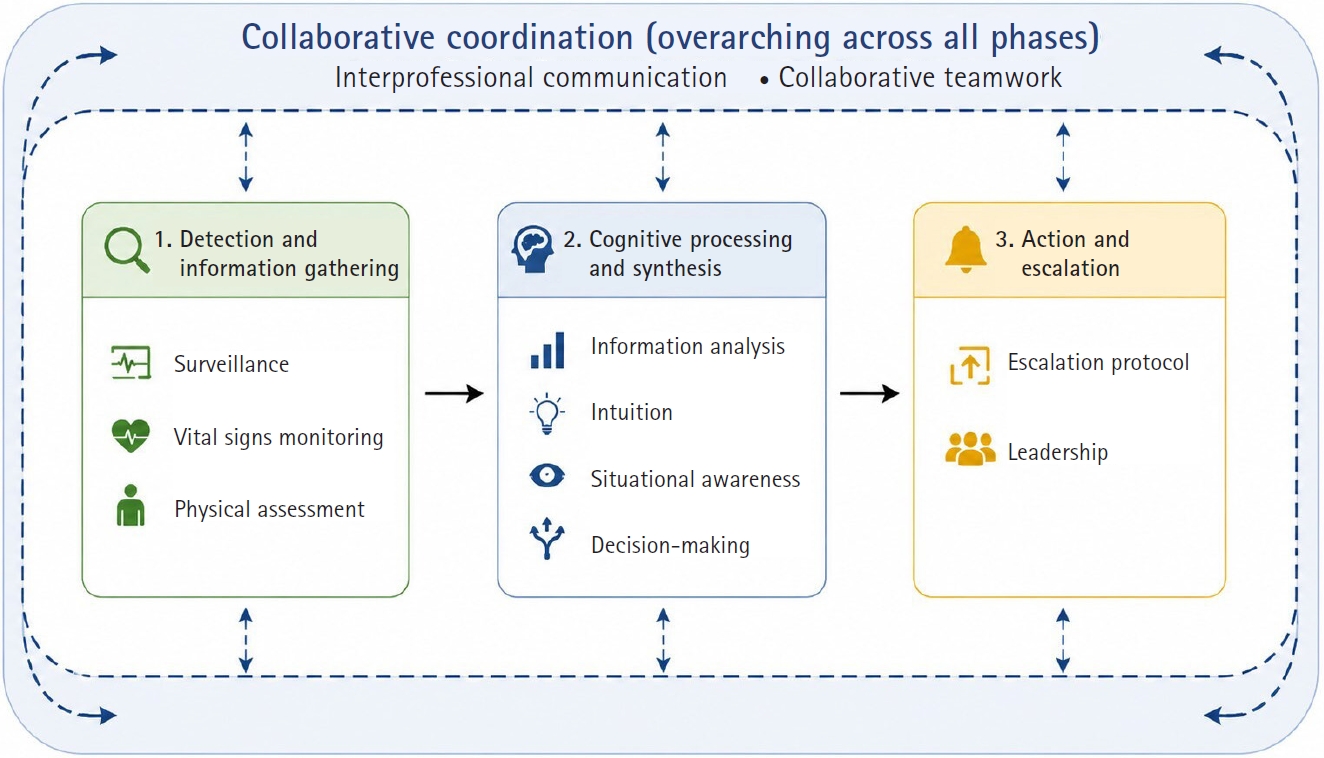
Results Twenty-one studies met the inclusion criteria. The findings were organized into two domains: nursing competencies and factors associated with competence. Technical competencies included physical assessment, vital-sign monitoring, surveillance, information analysis, and application of escalation protocols. Non-technical competencies included situational awareness, clinical decision-making, intuition, leadership, interprofessional communication, and teamwork. Individual-level factors included clinical experience, self-confidence, skill acquisition, and clinical judgment. System-level factors included education and training, relationship-building with physicians, supportive work environments, electronic tools, organizational support, and teamwork culture.
Conclusion Nursing competence in managing clinical deterioration is multidimensional and reflects the interaction of individual capabilities with system-level supports. Future research should develop educational strategies that strengthen both technical and non-technical skills while reinforcing organizational systems that support timely and effective responses to deterioration.
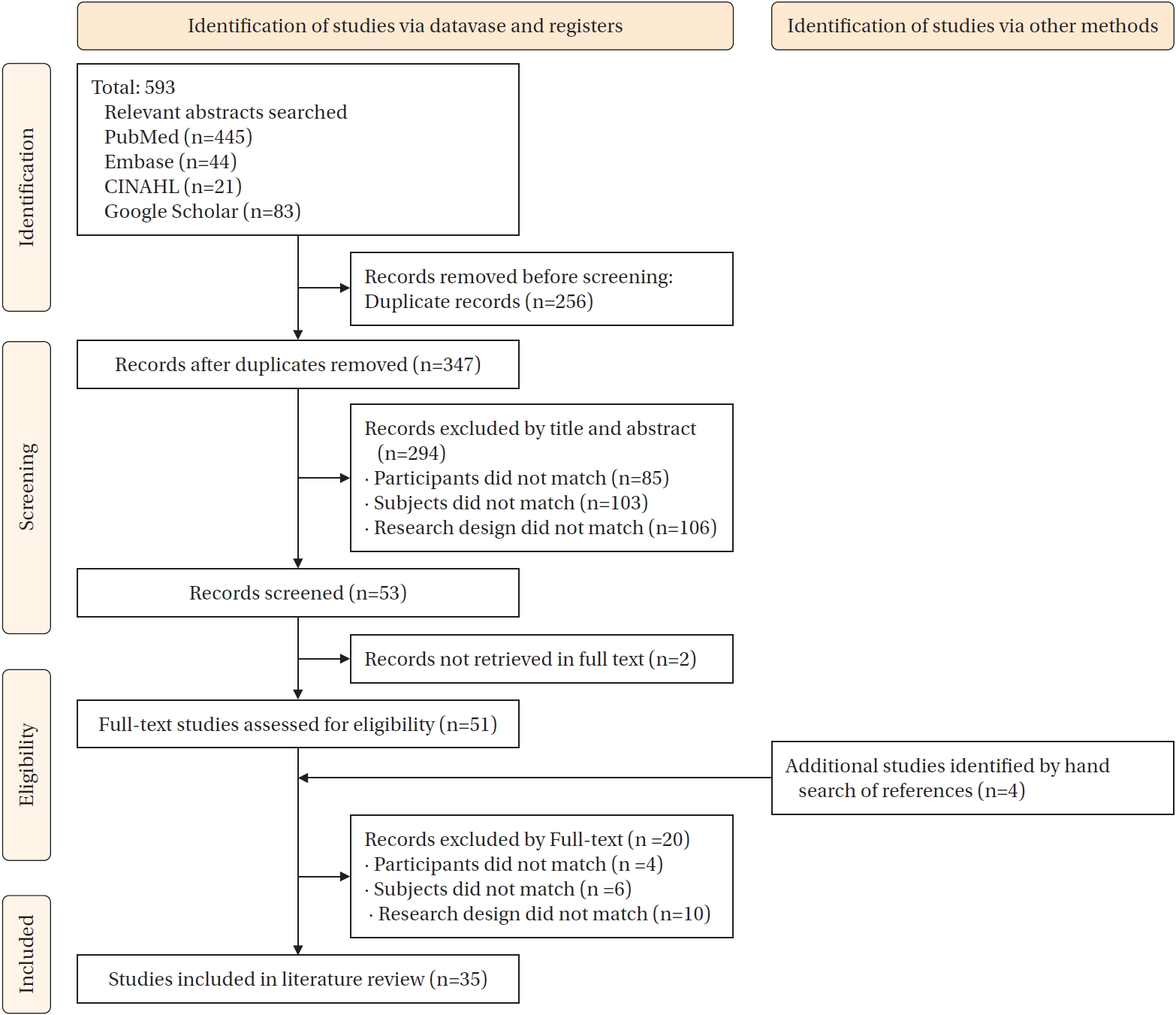
Purpose This study aimed to clarify the concept of nursing competence in coping with clinical deterioration by employing Rodgers’ evolutionary concept analysis, which reflects both sociocultural and temporal dimensions. Methods: A six-step concept analysis was conducted following Rodgers’ methodology. A systematic literature review was performed using PubMed, Embase, CINAHL, and Google Scholar, yielding 35 relevant studies published between 2000 and 2025. Data extraction followed the Joanna Briggs Institute template, and quality was appraised using the STROBE checklist. Results: Four key attributes of nursing competence were identified: technical skills in patient monitoring, situational awareness and clinical intuition, decision-making regarding escalation of care, and communication and teamwork to ensure timely intervention. Antecedents included formal education, clinical experience, and institutional support. Consequences encompassed enhanced patient safety, increased nurse confidence, and greater professional autonomy. The concept was demonstrated to be dynamic and influenced by healthcare policies, such as the implementation of rapid response systems. Conclusion: Nursing competence in managing clinical deterioration is a multidimensional and evolving concept that is essential for patient safety. Clarification of this concept can inform the development of assessment tools and simulation-based education. Further research should explore its application across diverse healthcare contexts and address challenges related to escalation of care.
Purpose This study was a scoping review aimed at evaluating Simulation-Based Education for recognizing and responding to deteriorating patients within Korean nursing school curricula, and at developing educational strategies for these competencies. Methods A literature search was conducted from April 1 to April 30, 2024. The review followed the scoping review framework by Arksey and O’Malley and the manual by the Joanna Briggs Institute. Relevant studies were identified through databases such as the Korean Medical Database, Korean Studies Information Service System, DataBase Periodical Information Academic, Research Information Sharing Service, ScienceOn, and the Cumulative Index to Nursing and Allied Health Literature. Results Eleven studies published from 2010 to 2019 were reviewed. The simulations typically included several lectures and practice sessions on advanced cardiopulmonary life support before the simulation exercises, which were then repeated.
Cardiac arrest was frequently used as a scenario subject. The learning outcomes focused on the cognitive and psychomotor domains, as well as self-efficacy. Conclusion Although simulation for recognizing and responding to deteriorating patients was available in Korean nursing school curricula, it was infrequently incorporated as a regular part of the training. Future initiatives should include adding educational content to enhance nursing students' competencies in recognizing and responding to deteriorating patient simulations. Subsequent studies should assess the effectiveness of these educational methods.
Citations
Citations to this article as recorded by
Utilization of advanced resuscitation skills among doctors and nurses in Uganda Peter Kavuma, Mary Ellen Lyon, Doreen Okong Alaleit, Jonathan Byasi, Janat Tumukunde, Daniel Obua African Journal of Emergency Medicine.2026; 16(2): 100969. CrossRef



 E-SUBMISSION
 First
First Prev
Prev