Purpose This study examined sociodemographic, clinical, and symptom-related factors associated with current employment among cancer survivors and described sex-based differences in occupational continuity.
Methods This cross-sectional study used data from the 2019 and 2021 Korea National Health and Nutrition Examination Survey. The sample included cancer survivors aged 19 to 65 years who did not have multiple primary cancers or missing data (n=289). Employment status was categorized as employed or non-employed. Sociodemographic factors (age, sex, education, marital and household characteristics, household income, and private insurance), clinical factors (time since diagnosis, cancer type, current cancer status, and comorbidity), and symptom-related factors (pain, fatigue, depression, memory problems, and sleep difficulties) were evaluated using hierarchical logistic regression. Weighted descriptive analyses were performed to examine sex-based differences in occupational continuity.
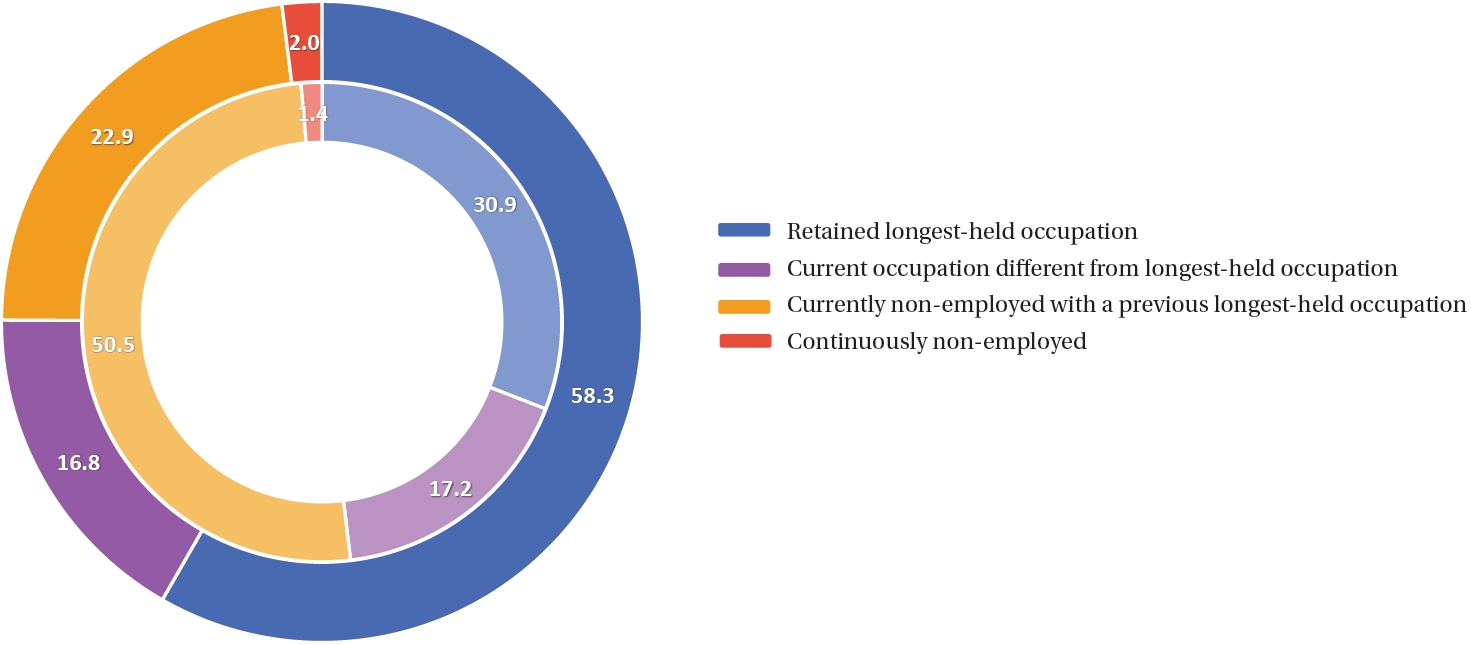
Results Overall, 56.6% of participants were employed. In the final model, male sex was associated with higher odds of employment (odds ratio [OR], 4.69; 95% confidence interval [CI], 2.21–9.94; p<.001), whereas monthly household income below 3 million Korean won was associated with lower odds of employment (OR, 0.41; 95% CI, 0.19–0.88; p<.05). Sleep difficulties were non-significantly associated with lower odds of employment (OR, 0.64; 95% CI, 0.41–1.00; p=.051). No clinical factor was significantly associated with employment. Male participants were more likely than female participants to retain their longest-held occupation (58.3% vs. 30.9%).
Conclusion Employment among cancer survivors was associated with sex and household income, and occupational continuity differed by sex. Although sleep difficulties were not statistically significant in the final model, sleep assessment and sex-sensitive vocational support may be useful components of survivorship nursing care.
PURPOSE This study was conducted to identify job experiences of male hospital nurses. METHODS Data were collected from 20 male nurses working at general hospitals, through semi-structured in-depth interviews. The interviews were recorded and subsequently transcribed verbatim. Using content analysis, data were coded and categorized. RESULTS The analyzed domains were motivations for choosing nursing, occupational experiences (3 subdomains), and attitudes toward the future. A total of 85 significant statements were selected from the data and classified into 32 categories. The nurses' motivations for choosing nursing were advantages of employment, their aptitude, scarcity value of men, professionalism and job security, good promotion, stable income, and family influence. In occupational experiences, they were assigned to special fields and dissatisfied with vertical relationship, promotion system, their salary, and gaps in military service time; they had difficulties in adapting to female-dominated groups and encountered gender role stereotype and preconception; they were satisfied with their distinguished performance, but had damaged self-esteem, and were stressed and disappointed in their work. In their attitudes toward the future, they considered their career changes, but tried to make professional and personal advancement. CONCLUSION These findings have implications for recruiting and retaining male nurses in clinical settings.


 E-SUBMISSION
 First
First Prev
Prev