Purpose This study examined sociodemographic, clinical, and symptom-related factors associated with current employment among cancer survivors and described sex-based differences in occupational continuity.
Methods This cross-sectional study used data from the 2019 and 2021 Korea National Health and Nutrition Examination Survey. The sample included cancer survivors aged 19 to 65 years who did not have multiple primary cancers or missing data (n=289). Employment status was categorized as employed or non-employed. Sociodemographic factors (age, sex, education, marital and household characteristics, household income, and private insurance), clinical factors (time since diagnosis, cancer type, current cancer status, and comorbidity), and symptom-related factors (pain, fatigue, depression, memory problems, and sleep difficulties) were evaluated using hierarchical logistic regression. Weighted descriptive analyses were performed to examine sex-based differences in occupational continuity.
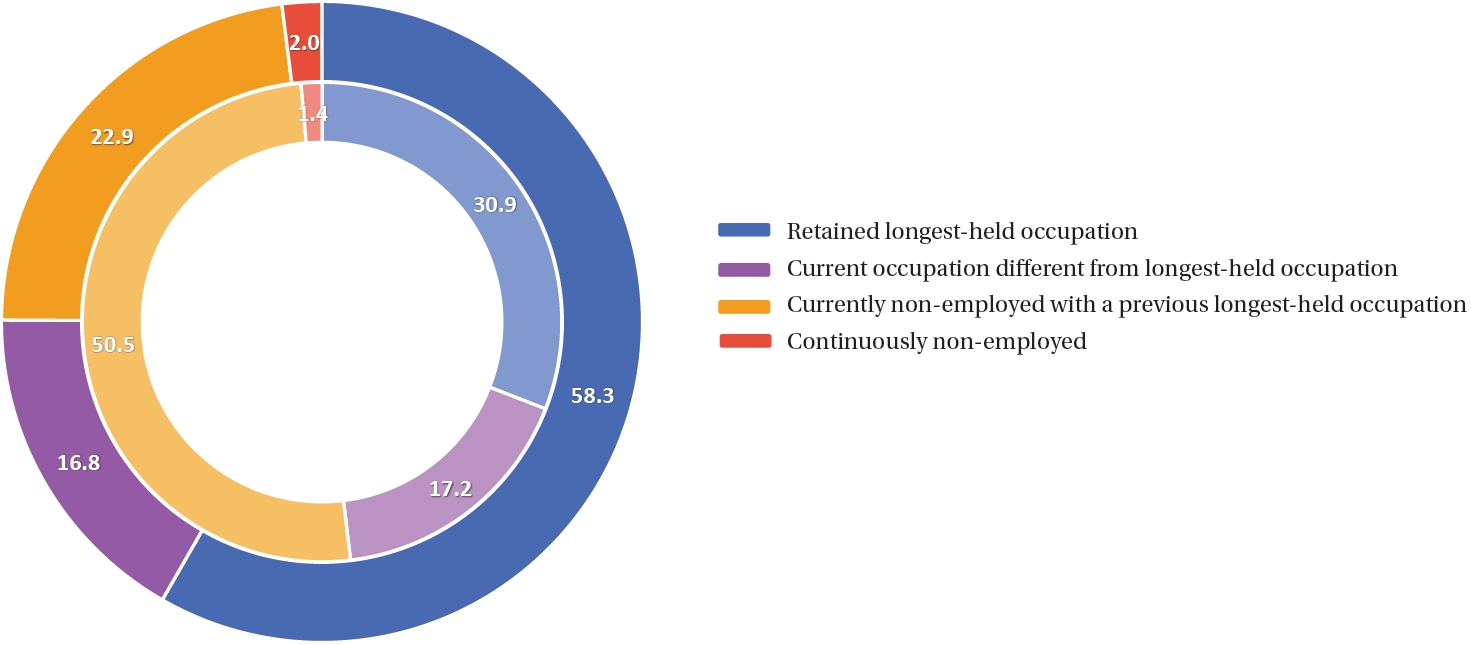
Results Overall, 56.6% of participants were employed. In the final model, male sex was associated with higher odds of employment (odds ratio [OR], 4.69; 95% confidence interval [CI], 2.21–9.94; p<.001), whereas monthly household income below 3 million Korean won was associated with lower odds of employment (OR, 0.41; 95% CI, 0.19–0.88; p<.05). Sleep difficulties were non-significantly associated with lower odds of employment (OR, 0.64; 95% CI, 0.41–1.00; p=.051). No clinical factor was significantly associated with employment. Male participants were more likely than female participants to retain their longest-held occupation (58.3% vs. 30.9%).
Conclusion Employment among cancer survivors was associated with sex and household income, and occupational continuity differed by sex. Although sleep difficulties were not statistically significant in the final model, sleep assessment and sex-sensitive vocational support may be useful components of survivorship nursing care.
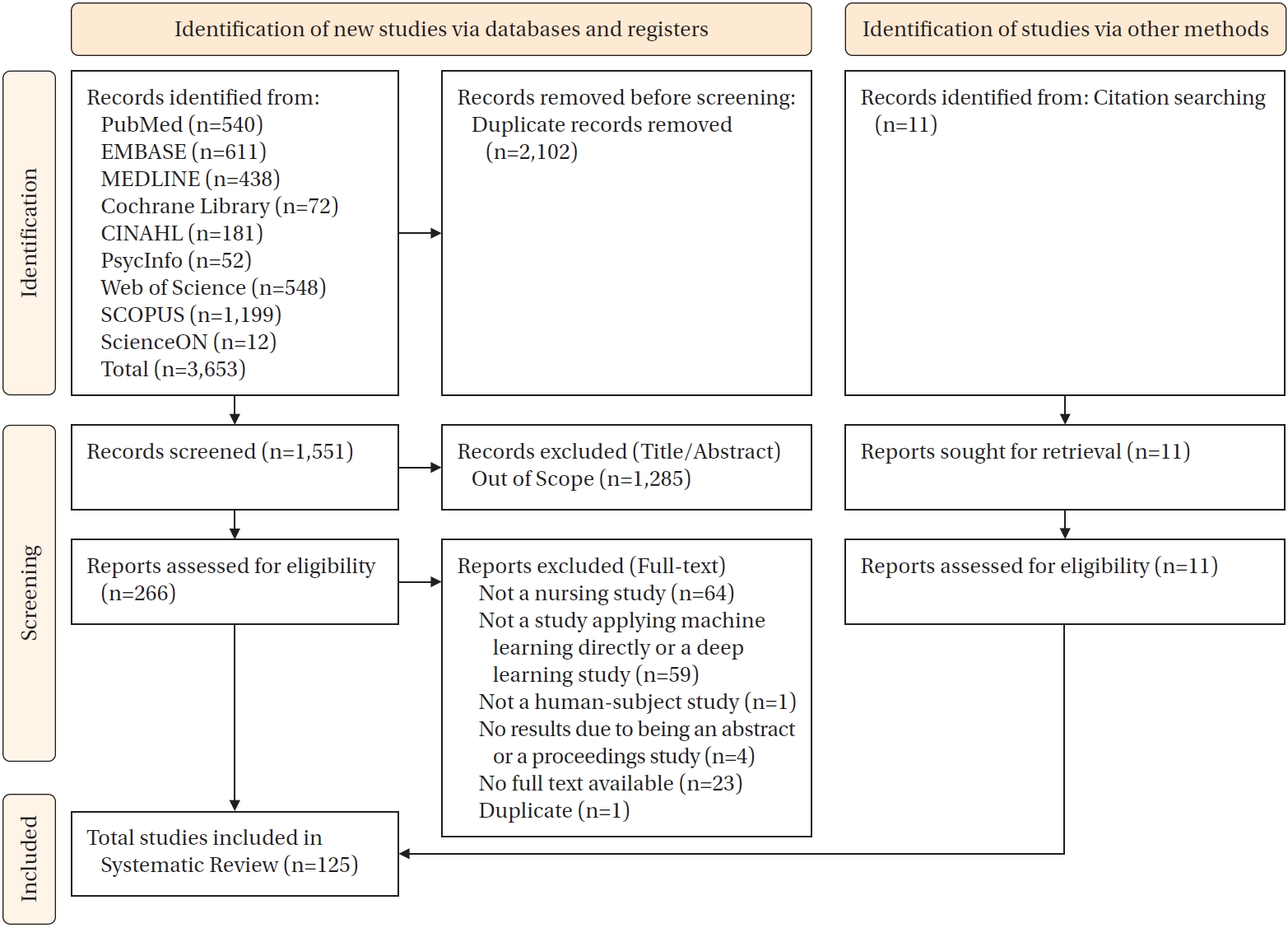
Purpose This study analyzed the methodological characteristics of machine learning (ML) applications in nursing research, evaluated their reporting quality against standardized guidelines, and assessed progress toward clinical implementation. Methods: A PRISMA-compliant systematic review (PROSPERO CRD42024595877) searched nine English- and Korean-language databases through September 27, 2024. Included studies applied ML to a nursing question and had at least one nursing-affiliated author. Two reviewers independently extracted data following the Cross-Industry Standard Process for Data Mining (CRISP-DM) framework. Reporting quality was appraised using the TRIPOD+AI checklist. Results: Of 125 included studies, supervised learning predominated (93.6%), with random forest, logistic regression, and support vector machines as common algorithms. The most frequent performance metrics were the area under the receiver operating curve and accuracy. Mean TRIPOD+AI compliance was 50.4% (standard deviation=9.37), with reporting quality lowest for data preparation (48.0%) and class imbalance handling (22.4%). Research focused on predicting pressure injuries, falls, and readmissions. Only seven studies described clinical deployment, often citing ethical or workflow barriers. Conclusion: While ML studies in nursing are increasing and show strong discriminatory accuracy, their impact is limited by inconsistent reporting, limited external validation, and rare clinical deployment. Translating these algorithms into practice requires adopting comprehensive reporting guidelines like TRIPOD+AI, documenting each CRISP-DM phase, and integrating nurse-centered decision-support pathways.


 E-SUBMISSION
 First
First Prev
Prev